

The Great Barrier Reef
2
associates of this society. It was also intimately involved in the establishment of the world’s largest
marine park, the GBR Marine Park in 1975, which was
recently enlarged and rezoned based on our much
increased understanding of coral reefs.
The book is divided into three sections. In the first
section, the geomorphology and paleobiology of the
GBR are discussed along with its oceanography. The
various habitats of the GBR are discussed, not only
from the point of view of coral dominated ecosystems,
but also includes the important associated inter-reefal
areas. These components of the GBR, along with catchments and offshore deeper waters, are highly interconnected (Fig. 1.2). The second section focuses on the
major processes that are affecting the reef and includes
a review of photosynthesis and primary production,
as well as the flow of energy and nutrients within the
reef ecosystem. Other chapters deal with the major
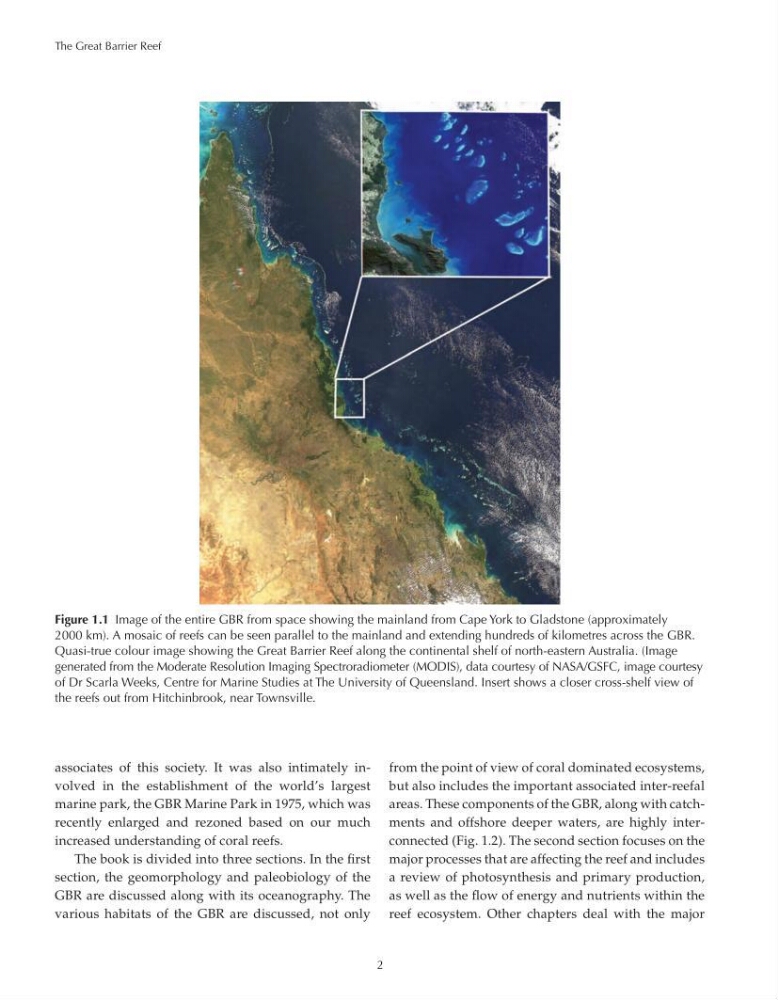
Figure 1.1 Image of the entire GBR from space showing the mainland from Cape York to Gladstone (approximately
2000 km). A mosaic of reefs can be seen parallel to the mainland and extending hundreds of kilometres across the GBR.
Quasi-true colour image showing the Great Barrier Reef along the continental shelf of north-eastern Australia. (Image
generated from the Moderate Resolution Imaging Spectroradiometer (MODIS), data courtesy of NASA/GSFC, image courtesy
of Dr Scarla Weeks, Centre for Marine Studies at The University of Queensland. Insert shows a closer cross-shelf view of
the reefs out from Hitchinbrook, near Townsville.
2
associates of this society. It was also intimately involved in the establishment of the world’s largest
marine park, the GBR Marine Park in 1975, which was
recently enlarged and rezoned based on our much
increased understanding of coral reefs.
The book is divided into three sections. In the first
section, the geomorphology and paleobiology of the
GBR are discussed along with its oceanography. The
various habitats of the GBR are discussed, not only
from the point of view of coral dominated ecosystems,
but also includes the important associated inter-reefal
areas. These components of the GBR, along with catchments and offshore deeper waters, are highly interconnected (Fig. 1.2). The second section focuses on the
major processes that are affecting the reef and includes
a review of photosynthesis and primary production,
as well as the flow of energy and nutrients within the
reef ecosystem. Other chapters deal with the major
Figure 1.1 Image of the entire GBR from space showing the mainland from Cape York to Gladstone (approximately
2000 km). A mosaic of reefs can be seen parallel to the mainland and extending hundreds of kilometres across the GBR.
Quasi-true colour image showing the Great Barrier Reef along the continental shelf of north-eastern Australia. (Image
generated from the Moderate Resolution Imaging Spectroradiometer (MODIS), data courtesy of NASA/GSFC, image courtesy
of Dr Scarla Weeks, Centre for Marine Studies at The University of Queensland. Insert shows a closer cross-shelf view of
the reefs out from Hitchinbrook, near Townsville.