

The Great Barrier Reef
120
The GBR continues to be under pressure from a
wide range of human uses and natural impacts, and
neither the GBR World Heritage Area nor the Marine
Park are static. Use patterns and technology are constantly changing and the marine environment itself is
dynamic. For example, the use of the Marine Park has
escalated rapidly in the 30 years since its establishment. Despite various complexities, the integrated
governance and management model that has been
functioning in the GBR has proven to be effective and
successful.
A range of strategies continue to ensure the GBR is
protected now and into the future. These strategies,
designed to maintain the health and increase the resilience of the GBR to cope with escalating pressures,
include:
L maintaining compliance with the Zoning Plan and
supporting Regulations;
L improving water quality through the Reef Water
Quality Protection Plan;
L promoting sustainable fisheries;
L developing sound policy regarding the effects of climate change on reefs, and
L promoting sustainable tourism.
As the Marine Park moves into its fourth decade the
new legislative framework along with the various other
management strategies will collectively contribute significantly to the conservation of the entire GBR ecosystem. Collectively these will enhance significantly the
health and resilience of the GBR, assist industry to
achieve increased levels of environmental and financial
sustainability, and provide benefits for all users and industries that are dependent on the GBR.
For more information about the Marine Park, visit
www.gbrmpa.gov.au [Verified 22 February 2008].
Detailed information on the rezoning is on the
GBRMPA website under ‘Zoning’ and then follow the
link ‘Information for Managers and Planners’.
All the zoning maps are on the website and copies
are available in major centres along the GBR coast.
ADDITIONAL READING
Access Economics Pty Ltd. (2007). Measuring the
economic & financial value of the Great Barrier Reef
Marine Park, 2005–06, Canberra.
Bishop, M. (2004). Enforcement in the Great Barrier
Reef Marine Park. In ‘Proceedings of the 2nd
International Tropical Ecosystems Management
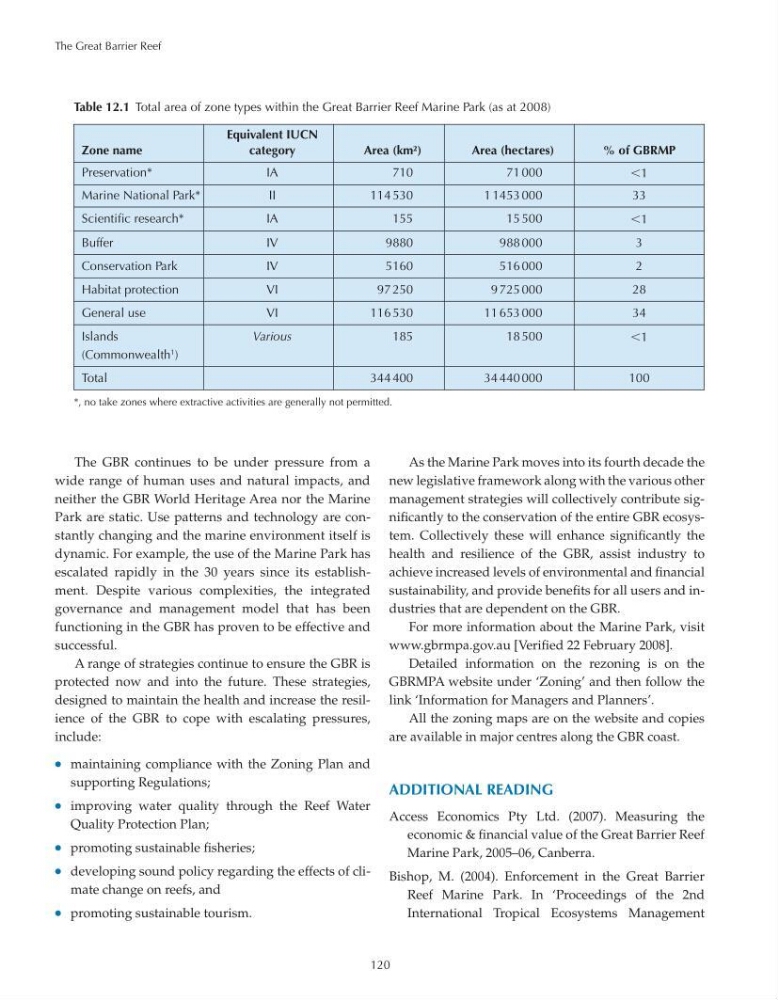
Table 12.1 Total area of zone types within the Great Barrier Reef Marine Park (as at 2008)
Zone name
Equivalent IUCN
category
Area (km²)
Area (hectares)
% of GBRMP
Preservation*
IA
710
71 000
1
Marine National Park*
II
114 530
1 1453 000
33
Scientific research*
IA
155
15 500
1
Buffer
IV
9880
988 000
3
Conservation Park
IV
5160
516 000
2
Habitat protection
VI
97 250
9 725 000
28
General use
VI
116 530
11 653 000
34
Islands
(Commonwealth
1 )
Various
185
18 500
1
Total
344 400
34 440 000
100
*, no take zones where extractive activities are generally not permitted.
120
The GBR continues to be under pressure from a
wide range of human uses and natural impacts, and
neither the GBR World Heritage Area nor the Marine
Park are static. Use patterns and technology are constantly changing and the marine environment itself is
dynamic. For example, the use of the Marine Park has
escalated rapidly in the 30 years since its establishment. Despite various complexities, the integrated
governance and management model that has been
functioning in the GBR has proven to be effective and
successful.
A range of strategies continue to ensure the GBR is
protected now and into the future. These strategies,
designed to maintain the health and increase the resilience of the GBR to cope with escalating pressures,
include:
L maintaining compliance with the Zoning Plan and
supporting Regulations;
L improving water quality through the Reef Water
Quality Protection Plan;
L promoting sustainable fisheries;
L developing sound policy regarding the effects of climate change on reefs, and
L promoting sustainable tourism.
As the Marine Park moves into its fourth decade the
new legislative framework along with the various other
management strategies will collectively contribute significantly to the conservation of the entire GBR ecosystem. Collectively these will enhance significantly the
health and resilience of the GBR, assist industry to
achieve increased levels of environmental and financial
sustainability, and provide benefits for all users and industries that are dependent on the GBR.
For more information about the Marine Park, visit
www.gbrmpa.gov.au [Verified 22 February 2008].
Detailed information on the rezoning is on the
GBRMPA website under ‘Zoning’ and then follow the
link ‘Information for Managers and Planners’.
All the zoning maps are on the website and copies
are available in major centres along the GBR coast.
ADDITIONAL READING
Access Economics Pty Ltd. (2007). Measuring the
economic & financial value of the Great Barrier Reef
Marine Park, 2005–06, Canberra.
Bishop, M. (2004). Enforcement in the Great Barrier
Reef Marine Park. In ‘Proceedings of the 2nd
International Tropical Ecosystems Management
Table 12.1 Total area of zone types within the Great Barrier Reef Marine Park (as at 2008)
Zone name
Equivalent IUCN
category
Area (km²)
Area (hectares)
% of GBRMP
Preservation*
IA
710
71 000
1
Marine National Park*
II
114 530
1 1453 000
33
Scientific research*
IA
155
15 500
1
Buffer
IV
9880
988 000
3
Conservation Park
IV
5160
516 000
2
Habitat protection
VI
97 250
9 725 000
28
General use
VI
116 530
11 653 000
34
Islands
(Commonwealth
1 )
Various
185
18 500
1
Total
344 400
34 440 000
100
*, no take zones where extractive activities are generally not permitted.