

Organic compounds in soils 51
0.53
0.32 0.20
100
75
50
25
Cryofocus Temperature
0
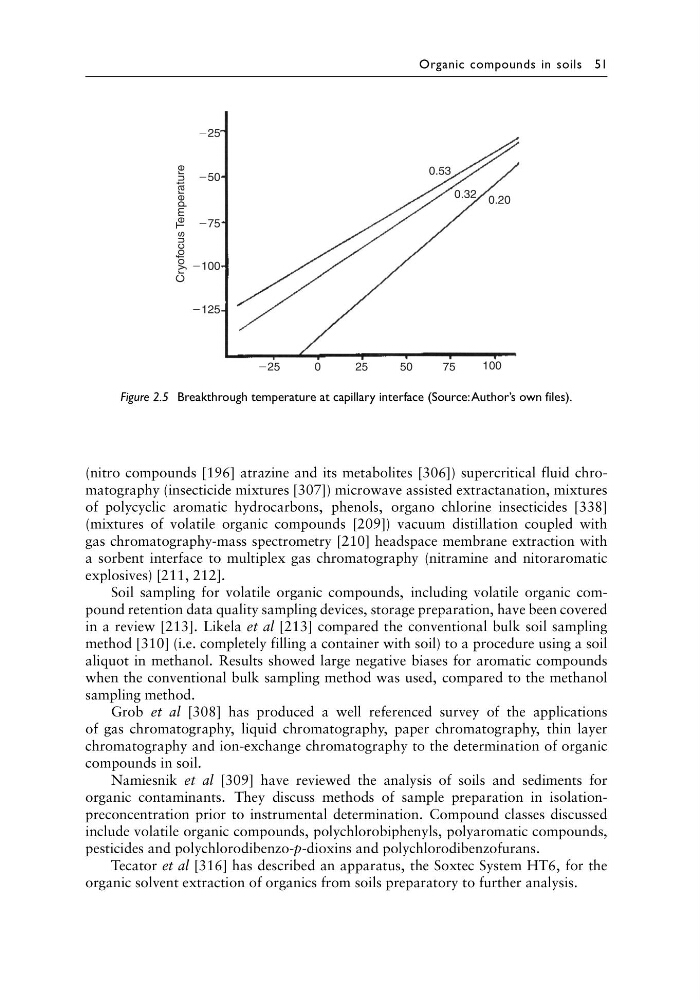
Figure 2.5 Breakthrough temperature at capillary interface (Source:Author’s own files).
(nitro compounds [196] atrazine and its metabolites [306]) supercritical fluid chromatography (insecticide mixtures [307]) microwave assisted extractanation, mixtures
of polycyclic aromatic hydrocarbons, phenols, organo chlorine insecticides [338]
(mixtures of volatile organic compounds [209]) vacuum distillation coupled with
gas chromatography-mass spectrometry [210] headspace membrane extraction with
a sorbent interface to multiplex gas chromatography (nitramine and nitoraromatic
explosives) [211, 212].
Soil sampling for volatile organic compounds, including volatile organic compound retention data quality sampling devices, storage preparation, have been covered
in a review [213]. Likela et al [213] compared the conventional bulk soil sampling
method [310] (i.e. completely filling a container with soil) to a procedure using a soil
aliquot in methanol. Results showed large negative biases for aromatic compounds
when the conventional bulk sampling method was used, compared to the methanol
sampling method.
Grob et al [308] has produced a well referenced survey of the applications
of gas chromatography, liquid chromatography, paper chromatography, thin layer
chromatography and ion-exchange chromatography to the determination of organic
compounds in soil.
Namiesnik et al [309] have reviewed the analysis of soils and sediments for
organic contaminants. They discuss methods of sample preparation in isolationpreconcentration prior to instrumental determination. Compound classes discussed
include volatile organic compounds, polychlorobiphenyls, polyaromatic compounds,
pesticides and polychlorodibenzo-p-dioxins and polychlorodibenzofurans.
Tecator et al [316] has described an apparatus, the Soxtec System HT6, for the
organic solvent extraction of organics from soils preparatory to further analysis.
0.53
0.32 0.20
100
75
50
25
Cryofocus Temperature
0
Figure 2.5 Breakthrough temperature at capillary interface (Source:Author’s own files).
(nitro compounds [196] atrazine and its metabolites [306]) supercritical fluid chromatography (insecticide mixtures [307]) microwave assisted extractanation, mixtures
of polycyclic aromatic hydrocarbons, phenols, organo chlorine insecticides [338]
(mixtures of volatile organic compounds [209]) vacuum distillation coupled with
gas chromatography-mass spectrometry [210] headspace membrane extraction with
a sorbent interface to multiplex gas chromatography (nitramine and nitoraromatic
explosives) [211, 212].
Soil sampling for volatile organic compounds, including volatile organic compound retention data quality sampling devices, storage preparation, have been covered
in a review [213]. Likela et al [213] compared the conventional bulk soil sampling
method [310] (i.e. completely filling a container with soil) to a procedure using a soil
aliquot in methanol. Results showed large negative biases for aromatic compounds
when the conventional bulk sampling method was used, compared to the methanol
sampling method.
Grob et al [308] has produced a well referenced survey of the applications
of gas chromatography, liquid chromatography, paper chromatography, thin layer
chromatography and ion-exchange chromatography to the determination of organic
compounds in soil.
Namiesnik et al [309] have reviewed the analysis of soils and sediments for
organic contaminants. They discuss methods of sample preparation in isolationpreconcentration prior to instrumental determination. Compound classes discussed
include volatile organic compounds, polychlorobiphenyls, polyaromatic compounds,
pesticides and polychlorodibenzo-p-dioxins and polychlorodibenzofurans.
Tecator et al [316] has described an apparatus, the Soxtec System HT6, for the
organic solvent extraction of organics from soils preparatory to further analysis.