

In humans, such factors as serum, red blood cells, immunological disorders,
and malabsorption can contribute to differences in individuals’ response to
stresses caused by environmental pollutants. For example, individuals with
sickle-cell anemia are more susceptible to the effect of toxicants than are
individuals without the anemia. People with malabsorptive disorders may also
have problems; they may suffer nutritional deficiencies, which in turn may lead
to an increased susceptibility to toxicants.
5.7.2.2 Developmental Factors
This category include aging, immature immune system, pregnancy, immature
detoxification systems, and circadian rhythms. Examples of these factors,
which all contribute to the varied responses to xenobiotics exhibited by
individuals, include decline in renal function as a result of aging; lack of gglobulin needed to cope with invading bacteria and viruses; lack of receptors
needed in hormonal action; greater stresses encountered by pregnant women
when metabolizing and detoxifying xenobiotics (not only for themselves but
also for their fetuses), and immature hepatic MFO system in the young.
5.7.2.3 Diseases
Diseases in lungs, heart, kidneys, and liver predispose a person to more severe
consequences of pollutant exposure. As mentioned previously, these organs are
responsible for metabolism, storage, and excretion of environmental pollutants. Cardiovascular and respiratory diseases of other origins decrease an
individual’s ability to withstand superimposed stresses. An impaired renal
function will certainly affect the kidneys’ ability to excrete toxic substances or
their metabolites. As noted earlier, the liver plays a vital role in detoxification
of chemicals, in addition to its role in the metabolism of different nutrients and
drugs. Disorders in the liver can therefore disrupt the proper detoxification
process.
5.7.2.4 Behavioral Factors
Smoking, drinking, and drug habits are some examples of lifestyle choices that
can affect an individual’s response to toxicants. Smoking has been shown to act
synergistically with several environmental pollutants. Asbestos workers or
uranium miners who smoke are known to have higher lung cancer death rates
Factors Affecting Xenobiotic Action
71
[16:54 26/8/04 P:/CRC PRESS/4365 MING-HO.751 (1670)/4365-005.3d]
Ref: 4365 MING-HO YU Chap-005 Page: 71 65-84
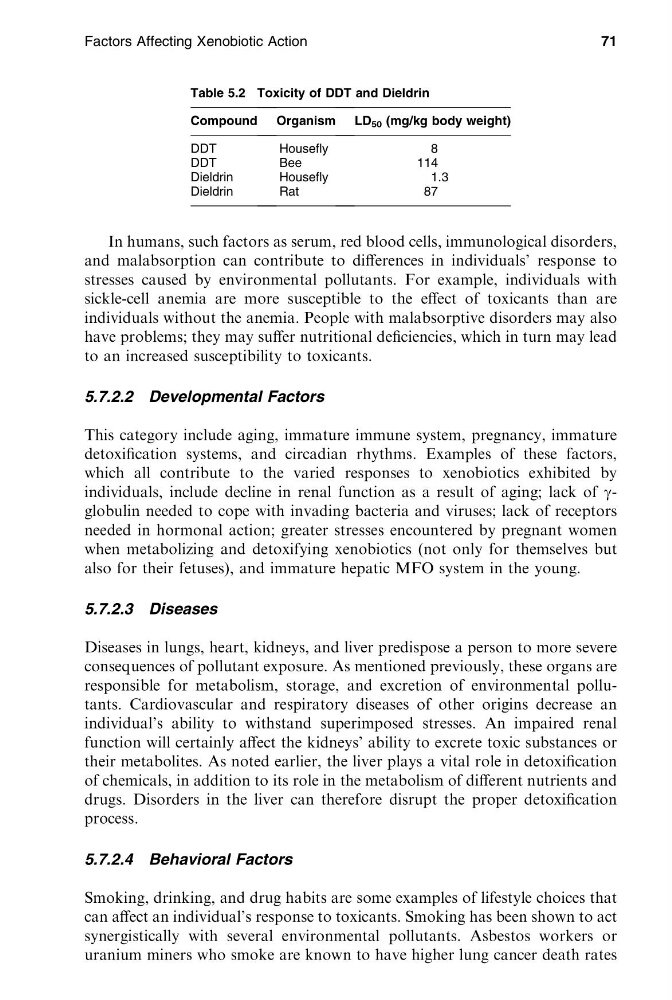
Table 5.2 Toxicity of DDT and Dieldrin
Compound Organism LD 50 (mg/kg body weight)
DDT
Housefly
8
DDT
Bee
114
Dieldrin
Housefly
1.3
Dieldrin
Rat
87
and malabsorption can contribute to differences in individuals’ response to
stresses caused by environmental pollutants. For example, individuals with
sickle-cell anemia are more susceptible to the effect of toxicants than are
individuals without the anemia. People with malabsorptive disorders may also
have problems; they may suffer nutritional deficiencies, which in turn may lead
to an increased susceptibility to toxicants.
5.7.2.2 Developmental Factors
This category include aging, immature immune system, pregnancy, immature
detoxification systems, and circadian rhythms. Examples of these factors,
which all contribute to the varied responses to xenobiotics exhibited by
individuals, include decline in renal function as a result of aging; lack of gglobulin needed to cope with invading bacteria and viruses; lack of receptors
needed in hormonal action; greater stresses encountered by pregnant women
when metabolizing and detoxifying xenobiotics (not only for themselves but
also for their fetuses), and immature hepatic MFO system in the young.
5.7.2.3 Diseases
Diseases in lungs, heart, kidneys, and liver predispose a person to more severe
consequences of pollutant exposure. As mentioned previously, these organs are
responsible for metabolism, storage, and excretion of environmental pollutants. Cardiovascular and respiratory diseases of other origins decrease an
individual’s ability to withstand superimposed stresses. An impaired renal
function will certainly affect the kidneys’ ability to excrete toxic substances or
their metabolites. As noted earlier, the liver plays a vital role in detoxification
of chemicals, in addition to its role in the metabolism of different nutrients and
drugs. Disorders in the liver can therefore disrupt the proper detoxification
process.
5.7.2.4 Behavioral Factors
Smoking, drinking, and drug habits are some examples of lifestyle choices that
can affect an individual’s response to toxicants. Smoking has been shown to act
synergistically with several environmental pollutants. Asbestos workers or
uranium miners who smoke are known to have higher lung cancer death rates
Factors Affecting Xenobiotic Action
71
[16:54 26/8/04 P:/CRC PRESS/4365 MING-HO.751 (1670)/4365-005.3d]
Ref: 4365 MING-HO YU Chap-005 Page: 71 65-84
Table 5.2 Toxicity of DDT and Dieldrin
Compound Organism LD 50 (mg/kg body weight)
DDT
Housefly
8
DDT
Bee
114
Dieldrin
Housefly
1.3
Dieldrin
Rat
87