

4.3.4 STORAGE
A toxicant may be stored in the liver, lungs, kidneys, bone, or adipose tissue.
These storage depots may or may not be the sites of toxic action. A toxicant
may be stored in a depot temporarily and then released and translocated again.
Similarly, a toxicant or its metabolite may be transported to a storage site and
remain there for a long period of time, even permanently. Excretion of the
toxicant following temporary storage may also occur.
4.3.5 METABOLISM
The metabolism of toxicants may occur at the portals of entry, or in such
organs as the skin, lungs, liver, kidney, and gastrointestinal tract. The liver
plays a central role in the metabolism of environmental toxicants (xenobiotics).
The metabolism of xenobiotics is often referred to as biotransformation. The
liver contains a rich supply of nonspecific enzymes, enabling it to metabolize a
broad spectrum of organic compounds.
Biotransformation reactions are classified into two phases, Phase I and
Phase II. Phase I reactions are further divided into three main categories,
oxidation, reduction, and hydrolysis. These reactions are characterized by the
introduction of a reactive polar group into the xenobiotic, forming a primary
metabolite. In contrast, Phase II reactions involve conjugation reactions in
which the primary metabolite combines with an endogenous substance, such as
certain amino acids or glutathione (GSH), to form a complex secondary
metabolite. The resultant secondary metabolite is more water-soluble, and
therefore more readily excreted, than the original toxicant.
While many xenobiotics are detoxified as a result of these reactions, others
may be converted to more active and more toxic compounds.
Biotransformation will be discussed in more detail in Chapter 5.
4.3.6 EXCRETION
The final step in the pathway of a toxicant is its excretion from the body.
Excretion may occur through the lungs, kidneys, or gastrointestinal tract. A
toxicant may be excreted in its original form or as its metabolites, depending
Toxic Action of Pollutants
51
[16:54 26/8/04 P:/CRC PRESS/4365 MING-HO.751 (1670)/4365-004.3d]
Ref: 4365 MING-HO YU Chap-004 Page: 51 45-64
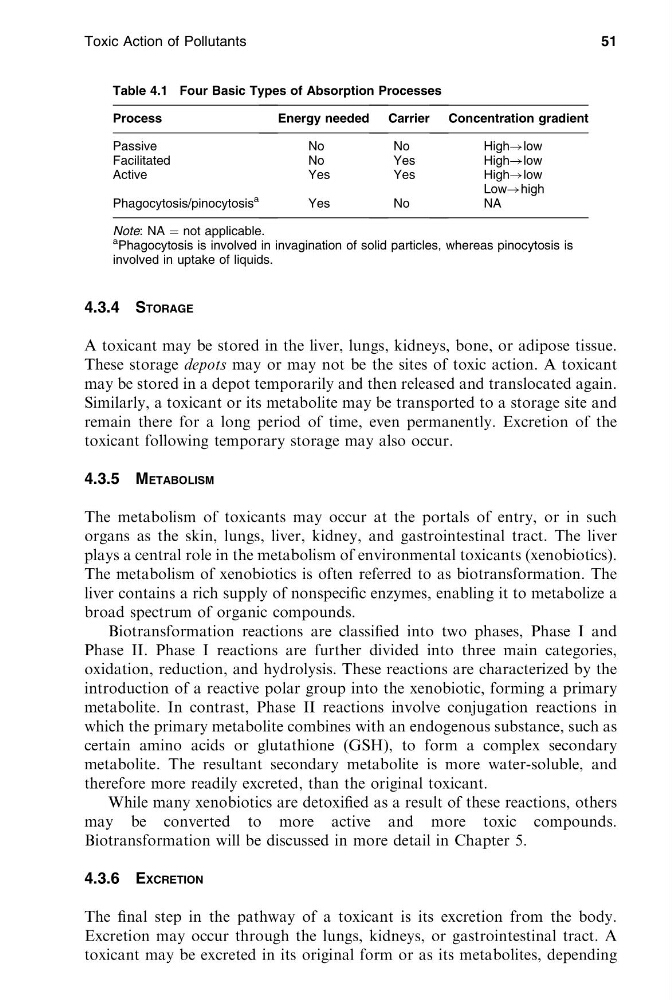
Table 4.1 Four Basic Types of Absorption Processes
Process
Energy needed Carrier Concentration gradient
Passive
No
No
High!low
Facilitated
No
Yes
High!low
Active
Yes
Yes
High!low
Low!high
Phagocytosis/pinocytosis
a
Yes
No
NA
Note: NA ¼ not applicable.
a Phagocytosis is involved in invagination of solid particles, whereas pinocytosis is
involved in uptake of liquids.
A toxicant may be stored in the liver, lungs, kidneys, bone, or adipose tissue.
These storage depots may or may not be the sites of toxic action. A toxicant
may be stored in a depot temporarily and then released and translocated again.
Similarly, a toxicant or its metabolite may be transported to a storage site and
remain there for a long period of time, even permanently. Excretion of the
toxicant following temporary storage may also occur.
4.3.5 METABOLISM
The metabolism of toxicants may occur at the portals of entry, or in such
organs as the skin, lungs, liver, kidney, and gastrointestinal tract. The liver
plays a central role in the metabolism of environmental toxicants (xenobiotics).
The metabolism of xenobiotics is often referred to as biotransformation. The
liver contains a rich supply of nonspecific enzymes, enabling it to metabolize a
broad spectrum of organic compounds.
Biotransformation reactions are classified into two phases, Phase I and
Phase II. Phase I reactions are further divided into three main categories,
oxidation, reduction, and hydrolysis. These reactions are characterized by the
introduction of a reactive polar group into the xenobiotic, forming a primary
metabolite. In contrast, Phase II reactions involve conjugation reactions in
which the primary metabolite combines with an endogenous substance, such as
certain amino acids or glutathione (GSH), to form a complex secondary
metabolite. The resultant secondary metabolite is more water-soluble, and
therefore more readily excreted, than the original toxicant.
While many xenobiotics are detoxified as a result of these reactions, others
may be converted to more active and more toxic compounds.
Biotransformation will be discussed in more detail in Chapter 5.
4.3.6 EXCRETION
The final step in the pathway of a toxicant is its excretion from the body.
Excretion may occur through the lungs, kidneys, or gastrointestinal tract. A
toxicant may be excreted in its original form or as its metabolites, depending
Toxic Action of Pollutants
51
[16:54 26/8/04 P:/CRC PRESS/4365 MING-HO.751 (1670)/4365-004.3d]
Ref: 4365 MING-HO YU Chap-004 Page: 51 45-64
Table 4.1 Four Basic Types of Absorption Processes
Process
Energy needed Carrier Concentration gradient
Passive
No
No
High!low
Facilitated
No
Yes
High!low
Active
Yes
Yes
High!low
Low!high
Phagocytosis/pinocytosis
a
Yes
No
NA
Note: NA ¼ not applicable.
a Phagocytosis is involved in invagination of solid particles, whereas pinocytosis is
involved in uptake of liquids.