

To examine the effect of any airborne pollutants on vegetation, it is crucial
to understand the uptake of the pollutants by the plant. While the atmospheric
concentration of a pollutant is an essential factor, the actual amount that
enters the plant is more important. The conductance through the stomata,
which regulate the passage of ambient air into the cells, is especially critical.
The extent of uptake depends on the chemical and physical properties of the
pollutant along the gas-to-liquid diffusion pathway. The flow of a pollutant
may be restricted by the leaf’s physical structure (Figure 4.2) or by scavenging
chemical reactions occurring within the leaf. Leaf orientation and morphology,
including epidermal characteristics, and air movement across the leaf are
important determinants affecting the initial flux of gases to the leaf surface.
Stomatal resistance is a very important factor affecting pollutant uptake.
The resistance is determined by stomatal size and number, the size of the
stomatal aperture, and other anatomical characteristics.
1 Stomatal opening is
extremely important: little or no uptake may occur when the stomata are
closed. It is regulated by light, humidity, temperature, internal carbon dioxide
(CO 2 ) content, water and nutrient availability to the plant, and potassium (K
þ )
ions transported into the guard cells.
2
Exposure of roots to toxicants in contaminated soils is another important
process whereby toxicant uptake by plants occurs. For example, vegetation
growing in soils of contaminated sites, such as waste sites and areas that have
46
Environmental Toxicology
[16:54 26/8/04 P:/CRC PRESS/4365 MING-HO.751 (1670)/4365-004.3d]
Ref: 4365 MING-HO YU Chap-004 Page: 46 45-64
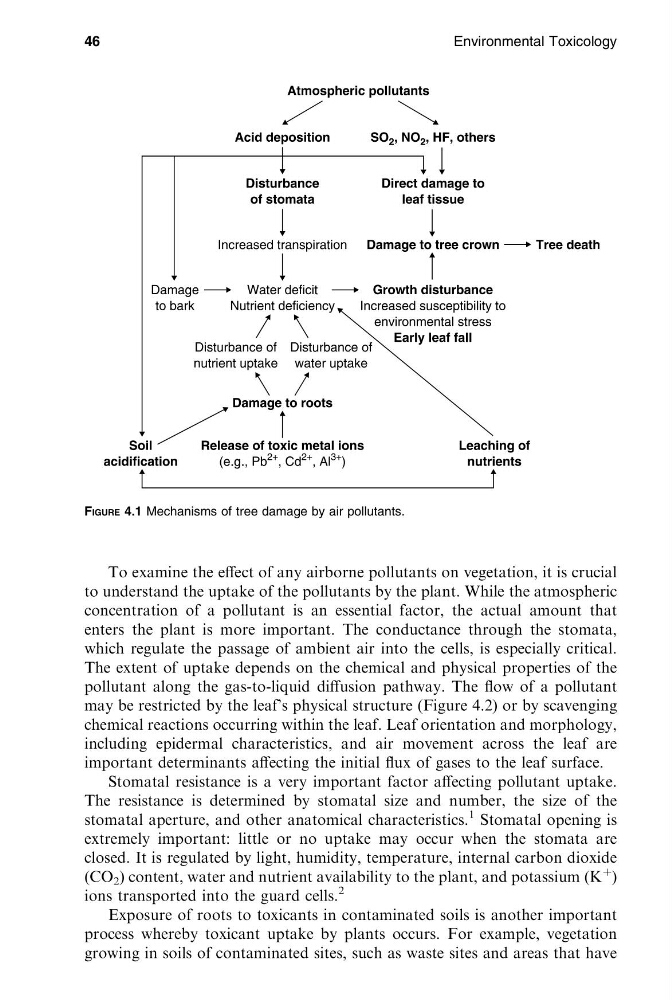
FIGURE 4.1 Mechanisms of tree damage by air pollutants.
to understand the uptake of the pollutants by the plant. While the atmospheric
concentration of a pollutant is an essential factor, the actual amount that
enters the plant is more important. The conductance through the stomata,
which regulate the passage of ambient air into the cells, is especially critical.
The extent of uptake depends on the chemical and physical properties of the
pollutant along the gas-to-liquid diffusion pathway. The flow of a pollutant
may be restricted by the leaf’s physical structure (Figure 4.2) or by scavenging
chemical reactions occurring within the leaf. Leaf orientation and morphology,
including epidermal characteristics, and air movement across the leaf are
important determinants affecting the initial flux of gases to the leaf surface.
Stomatal resistance is a very important factor affecting pollutant uptake.
The resistance is determined by stomatal size and number, the size of the
stomatal aperture, and other anatomical characteristics.
1 Stomatal opening is
extremely important: little or no uptake may occur when the stomata are
closed. It is regulated by light, humidity, temperature, internal carbon dioxide
(CO 2 ) content, water and nutrient availability to the plant, and potassium (K
þ )
ions transported into the guard cells.
2
Exposure of roots to toxicants in contaminated soils is another important
process whereby toxicant uptake by plants occurs. For example, vegetation
growing in soils of contaminated sites, such as waste sites and areas that have
46
Environmental Toxicology
[16:54 26/8/04 P:/CRC PRESS/4365 MING-HO.751 (1670)/4365-004.3d]
Ref: 4365 MING-HO YU Chap-004 Page: 46 45-64
FIGURE 4.1 Mechanisms of tree damage by air pollutants.