

7.2.1.1 Nasopharynx
Air that is drawn in through the nose and the upper throat is warmed and
moistened as it moves to the lungs. Particulate matter is likewise moistened as
it enters the nose. Large particles are filtered and removed by the hairs at the
entrance of the nose, while smaller particulates, such as dust, carbon, and
pollen spores, are washed out with the aid of mucus.
7.2.1.2 Tracheobronchial Areas
The response of the tracheobronchial area to large particulates is contraction
of the muscles, causing the lumena of bronchi to be narrowed. This results in
removal of solid particulate matter with a diameter above 5 mm, and permits
less of the particulate matter to enter the lower portion of bronchial tubes. The
mucus that is secreted moistens the particulates as they accumulate, which are
then removed through the cough reflex. Spasm – involuntary muscular
contraction – of the bronchi may be induced, which tends to prevent invading
100
Environmental Toxicology
[16:53 26/8/04 P:/CRC PRESS/4365 MING-HO.751 (1670)/4365-007.3d]
Ref: 4365 MING-HO YU Chap-007 Page: 100 99-110
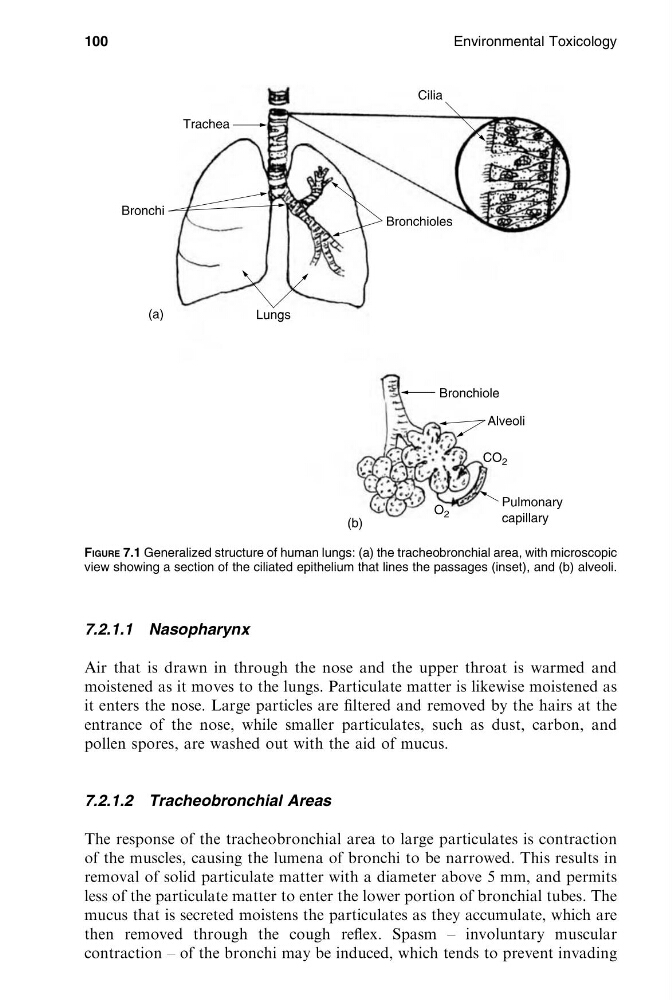
FIGURE 7.1 Generalized structure of human lungs: (a) the tracheobronchial area, with microscopic
view showing a section of the ciliated epithelium that lines the passages (inset), and (b) alveoli.
Air that is drawn in through the nose and the upper throat is warmed and
moistened as it moves to the lungs. Particulate matter is likewise moistened as
it enters the nose. Large particles are filtered and removed by the hairs at the
entrance of the nose, while smaller particulates, such as dust, carbon, and
pollen spores, are washed out with the aid of mucus.
7.2.1.2 Tracheobronchial Areas
The response of the tracheobronchial area to large particulates is contraction
of the muscles, causing the lumena of bronchi to be narrowed. This results in
removal of solid particulate matter with a diameter above 5 mm, and permits
less of the particulate matter to enter the lower portion of bronchial tubes. The
mucus that is secreted moistens the particulates as they accumulate, which are
then removed through the cough reflex. Spasm – involuntary muscular
contraction – of the bronchi may be induced, which tends to prevent invading
100
Environmental Toxicology
[16:53 26/8/04 P:/CRC PRESS/4365 MING-HO.751 (1670)/4365-007.3d]
Ref: 4365 MING-HO YU Chap-007 Page: 100 99-110
FIGURE 7.1 Generalized structure of human lungs: (a) the tracheobronchial area, with microscopic
view showing a section of the ciliated epithelium that lines the passages (inset), and (b) alveoli.