

the dielectric constant of the insulating material. Table 25-1 shows some dielectric materials and their dielectric constants. The dielectric constant of a vacuum
is unity by definition. Because air is mostly empty space, its measured dielectric
constant is only slightly greater than unity. Even common paper can significantly increase the capacitance of a capacitor, and some materials, such as
strontium titanate, can increase the capacitance by more than two orders of
magnitude.
Another effect of the introduction of a dielectric is to limit the potential
difference that can be applied between the plates to a certain value V max , called
the breakdown potential. If this value is substantially exceeded, the dielectric
material will break down and form a conducting path between the plates. Every
dielectric material has a characteristic dielectric strength, which is the maximum
value of the electric field that it can tolerate without breakdown. A few such
values are listed in Table 25-1.
As we discussed just after Eq. 25-18, the capacitance of any capacitor can be
written in the form
C ϭ ´ 0 ᏸ,
( 2 5 - 2 6 )
in which ᏸ has the dimension of length. For example, ᏸ ϭ A/d for a parallel-plate
capacitor. Faraday’s discovery was that, with a dielectric completely filling the
space between the plates, Eq. 25-26 becomes
C ϭ k´ 0 ᏸ ϭ kC air ,
( 2 5 - 2 7 )
where C air is the value of the capacitance with only air between the plates. For example, if we fill a capacitor with strontium titanate, with a dielectric constant of
310, we multiply the capacitance by 310.
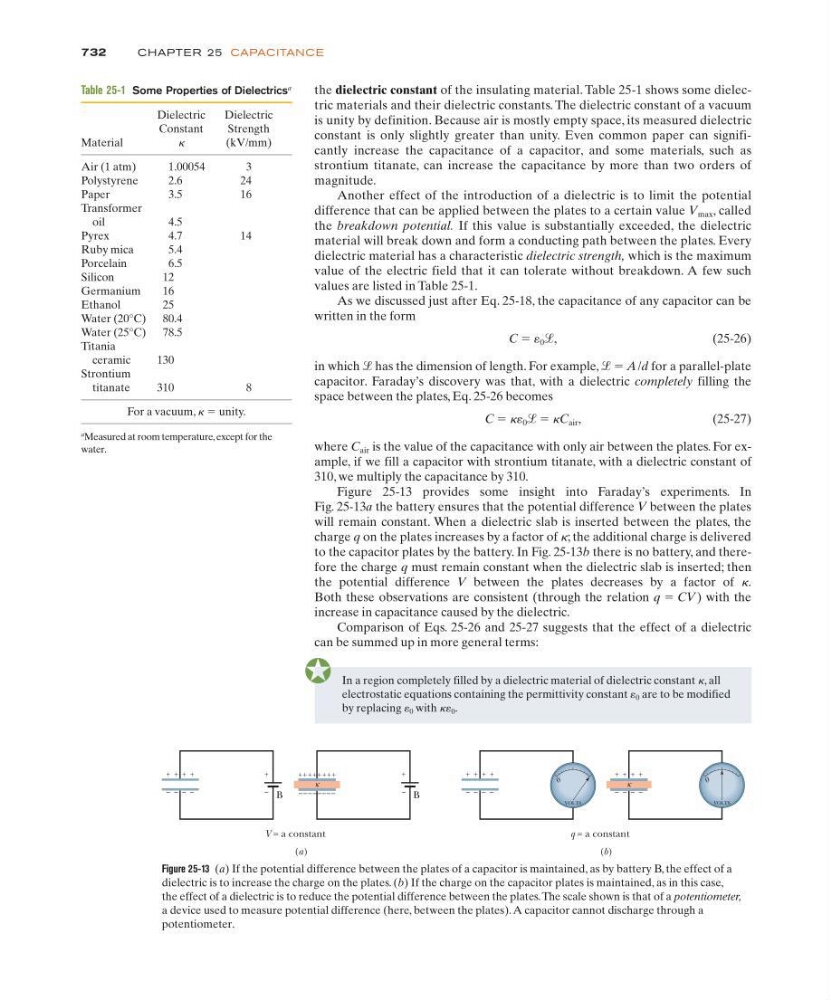
Figure 25-13 provides some insight into Faraday’s experiments. In
Fig. 25-13a the battery ensures that the potential difference V between the plates
will remain constant. When a dielectric slab is inserted between the plates, the
charge q on the plates increases by a factor of k; the additional charge is delivered
to the capacitor plates by the battery. In Fig. 25-13b there is no battery, and therefore the charge q must remain constant when the dielectric slab is inserted; then
the potential difference V between the plates decreases by a factor of k.
Both these observations are consistent (through the relation q ϭ CV) with the
increase in capacitance caused by the dielectric.
Comparison of Eqs. 25-26 and 25-27 suggests that the effect of a dielectric
can be summed up in more general terms:
732
CHAPTE R 25 CAPACITANCE
Table 25-1 Some Properties of Dielectrics
a
Dielectric
Dielectric
Constant
Strength
Material
k
(kV/mm)
Air (1 atm)
1.00054
3
Polystyrene
2.6
24
Paper
3.5
16
Transformer
oil
4.5
Pyrex
4.7
14
Ruby mica
5.4
Porcelain
6.5
Silicon
12
Germanium
16
Ethanol
25
Water (20°C) 80.4
Water (25°C) 78.5
Titania
ceramic
130
Strontium
titanate
310
8
For a vacuum, k ϭ unity.
a
Measured at room temperature, except for the
water.
Figure 25-13 (a) If the potential difference between the plates of a capacitor is maintained, as by battery B, the effect of a
dielectric is to increase the charge on the plates. (b) If the charge on the capacitor plates is maintained, as in this case,
the effect of a dielectric is to reduce the potential difference between the plates.The scale shown is that of a potentiometer,
a device used to measure potential difference (here, between the plates).A capacitor cannot discharge through a
potentiometer.
(a)
B
B
++++++++
κ
V = a constant
(b)
q = a constant
+ +
+ +
–
–
–
–
––––––––
+ +
+ +
–
–
–
–
+
–
+ +
+ +
–
–
–
–
+
–
κ
0
VOLTS
0
VOLTS
In a region completely filled by a dielectric material of dielectric constant k, all
electrostatic equations containing the permittivity constant 0 are to be modified
by replacing ´ 0 with k´ 0 .