

570
CHAPTE R 19 TH E KI N ETIC TH EORY OF GASES
(Answer)
In words, about 71% of the energy transferred to the gas
goes into the internal energy. The rest goes into the work required to increase the volume of the gas, as the gas pushes
the walls of its container outward.
Increases in K: If we were to increase the temperature of a
monatomic gas (with the same value of n) by the amount
given in Eq. 19-52, the internal energy would change by a
smaller amount, call it ⌬E int, mon , because rotational motion
is not involved. To calculate that smaller amount, we still use
Eq. 19-45 but now we substitute the value of C V for a
monatomic gas — namely,
So,
Substituting for ⌬T from Eq. 19-52 leads us to
For the monatomic gas, all this energy would go into the kinetic energy of the translational motion of the atoms. The important point here is that for a diatomic gas with the same
values of n and ⌬T, the same amount of energy goes into the
kinetic energy of the translational motion of the molecules.
The rest of ⌬E int, dia (that is, the additional 285.7 J) goes into the
rotational motion of the molecules. Thus, for the diatomic gas,
⌬K trans ϭ 428.6 J and ⌬K rot ϭ 285.7 J. (Answer)
ϭ 0.42857Q ϭ 428.6 J.
⌬E int,mon ϭ n
3
2 R
Q
n
7
2 R ϭ
3
7 Q
⌬E int,mon ϭ n
3
2 R ⌬T.
C V ϭ
3
2 R.
ϭ 0.71428Q ϭ 714.3 J.
⌬E int,dia ϭ nC V ⌬T ϭ n
5
2 R
Q
7
2 nR ϭ
5
7 Q
energy? Of that amount, how much goes into ⌬K tran (the kinetic energy of the translational motion of the molecules) and
⌬K rot (the kinetic energy of their rotational motion)?
KEY IDEAS
1. The transfer of energy as heat Q to a gas under constant
pressure is related to the resulting temperature increase
⌬T via Eq. 19-46 (Q ϭ nC p ⌬T ).
2. Because the gas is diatomic with molecules undergoing
rotation but not oscillation, the molar specific heat is,
from Fig. 19-12 and Table 19-3,
.
3. The increase ⌬E int in the internal energy is the same as
would occur with a constant-volume process resulting in
the same ⌬T. Thus, from Eq. 19-45, ⌬E int ϭ nC V ⌬T. From
Fig. 19-12 and Table 19-3, we see that
.
4. For the same n and ⌬T, ⌬E int is greater for a diatomic gas
than for a monatomic gas because additional energy is
required for rotation.
Increase in E int : Let’s first get the temperature change ⌬T due
to the transfer of energy as heat. From Eq. 19-46, substituting
for C p , we have
(19-52)
We next find E int from Eq. 19-45, substituting the molar
specific heat
for a constant-volume process and
using the same
. Because we are dealing with a diatomic gas, let’s call this change
. Equation 19-45
gives us
⌬E int,dia
⌬T
C V (ϭ
5
2 R)
⌬
⌬T ϭ
Q
7
2 nR
.
7
2 R
C V ϭ
5
2 R
C p ϭ
7
2 R
Additional examples, video, and practice available at WileyPLUS
A Hint of Quantum Theory
We can improve the agreement of kinetic theory with experiment by
including the oscillations of the atoms in a gas of diatomic or polyatomic molecules. For example, the two atoms in the O 2 molecule of
Fig. 19-13b can oscillate toward and away from each other, with the
interconnecting bond acting like a spring. However, experiment
shows that such oscillations occur only at relatively high temperatures of the gas — the motion is “turned on” only when the gas molecules have relatively large energies. Rotational motion is also subject to such “turning on,” but at a lower temperature.
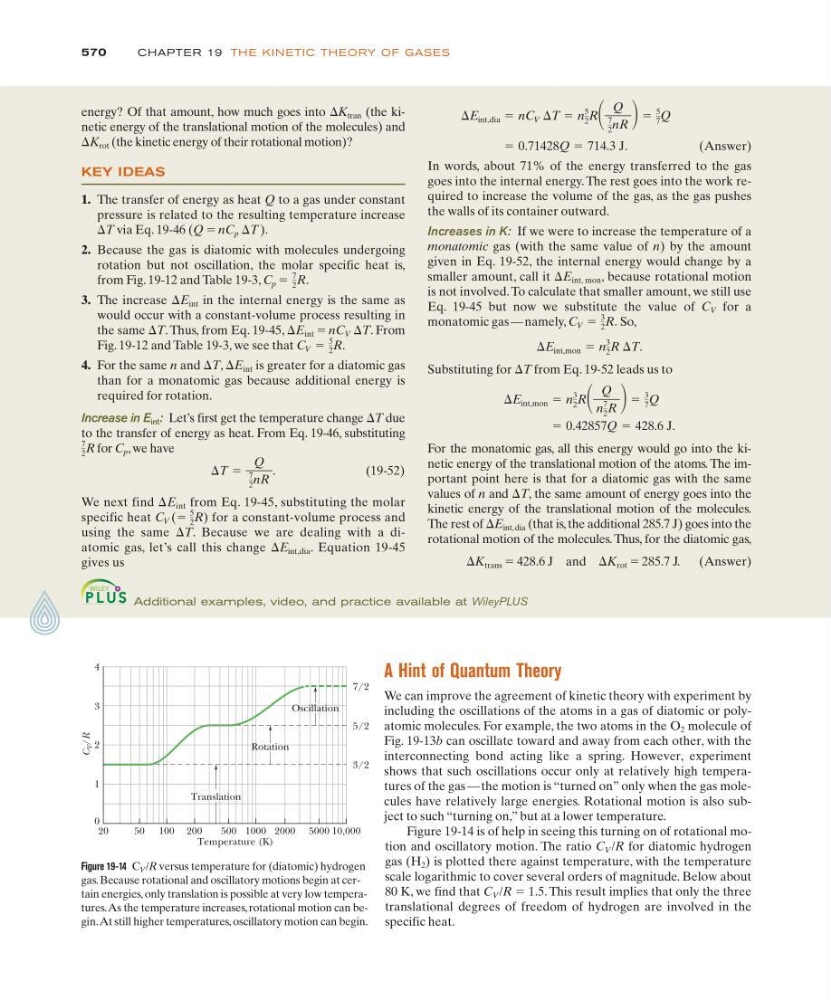
Figure 19-14 is of help in seeing this turning on of rotational motion and oscillatory motion. The ratio C V /R for diatomic hydrogen
gas (H 2 ) is plotted there against temperature, with the temperature
scale logarithmic to cover several orders of magnitude. Below about
80 K, we find that C V /R ϭ 1.5. This result implies that only the three
translational degrees of freedom of hydrogen are involved in the
specific heat.
20
50 100 200
500 1000 2000 5000 10,000
Temperature (K)
0
1
2
3
4
C
V /R
7/2
5/2
3/2
Translation
Rotation
Oscillation
Figure 19-14 C V /R versus temperature for (diatomic) hydrogen
gas. Because rotational and oscillatory motions begin at certain energies, only translation is possible at very low temperatures.As the temperature increases, rotational motion can begin.At still higher temperatures, oscillatory motion can begin.
CHAPTE R 19 TH E KI N ETIC TH EORY OF GASES
(Answer)
In words, about 71% of the energy transferred to the gas
goes into the internal energy. The rest goes into the work required to increase the volume of the gas, as the gas pushes
the walls of its container outward.
Increases in K: If we were to increase the temperature of a
monatomic gas (with the same value of n) by the amount
given in Eq. 19-52, the internal energy would change by a
smaller amount, call it ⌬E int, mon , because rotational motion
is not involved. To calculate that smaller amount, we still use
Eq. 19-45 but now we substitute the value of C V for a
monatomic gas — namely,
So,
Substituting for ⌬T from Eq. 19-52 leads us to
For the monatomic gas, all this energy would go into the kinetic energy of the translational motion of the atoms. The important point here is that for a diatomic gas with the same
values of n and ⌬T, the same amount of energy goes into the
kinetic energy of the translational motion of the molecules.
The rest of ⌬E int, dia (that is, the additional 285.7 J) goes into the
rotational motion of the molecules. Thus, for the diatomic gas,
⌬K trans ϭ 428.6 J and ⌬K rot ϭ 285.7 J. (Answer)
ϭ 0.42857Q ϭ 428.6 J.
⌬E int,mon ϭ n
3
2 R
Q
n
7
2 R ϭ
3
7 Q
⌬E int,mon ϭ n
3
2 R ⌬T.
C V ϭ
3
2 R.
ϭ 0.71428Q ϭ 714.3 J.
⌬E int,dia ϭ nC V ⌬T ϭ n
5
2 R
Q
7
2 nR ϭ
5
7 Q
energy? Of that amount, how much goes into ⌬K tran (the kinetic energy of the translational motion of the molecules) and
⌬K rot (the kinetic energy of their rotational motion)?
KEY IDEAS
1. The transfer of energy as heat Q to a gas under constant
pressure is related to the resulting temperature increase
⌬T via Eq. 19-46 (Q ϭ nC p ⌬T ).
2. Because the gas is diatomic with molecules undergoing
rotation but not oscillation, the molar specific heat is,
from Fig. 19-12 and Table 19-3,
.
3. The increase ⌬E int in the internal energy is the same as
would occur with a constant-volume process resulting in
the same ⌬T. Thus, from Eq. 19-45, ⌬E int ϭ nC V ⌬T. From
Fig. 19-12 and Table 19-3, we see that
.
4. For the same n and ⌬T, ⌬E int is greater for a diatomic gas
than for a monatomic gas because additional energy is
required for rotation.
Increase in E int : Let’s first get the temperature change ⌬T due
to the transfer of energy as heat. From Eq. 19-46, substituting
for C p , we have
(19-52)
We next find E int from Eq. 19-45, substituting the molar
specific heat
for a constant-volume process and
using the same
. Because we are dealing with a diatomic gas, let’s call this change
. Equation 19-45
gives us
⌬E int,dia
⌬T
C V (ϭ
5
2 R)
⌬
⌬T ϭ
Q
7
2 nR
.
7
2 R
C V ϭ
5
2 R
C p ϭ
7
2 R
Additional examples, video, and practice available at WileyPLUS
A Hint of Quantum Theory
We can improve the agreement of kinetic theory with experiment by
including the oscillations of the atoms in a gas of diatomic or polyatomic molecules. For example, the two atoms in the O 2 molecule of
Fig. 19-13b can oscillate toward and away from each other, with the
interconnecting bond acting like a spring. However, experiment
shows that such oscillations occur only at relatively high temperatures of the gas — the motion is “turned on” only when the gas molecules have relatively large energies. Rotational motion is also subject to such “turning on,” but at a lower temperature.
Figure 19-14 is of help in seeing this turning on of rotational motion and oscillatory motion. The ratio C V /R for diatomic hydrogen
gas (H 2 ) is plotted there against temperature, with the temperature
scale logarithmic to cover several orders of magnitude. Below about
80 K, we find that C V /R ϭ 1.5. This result implies that only the three
translational degrees of freedom of hydrogen are involved in the
specific heat.
20
50 100 200
500 1000 2000 5000 10,000
Temperature (K)
0
1
2
3
4
C
V /R
7/2
5/2
3/2
Translation
Rotation
Oscillation
Figure 19-14 C V /R versus temperature for (diatomic) hydrogen
gas. Because rotational and oscillatory motions begin at certain energies, only translation is possible at very low temperatures.As the temperature increases, rotational motion can begin.At still higher temperatures, oscillatory motion can begin.