

274
CHAPTE R 10 ROTATION
Table 10-2 Some Rotational Inertias
Axis
Hoop about
central axis
Axis
Annular cylinder
(or ring) about
central axis
R
I = M R 2
(b )
(a )
I = M ( R 1
2 + R 2
2 )
R 2
R 1
Thin rod about
axis through center
perpendicular to
length
(e )
I = M L
2
L
Axis
Axis
Axis
Hoop about any
diameter
Slab about
perpendicular
axis through
center
(i )
(h )
I = M R
2
I = M ( a
2 + b
2 )
R
b
a
Axis
Solid cylinder
(or disk) about
central axis
(c )
I = M R 2
R
L
Axis
Solid cylinder
(or disk) about
central diameter
( d )
I = M R
2 + M L
2
R
L
Axis
Thin
spherical shell
about any
diameter
(g )
I = M R 2
2 R
Solid sphere
about any
diameter
(f )
I = M R 2
2 R
Axis
1
__
2
1
__
2
2
__
5
1
__
4
2
__
3
1
__
2
1
__
12
1
__
12
1
__
12
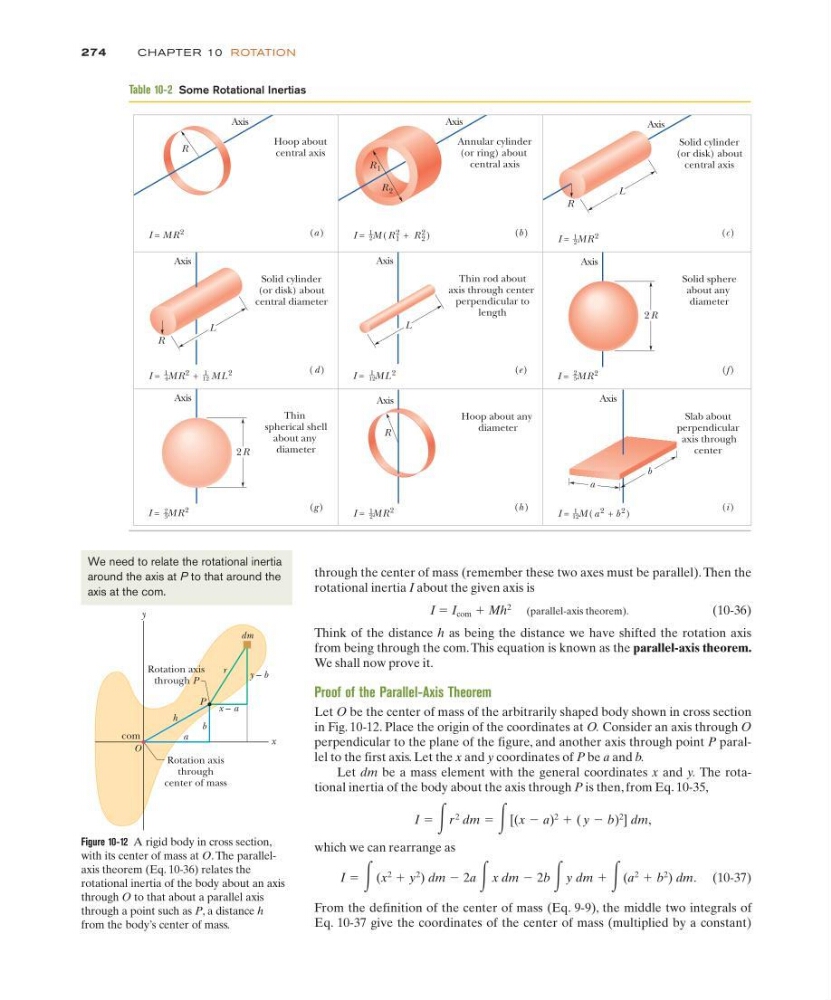
Figure 10-12 A rigid body in cross section,
with its center of mass at O. The parallelaxis theorem (Eq. 10-36) relates the
rotational inertia of the body about an axis
through O to that about a parallel axis
through a point such as P, a distance h
from the body’s center of mass.
dm
r
P
h
a
b
x – a
y – b
com
O
Rotation axis
through
center of mass
Rotation axis
through P
y
x
We need to relate the rotational inertia
around the axis at P to that around the
axis at the com.
through the center of mass (remember these two axes must be parallel). Then the
rotational inertia I about the given axis is
I ϭ I com ϩ Mh
2
(parallel-axis theorem).
(10-36)
Think of the distance h as being the distance we have shifted the rotation axis
from being through the com. This equation is known as the parallel-axis theorem.
We shall now prove it.
Proof of the Parallel-Axis Theorem
Let O be the center of mass of the arbitrarily shaped body shown in cross section
in Fig. 10-12. Place the origin of the coordinates at O. Consider an axis through O
perpendicular to the plane of the figure, and another axis through point P parallel to the first axis. Let the x and y coordinates of P be a and b.
Let dm be a mass element with the general coordinates x and y. The rotational inertia of the body about the axis through P is then, from Eq. 10-35,
which we can rearrange as
(10-37)
From the definition of the center of mass (Eq. 9-9), the middle two integrals of
Eq. 10-37 give the coordinates of the center of mass (multiplied by a constant)
I ϭ ͵ (x
2 ϩ y
2
) dm Ϫ 2a ͵xdm Ϫ 2b ͵ydm ϩ ͵(a
2 ϩ b
2
) dm.
I ϭ ͵r
2
dm ϭ ͵[(x Ϫ a)
2 ϩ ( y Ϫ b)
2
] dm,
CHAPTE R 10 ROTATION
Table 10-2 Some Rotational Inertias
Axis
Hoop about
central axis
Axis
Annular cylinder
(or ring) about
central axis
R
I = M R 2
(b )
(a )
I = M ( R 1
2 + R 2
2 )
R 2
R 1
Thin rod about
axis through center
perpendicular to
length
(e )
I = M L
2
L
Axis
Axis
Axis
Hoop about any
diameter
Slab about
perpendicular
axis through
center
(i )
(h )
I = M R
2
I = M ( a
2 + b
2 )
R
b
a
Axis
Solid cylinder
(or disk) about
central axis
(c )
I = M R 2
R
L
Axis
Solid cylinder
(or disk) about
central diameter
( d )
I = M R
2 + M L
2
R
L
Axis
Thin
spherical shell
about any
diameter
(g )
I = M R 2
2 R
Solid sphere
about any
diameter
(f )
I = M R 2
2 R
Axis
1
__
2
1
__
2
2
__
5
1
__
4
2
__
3
1
__
2
1
__
12
1
__
12
1
__
12
Figure 10-12 A rigid body in cross section,
with its center of mass at O. The parallelaxis theorem (Eq. 10-36) relates the
rotational inertia of the body about an axis
through O to that about a parallel axis
through a point such as P, a distance h
from the body’s center of mass.
dm
r
P
h
a
b
x – a
y – b
com
O
Rotation axis
through
center of mass
Rotation axis
through P
y
x
We need to relate the rotational inertia
around the axis at P to that around the
axis at the com.
through the center of mass (remember these two axes must be parallel). Then the
rotational inertia I about the given axis is
I ϭ I com ϩ Mh
2
(parallel-axis theorem).
(10-36)
Think of the distance h as being the distance we have shifted the rotation axis
from being through the com. This equation is known as the parallel-axis theorem.
We shall now prove it.
Proof of the Parallel-Axis Theorem
Let O be the center of mass of the arbitrarily shaped body shown in cross section
in Fig. 10-12. Place the origin of the coordinates at O. Consider an axis through O
perpendicular to the plane of the figure, and another axis through point P parallel to the first axis. Let the x and y coordinates of P be a and b.
Let dm be a mass element with the general coordinates x and y. The rotational inertia of the body about the axis through P is then, from Eq. 10-35,
which we can rearrange as
(10-37)
From the definition of the center of mass (Eq. 9-9), the middle two integrals of
Eq. 10-37 give the coordinates of the center of mass (multiplied by a constant)
I ϭ ͵ (x
2 ϩ y
2
) dm Ϫ 2a ͵xdm Ϫ 2b ͵ydm ϩ ͵(a
2 ϩ b
2
) dm.
I ϭ ͵r
2
dm ϭ ͵[(x Ϫ a)
2 ϩ ( y Ϫ b)
2
] dm,