

Copyright © National Academy of Sciences. All rights reserved.
Solar and Space Physics: A Science for a Technological Society
APPENDIX D
361
munities within the United States, the total job advertisements reached their lowest levels in the decade
(14), approximately half the decadal average number of job advertisements.
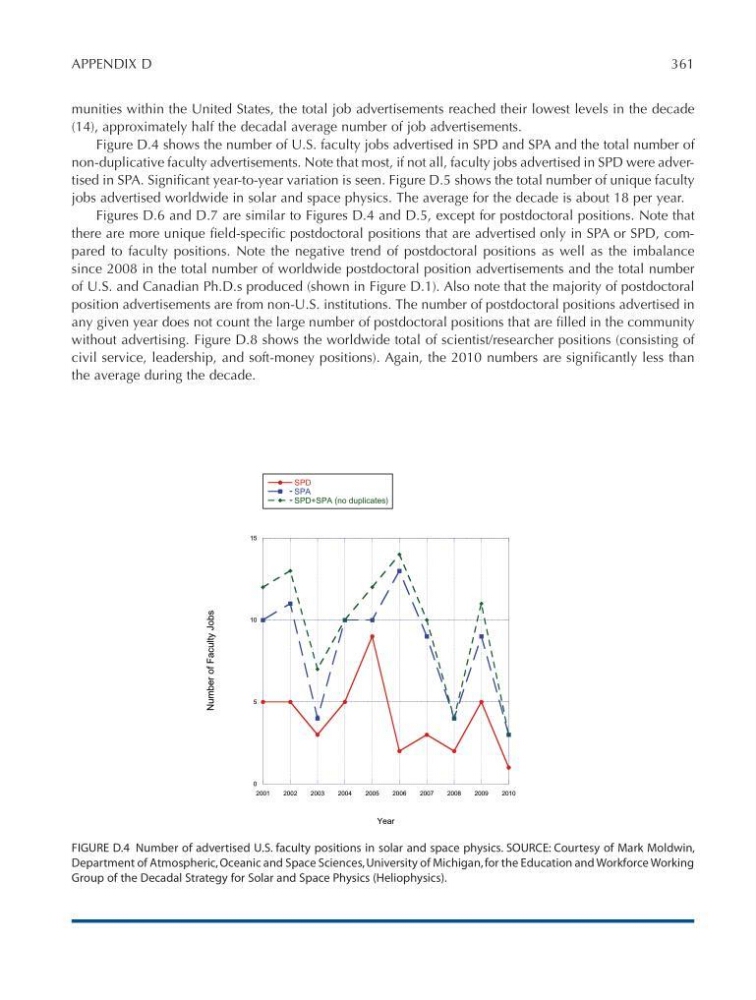
Figure D.4 shows the number of U.S. faculty jobs advertised in SPD and SPA and the total number of
non-duplicative faculty advertisements. Note that most, if not all, faculty jobs advertised in SPD were advertised in SPA. Significant year-to-year variation is seen. Figure D.5 shows the total number of unique faculty
jobs advertised worldwide in solar and space physics. The average for the decade is about 18 per year.
Figures D.6 and D.7 are similar to Figures D.4 and D.5, except for postdoctoral positions. Note that
there are more unique field-specific postdoctoral positions that are advertised only in SPA or SPD, compared to faculty positions. Note the negative trend of postdoctoral positions as well as the imbalance
since 2008 in the total number of worldwide postdoctoral position advertisements and the total number
of U.S. and Canadian Ph.D.s produced (shown in Figure D.1). Also note that the majority of postdoctoral
position advertisements are from non-U.S. institutions. The number of postdoctoral positions advertised in
any given year does not count the large number of postdoctoral positions that are filled in the community
without advertising. Figure D.8 shows the worldwide total of scientist/researcher positions (consisting of
civil service, leadership, and soft-money positions). Again, the 2010 numbers are significantly less than
the average during the decade.
0
5
10
15
2001
2002
2003
2004
2005
2006
2007
2008
2009
2010
Number of US Faculty Jobs Advertised in SPD and SPA
SPD
SPA
SPD+SPA (no duplicates)
Number of Faculty Jobs
Year
Figure D-4
FIGURE D.4 Number of advertised U.S. faculty positions in solar and space physics. SOURCE: Courtesy of Mark Moldwin,
Department of Atmospheric, Oceanic and Space Sciences, University of Michigan, for the Education and Workforce Working
Group of the Decadal Strategy for Solar and Space Physics (Heliophysics).
Solar and Space Physics: A Science for a Technological Society
APPENDIX D
361
munities within the United States, the total job advertisements reached their lowest levels in the decade
(14), approximately half the decadal average number of job advertisements.
Figure D.4 shows the number of U.S. faculty jobs advertised in SPD and SPA and the total number of
non-duplicative faculty advertisements. Note that most, if not all, faculty jobs advertised in SPD were advertised in SPA. Significant year-to-year variation is seen. Figure D.5 shows the total number of unique faculty
jobs advertised worldwide in solar and space physics. The average for the decade is about 18 per year.
Figures D.6 and D.7 are similar to Figures D.4 and D.5, except for postdoctoral positions. Note that
there are more unique field-specific postdoctoral positions that are advertised only in SPA or SPD, compared to faculty positions. Note the negative trend of postdoctoral positions as well as the imbalance
since 2008 in the total number of worldwide postdoctoral position advertisements and the total number
of U.S. and Canadian Ph.D.s produced (shown in Figure D.1). Also note that the majority of postdoctoral
position advertisements are from non-U.S. institutions. The number of postdoctoral positions advertised in
any given year does not count the large number of postdoctoral positions that are filled in the community
without advertising. Figure D.8 shows the worldwide total of scientist/researcher positions (consisting of
civil service, leadership, and soft-money positions). Again, the 2010 numbers are significantly less than
the average during the decade.
0
5
10
15
2001
2002
2003
2004
2005
2006
2007
2008
2009
2010
Number of US Faculty Jobs Advertised in SPD and SPA
SPD
SPA
SPD+SPA (no duplicates)
Number of Faculty Jobs
Year
Figure D-4
FIGURE D.4 Number of advertised U.S. faculty positions in solar and space physics. SOURCE: Courtesy of Mark Moldwin,
Department of Atmospheric, Oceanic and Space Sciences, University of Michigan, for the Education and Workforce Working
Group of the Decadal Strategy for Solar and Space Physics (Heliophysics).