

Copyright © National Academy of Sciences. All rights reserved.
Solar and Space Physics: A Science for a Technological Society
78
SOLAR AND SPACE PHYSICS: A SCIENCE FOR A TECHNOLOGICAL SOCIETY
and develop theoretical and computational models that extract the essential physics from measurements
made across multiple observing platforms.
The survey committee concluded that a successful solar and space physics scientific program over
the next decade is one that balances spaceflight missions of various sizes with supporting programs and
infrastructure investments. The goal for the next decade is to:
• Aggressively pursue innovative technological and theoretical advances,
• Build tools for the research community that enable new breakthroughs, and
• Implement an exciting program that addresses key science opportunities while being mindful of
fiscal and other constraints.
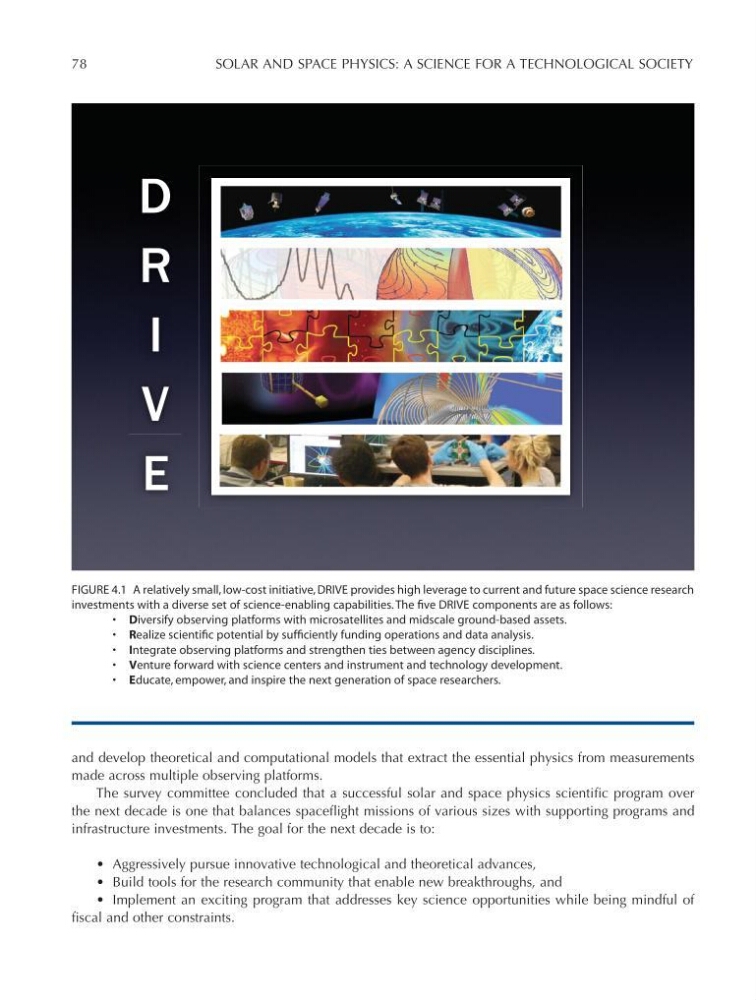
FIGURE 4.1 A relatively small, low-cost initiative, DRIVE provides high leverage to current and future space science research
investments with a diverse set of science-enabling capabilities. The five DRIVE components are as follows:
• Diversify observing platforms with microsatellites and midscale ground-based assets.
• Realize scientific potential by sufficiently funding operations and data analysis.
• Integrate observing platforms and strengthen ties between agency disciplines.
• Venture forward with science centers and instrument and technology development.
• Educate, empower, and inspire the next generation of space researchers.
D
R
I
V
E
Figure 4-1
Solar and Space Physics: A Science for a Technological Society
78
SOLAR AND SPACE PHYSICS: A SCIENCE FOR A TECHNOLOGICAL SOCIETY
and develop theoretical and computational models that extract the essential physics from measurements
made across multiple observing platforms.
The survey committee concluded that a successful solar and space physics scientific program over
the next decade is one that balances spaceflight missions of various sizes with supporting programs and
infrastructure investments. The goal for the next decade is to:
• Aggressively pursue innovative technological and theoretical advances,
• Build tools for the research community that enable new breakthroughs, and
• Implement an exciting program that addresses key science opportunities while being mindful of
fiscal and other constraints.
FIGURE 4.1 A relatively small, low-cost initiative, DRIVE provides high leverage to current and future space science research
investments with a diverse set of science-enabling capabilities. The five DRIVE components are as follows:
• Diversify observing platforms with microsatellites and midscale ground-based assets.
• Realize scientific potential by sufficiently funding operations and data analysis.
• Integrate observing platforms and strengthen ties between agency disciplines.
• Venture forward with science centers and instrument and technology development.
• Educate, empower, and inspire the next generation of space researchers.
D
R
I
V
E
Figure 4-1