

Relevant Methods for MRI/X Brain Image Registration
345
Table 2. Average NMI and NCCC values resulting from the different multimodal
registration methods using the RIRE dataset (best values are in bold).
NMI
NCCC
Image
pair
HM
SPM
ITK 3D Slicer
HM
SPM
ITK 3D Slicer
1
0.0830 0.0798 0.0740
0.0790
0.2473 0.2255 0.2363
0.2457
2
0.0780 0.0723 0.0671
0.0723
0.2651 0.2451 0.2478
0.2537
3
0.0498 0.0387 0.0352
0.0405
0.2726 0.2343 0.2275
0.2336
4
0.0391 0.0288 0.0266
0.0340
0.2139 0.1799 0.1554
0.2066
5
0.0643 0.0459 0.0406
0.0591
0.2401 0.2246 0.1965
0.2251
6
0.0765 0.0576 0.0520
0.0657
0.2542 0.2394 0.2378
0.2474
7
0.0605 0.0553 0.0510
0.0515
0.2726 0.2419 0.2539
0.2522
8
0.0763 0.0698 0.0631
0.0607
0.2642 0.2446 0.2487
0.2542
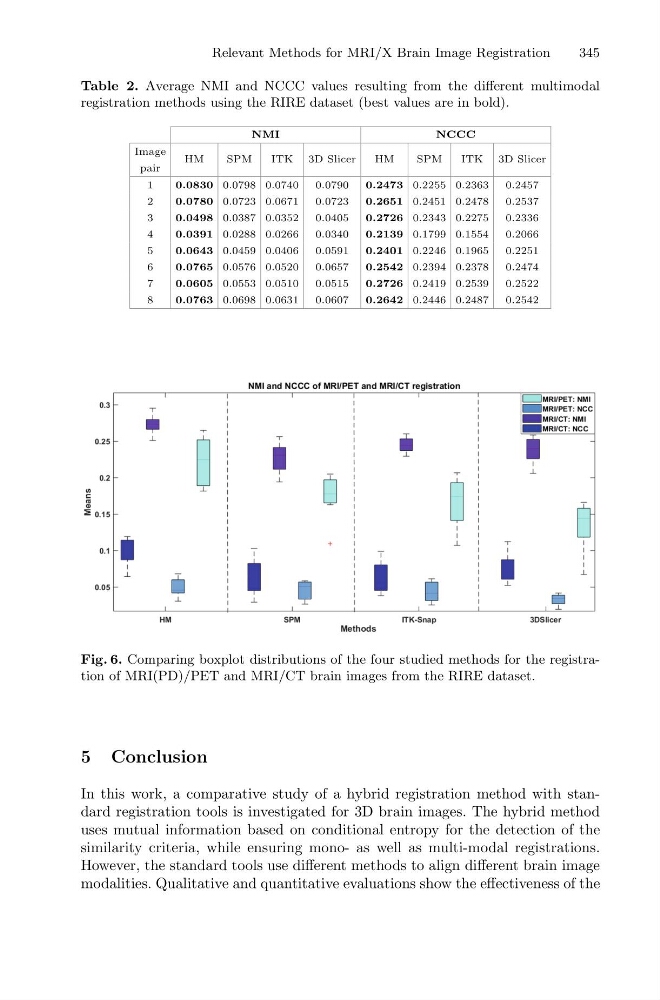
Fig. 6. Comparing boxplot distributions of the four studied methods for the registration of MRI(PD)/PET and MRI/CT brain images from the RIRE dataset.
5 Conclusion
In this work, a comparative study of a hybrid registration method with standard registration tools is investigated for 3D brain images. The hybrid method
uses mutual information based on conditional entropy for the detection of the
similarity criteria, while ensuring mono- as well as multi-modal registrations.
However, the standard tools use different methods to align different brain image
modalities. Qualitative and quantitative evaluations show the effectiveness of the
345
Table 2. Average NMI and NCCC values resulting from the different multimodal
registration methods using the RIRE dataset (best values are in bold).
NMI
NCCC
Image
pair
HM
SPM
ITK 3D Slicer
HM
SPM
ITK 3D Slicer
1
0.0830 0.0798 0.0740
0.0790
0.2473 0.2255 0.2363
0.2457
2
0.0780 0.0723 0.0671
0.0723
0.2651 0.2451 0.2478
0.2537
3
0.0498 0.0387 0.0352
0.0405
0.2726 0.2343 0.2275
0.2336
4
0.0391 0.0288 0.0266
0.0340
0.2139 0.1799 0.1554
0.2066
5
0.0643 0.0459 0.0406
0.0591
0.2401 0.2246 0.1965
0.2251
6
0.0765 0.0576 0.0520
0.0657
0.2542 0.2394 0.2378
0.2474
7
0.0605 0.0553 0.0510
0.0515
0.2726 0.2419 0.2539
0.2522
8
0.0763 0.0698 0.0631
0.0607
0.2642 0.2446 0.2487
0.2542
Fig. 6. Comparing boxplot distributions of the four studied methods for the registration of MRI(PD)/PET and MRI/CT brain images from the RIRE dataset.
5 Conclusion
In this work, a comparative study of a hybrid registration method with standard registration tools is investigated for 3D brain images. The hybrid method
uses mutual information based on conditional entropy for the detection of the
similarity criteria, while ensuring mono- as well as multi-modal registrations.
However, the standard tools use different methods to align different brain image
modalities. Qualitative and quantitative evaluations show the effectiveness of the