

geometric mean, standard deviation or error), so that more accurate or optimal comparison for specific variable distribution can be made.
3 Citizen Activity and Vital/Health Parameters Data
The data are collected by several types of health and fitness wearable tracker devices
manufactured by Fitbit, Garmin and ASUS, monitoring physical and walking activity,
sleep and heart/cardio parameters, for over 300 recruited citizens participating in the
study in 7 global testbed cities (Barcelona, Birmingham, New York, Paris, Pavia(Italy),
Singapore, and Keelung/Taipei), supplied with wearable tracker devices by the Project.
Physical activity level as a single measure is mainly expressed in terms of time
spent and calories burned while performing light/soft, moderate, and intense/vigorous
physical activity. Walking activity is captured with walked steps, distance, speed, and
climbed stairs/floors measurements. Heart rate measures capture time spent in different
target heart rate zones (like peak, cardio, fat burn), resting and maximal heart rate
(hr max ), and some still experimental measures like systolic and diastolic blood pressure,
measured by the newest recently released devices such as ASUS VivoWatch BP, but
not yet acquired in significant volume sufficient for analysis. The peak heart rate zone
by default definition ranges from 85 to 100% of person’s maximum heart rate (hr max ),
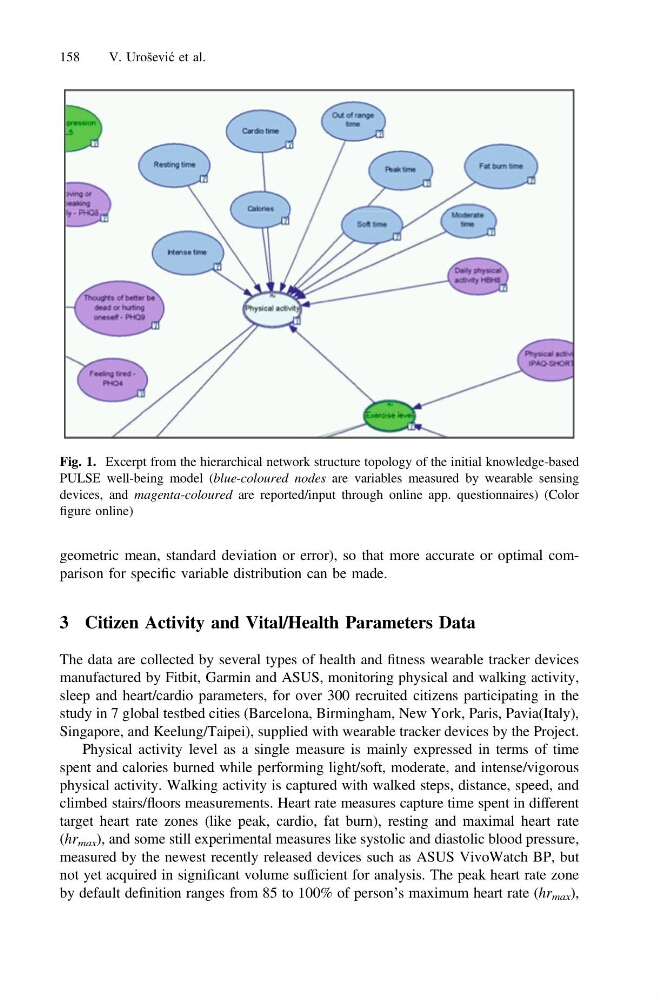
Fig. 1. Excerpt from the hierarchical network structure topology of the initial knowledge-based
PULSE well-being model (blue-coloured nodes are variables measured by wearable sensing
devices, and magenta-coloured are reported/input through online app. questionnaires) (Color
figure online)
158
V. Urošević et al.
3 Citizen Activity and Vital/Health Parameters Data
The data are collected by several types of health and fitness wearable tracker devices
manufactured by Fitbit, Garmin and ASUS, monitoring physical and walking activity,
sleep and heart/cardio parameters, for over 300 recruited citizens participating in the
study in 7 global testbed cities (Barcelona, Birmingham, New York, Paris, Pavia(Italy),
Singapore, and Keelung/Taipei), supplied with wearable tracker devices by the Project.
Physical activity level as a single measure is mainly expressed in terms of time
spent and calories burned while performing light/soft, moderate, and intense/vigorous
physical activity. Walking activity is captured with walked steps, distance, speed, and
climbed stairs/floors measurements. Heart rate measures capture time spent in different
target heart rate zones (like peak, cardio, fat burn), resting and maximal heart rate
(hr max ), and some still experimental measures like systolic and diastolic blood pressure,
measured by the newest recently released devices such as ASUS VivoWatch BP, but
not yet acquired in significant volume sufficient for analysis. The peak heart rate zone
by default definition ranges from 85 to 100% of person’s maximum heart rate (hr max ),
Fig. 1. Excerpt from the hierarchical network structure topology of the initial knowledge-based
PULSE well-being model (blue-coloured nodes are variables measured by wearable sensing
devices, and magenta-coloured are reported/input through online app. questionnaires) (Color
figure online)
158
V. Urošević et al.