

ULTech to Observe Elderly’s Behavior Changes over Time in SH
139
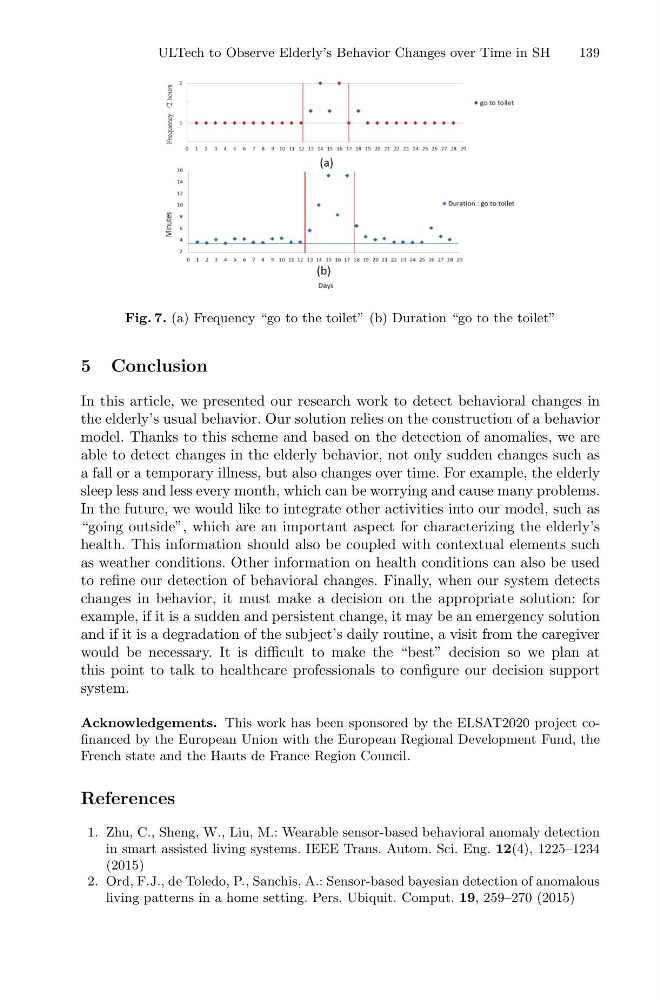
Fig. 7. (a) Frequency “go to the toilet” (b) Duration “go to the toilet”
5 Conclusion
In this article, we presented our research work to detect behavioral changes in
the elderly’s usual behavior. Our solution relies on the construction of a behavior
model. Thanks to this scheme and based on the detection of anomalies, we are
able to detect changes in the elderly behavior, not only sudden changes such as
a fall or a temporary illness, but also changes over time. For example, the elderly
sleep less and less every month, which can be worrying and cause many problems.
In the future, we would like to integrate other activities into our model, such as
“going outside”, which are an important aspect for characterizing the elderly’s
health. This information should also be coupled with contextual elements such
as weather conditions. Other information on health conditions can also be used
to refine our detection of behavioral changes. Finally, when our system detects
changes in behavior, it must make a decision on the appropriate solution: for
example, if it is a sudden and persistent change, it may be an emergency solution
and if it is a degradation of the subject’s daily routine, a visit from the caregiver
would be necessary. It is difficult to make the “best” decision so we plan at
this point to talk to healthcare professionals to configure our decision support
system.
Acknowledgements. This work has been sponsored by the ELSAT2020 project cofinanced by the European Union with the European Regional Development Fund, the
French state and the Hauts de France Region Council.
References
1. Zhu, C., Sheng, W., Liu, M.: Wearable sensor-based behavioral anomaly detection
in smart assisted living systems. IEEE Trans. Autom. Sci. Eng. 12(4), 1225–1234
(2015)
2. Ord, F.J., de Toledo, P., Sanchis, A.: Sensor-based bayesian detection of anomalous
living patterns in a home setting. Pers. Ubiquit. Comput. 19, 259–270 (2015)
139
Fig. 7. (a) Frequency “go to the toilet” (b) Duration “go to the toilet”
5 Conclusion
In this article, we presented our research work to detect behavioral changes in
the elderly’s usual behavior. Our solution relies on the construction of a behavior
model. Thanks to this scheme and based on the detection of anomalies, we are
able to detect changes in the elderly behavior, not only sudden changes such as
a fall or a temporary illness, but also changes over time. For example, the elderly
sleep less and less every month, which can be worrying and cause many problems.
In the future, we would like to integrate other activities into our model, such as
“going outside”, which are an important aspect for characterizing the elderly’s
health. This information should also be coupled with contextual elements such
as weather conditions. Other information on health conditions can also be used
to refine our detection of behavioral changes. Finally, when our system detects
changes in behavior, it must make a decision on the appropriate solution: for
example, if it is a sudden and persistent change, it may be an emergency solution
and if it is a degradation of the subject’s daily routine, a visit from the caregiver
would be necessary. It is difficult to make the “best” decision so we plan at
this point to talk to healthcare professionals to configure our decision support
system.
Acknowledgements. This work has been sponsored by the ELSAT2020 project cofinanced by the European Union with the European Regional Development Fund, the
French state and the Hauts de France Region Council.
References
1. Zhu, C., Sheng, W., Liu, M.: Wearable sensor-based behavioral anomaly detection
in smart assisted living systems. IEEE Trans. Autom. Sci. Eng. 12(4), 1225–1234
(2015)
2. Ord, F.J., de Toledo, P., Sanchis, A.: Sensor-based bayesian detection of anomalous
living patterns in a home setting. Pers. Ubiquit. Comput. 19, 259–270 (2015)