

6.3 The Composite Midpoint Method
145
6.3.3 Comparing the Trapezoidal and the Midpoint Methods
The next example shows how easy it is to combine the trapezoidal and midpoint
functions to make a comparison of the two methods. The coding is given in
compare_integration_methods.py:
from trapezoidal import trapezoidal
from midpoint import midpoint
from math import exp
g = lambda y: exp(-y**2)
a = 0
b = 2
print(’
n
midpoint
trapezoidal’)
for i in range(1, 21):
n = 2**i
m = midpoint(g, a, b, n)
t = trapezoidal(g, a, b, n)
print(’{:7d} {:.16f} {:.16f}’.format(n, m, t))
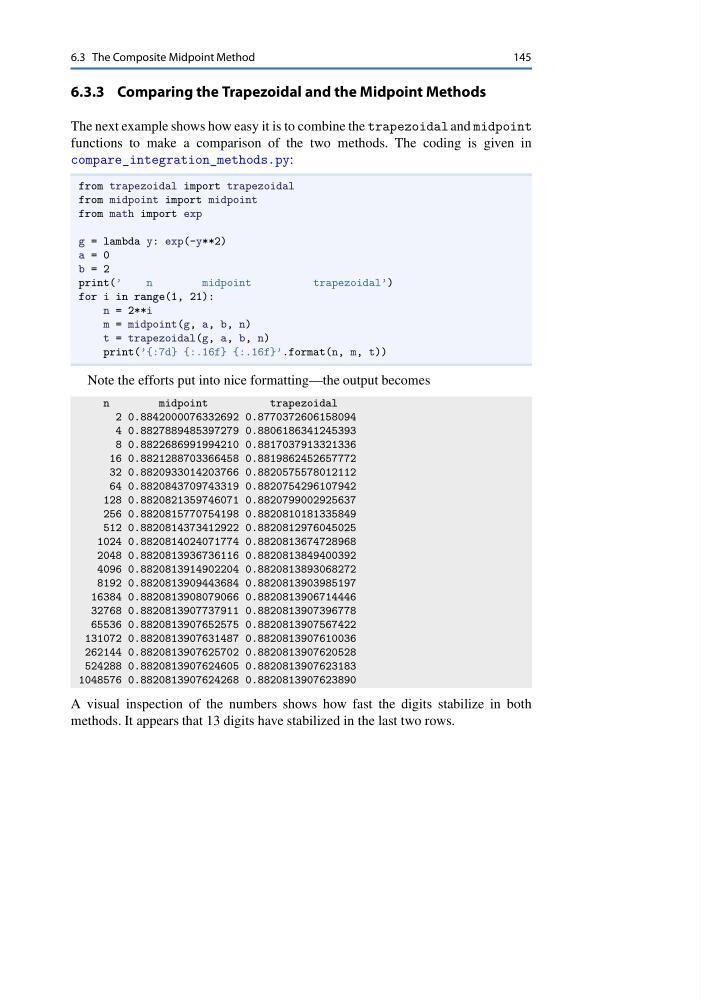
Note the efforts put into nice formatting—the output becomes
n
midpoint
trapezoidal
2 0.8842000076332692 0.8770372606158094
4 0.8827889485397279 0.8806186341245393
8 0.8822686991994210 0.8817037913321336
16 0.8821288703366458 0.8819862452657772
32 0.8820933014203766 0.8820575578012112
64 0.8820843709743319 0.8820754296107942
128 0.8820821359746071 0.8820799002925637
256 0.8820815770754198 0.8820810181335849
512 0.8820814373412922 0.8820812976045025
1024 0.8820814024071774 0.8820813674728968
2048 0.8820813936736116 0.8820813849400392
4096 0.8820813914902204 0.8820813893068272
8192 0.8820813909443684 0.8820813903985197
16384 0.8820813908079066 0.8820813906714446
32768 0.8820813907737911 0.8820813907396778
65536 0.8820813907652575 0.8820813907567422
131072 0.8820813907631487 0.8820813907610036
262144 0.8820813907625702 0.8820813907620528
524288 0.8820813907624605 0.8820813907623183
1048576 0.8820813907624268 0.8820813907623890
A visual inspection of the numbers shows how fast the digits stabilize in both
methods. It appears that 13 digits have stabilized in the last two rows.
145
6.3.3 Comparing the Trapezoidal and the Midpoint Methods
The next example shows how easy it is to combine the trapezoidal and midpoint
functions to make a comparison of the two methods. The coding is given in
compare_integration_methods.py:
from trapezoidal import trapezoidal
from midpoint import midpoint
from math import exp
g = lambda y: exp(-y**2)
a = 0
b = 2
print(’
n
midpoint
trapezoidal’)
for i in range(1, 21):
n = 2**i
m = midpoint(g, a, b, n)
t = trapezoidal(g, a, b, n)
print(’{:7d} {:.16f} {:.16f}’.format(n, m, t))
Note the efforts put into nice formatting—the output becomes
n
midpoint
trapezoidal
2 0.8842000076332692 0.8770372606158094
4 0.8827889485397279 0.8806186341245393
8 0.8822686991994210 0.8817037913321336
16 0.8821288703366458 0.8819862452657772
32 0.8820933014203766 0.8820575578012112
64 0.8820843709743319 0.8820754296107942
128 0.8820821359746071 0.8820799002925637
256 0.8820815770754198 0.8820810181335849
512 0.8820814373412922 0.8820812976045025
1024 0.8820814024071774 0.8820813674728968
2048 0.8820813936736116 0.8820813849400392
4096 0.8820813914902204 0.8820813893068272
8192 0.8820813909443684 0.8820813903985197
16384 0.8820813908079066 0.8820813906714446
32768 0.8820813907737911 0.8820813907396778
65536 0.8820813907652575 0.8820813907567422
131072 0.8820813907631487 0.8820813907610036
262144 0.8820813907625702 0.8820813907620528
524288 0.8820813907624605 0.8820813907623183
1048576 0.8820813907624268 0.8820813907623890
A visual inspection of the numbers shows how fast the digits stabilize in both
methods. It appears that 13 digits have stabilized in the last two rows.