

change affecting both water availability and water quality. Second, and related to
the first point, is the fact that the waterboard’s functions and priorities are established by law. Whereas this has positive impacts in a number of areas, this means
that droughts—as well as other emerging and novel issues—can only be addressed
within the possibilities provided by the current legal framework. Furthermore, the
requirements derived from the legal responsibilities mean that changes (e.g. to
operational rules) can only be approved after a lengthy review process. This can
significantly increase the time lag between issue identification and measure
implementation.
These and other governance issues are also addressed in the following section, in
which we present possible recommendations to improve the region’s water governance in view of droughts.
4.5.2 Recommendations
This section presents possible recommendations to improve, from a drought perspective, the water governance context in the Eifel-Rur region.
Governance Criteria
Governance
Dimensions
Extent
Coherence
Flexibility
Intensity
Levels & scales
Actors & networks
Problem
perceptions & Goal
ambitions
Strategies &
Instruments
Responsibilities &
Resources
Supportive
Neutral
Restrictive
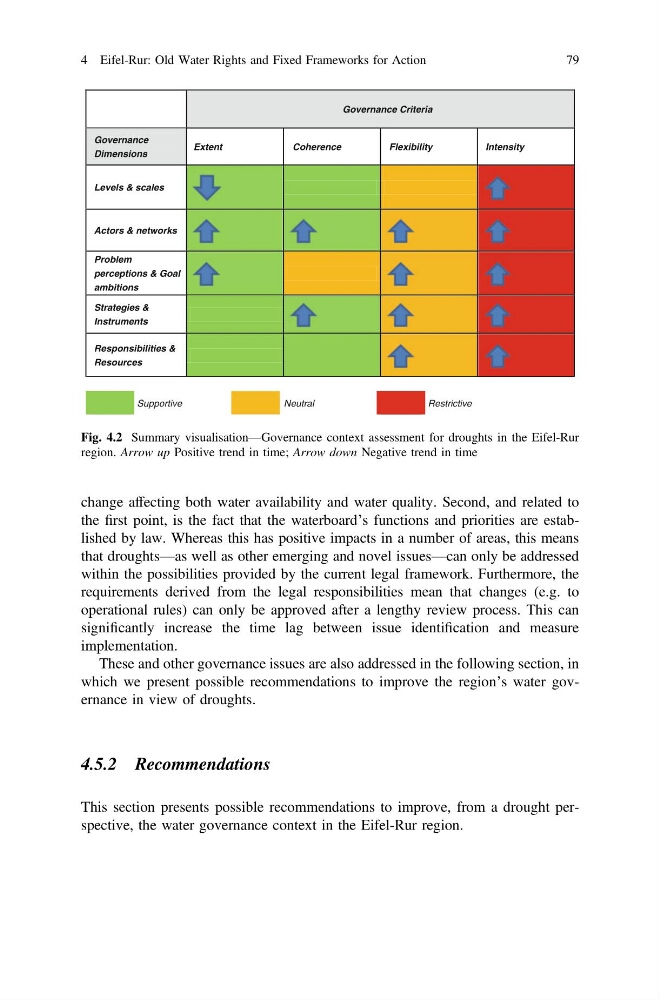
Fig. 4.2 Summary visualisation—Governance context assessment for droughts in the Eifel-Rur
region. Arrow up Positive trend in time; Arrow down Negative trend in time
4 Eifel-Rur: Old Water Rights and Fixed Frameworks for Action
79
the first point, is the fact that the waterboard’s functions and priorities are established by law. Whereas this has positive impacts in a number of areas, this means
that droughts—as well as other emerging and novel issues—can only be addressed
within the possibilities provided by the current legal framework. Furthermore, the
requirements derived from the legal responsibilities mean that changes (e.g. to
operational rules) can only be approved after a lengthy review process. This can
significantly increase the time lag between issue identification and measure
implementation.
These and other governance issues are also addressed in the following section, in
which we present possible recommendations to improve the region’s water governance in view of droughts.
4.5.2 Recommendations
This section presents possible recommendations to improve, from a drought perspective, the water governance context in the Eifel-Rur region.
Governance Criteria
Governance
Dimensions
Extent
Coherence
Flexibility
Intensity
Levels & scales
Actors & networks
Problem
perceptions & Goal
ambitions
Strategies &
Instruments
Responsibilities &
Resources
Supportive
Neutral
Restrictive
Fig. 4.2 Summary visualisation—Governance context assessment for droughts in the Eifel-Rur
region. Arrow up Positive trend in time; Arrow down Negative trend in time
4 Eifel-Rur: Old Water Rights and Fixed Frameworks for Action
79