

learning psychology and thus seem to apply to individuals, also organisations and
individuals representing groups and organisations (so-called ‘corporate actors’) can
have the same set of origins of motivations.
Cognitions—The cognitions of actors (interpretations of reality held to be true)
are not only a matter of observations and information processing capacity, though
these aspects are important and with the information technology revolution are a
source of quick changes. In policy sciences the so-called ‘argumentative turn’
(Fischer 1995; Fischer and Gottweis 2012), reflects a variety of approaches that
emphasise that knowledge is produced itself in mutual interactions, based on
interpretations of reality of actors, that themselves are mediated by frames of reference. Some frames of reference are termed by Axelrod (1976) as ‘cognitive
maps’, by Schön (1983), Schön and Rein (1994) and later van Hulst and Yanow
(2014) as ‘frames’, by Sabatier and Jenkins-Smith (1999) as ‘policy core beliefs’
and ‘deep core beliefs’. Dryzek (1997) speaks of ‘discourses’, thereby also stressing
the language dependency of understanding and the role of words, one-liners, stories
and the like to guide, but also to restrict and bias understanding. While these
approaches are quite different in their conceptual understanding and methodology
of reconstruction, they also share some understandings: that cognitions are not just
factual information about, but more interpretations of reality, and that such interpretations are influenced by filters, frames and interactions with other actors. Not
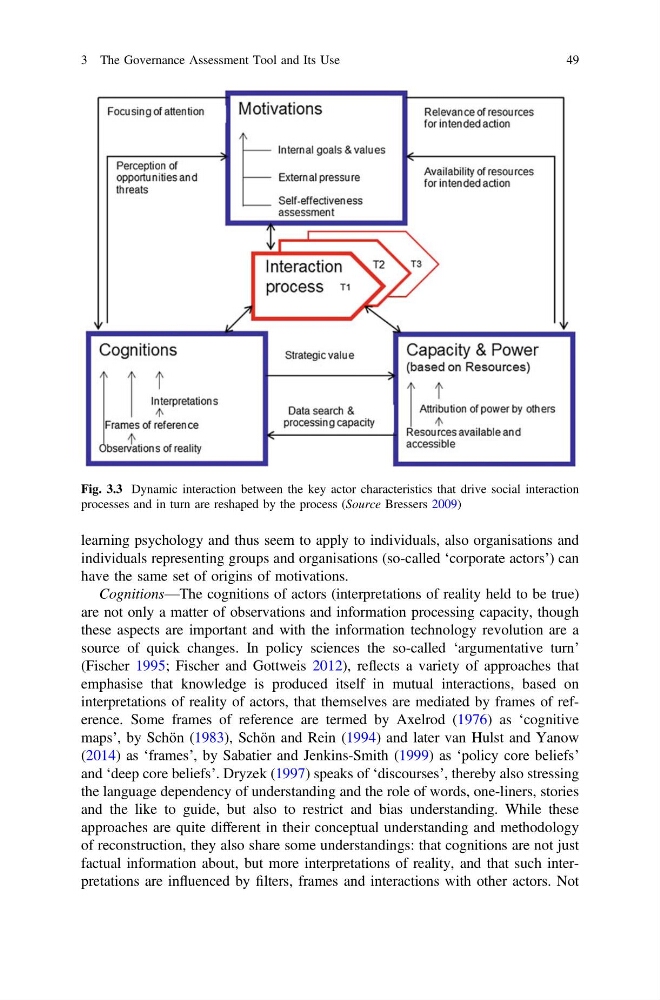
Fig. 3.3 Dynamic interaction between the key actor characteristics that drive social interaction
processes and in turn are reshaped by the process (Source Bressers 2009)
3 The Governance Assessment Tool and Its Use
49
individuals representing groups and organisations (so-called ‘corporate actors’) can
have the same set of origins of motivations.
Cognitions—The cognitions of actors (interpretations of reality held to be true)
are not only a matter of observations and information processing capacity, though
these aspects are important and with the information technology revolution are a
source of quick changes. In policy sciences the so-called ‘argumentative turn’
(Fischer 1995; Fischer and Gottweis 2012), reflects a variety of approaches that
emphasise that knowledge is produced itself in mutual interactions, based on
interpretations of reality of actors, that themselves are mediated by frames of reference. Some frames of reference are termed by Axelrod (1976) as ‘cognitive
maps’, by Schön (1983), Schön and Rein (1994) and later van Hulst and Yanow
(2014) as ‘frames’, by Sabatier and Jenkins-Smith (1999) as ‘policy core beliefs’
and ‘deep core beliefs’. Dryzek (1997) speaks of ‘discourses’, thereby also stressing
the language dependency of understanding and the role of words, one-liners, stories
and the like to guide, but also to restrict and bias understanding. While these
approaches are quite different in their conceptual understanding and methodology
of reconstruction, they also share some understandings: that cognitions are not just
factual information about, but more interpretations of reality, and that such interpretations are influenced by filters, frames and interactions with other actors. Not
Fig. 3.3 Dynamic interaction between the key actor characteristics that drive social interaction
processes and in turn are reshaped by the process (Source Bressers 2009)
3 The Governance Assessment Tool and Its Use
49