

financially and understaffed. They sometimes cannot participate in consultations
where in principle they would be welcome to have an input. This situation has
worsened over the years. To end with, it is an issue whether drought resilience
policy could or should go beyond voluntary approaches.
9.4.5 Overview and Visualization of the Results
of the Analysis
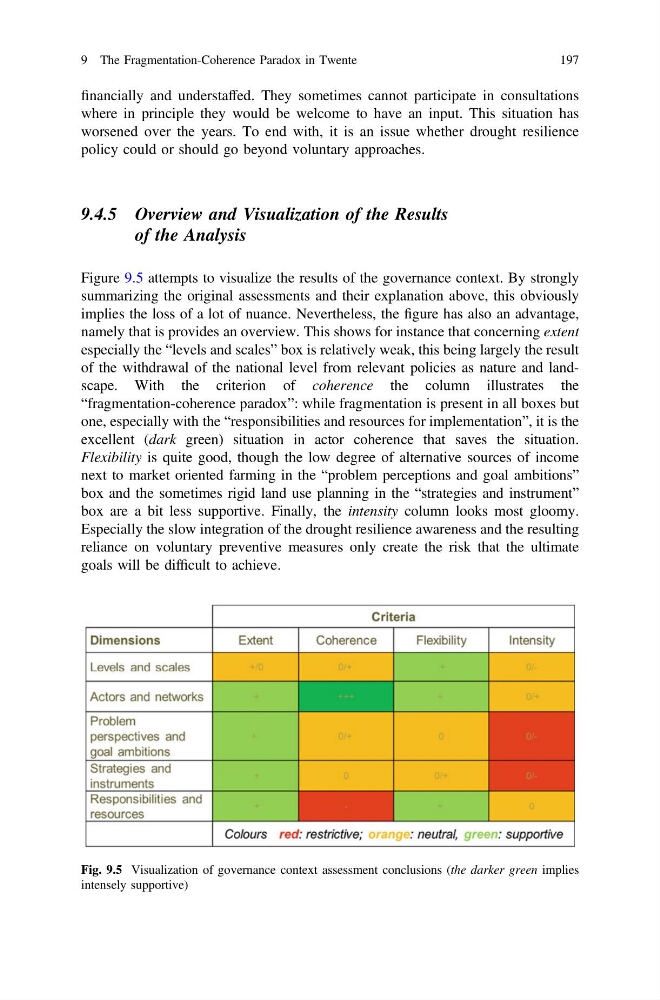
Figure 9.5 attempts to visualize the results of the governance context. By strongly
summarizing the original assessments and their explanation above, this obviously
implies the loss of a lot of nuance. Nevertheless, the figure has also an advantage,
namely that is provides an overview. This shows for instance that concerning extent
especially the “levels and scales” box is relatively weak, this being largely the result
of the withdrawal of the national level from relevant policies as nature and landscape. With the criterion of coherence the column illustrates the
“fragmentation-coherence paradox”: while fragmentation is present in all boxes but
one, especially with the “responsibilities and resources for implementation”, it is the
excellent (dark green) situation in actor coherence that saves the situation.
Flexibility is quite good, though the low degree of alternative sources of income
next to market oriented farming in the “problem perceptions and goal ambitions”
box and the sometimes rigid land use planning in the “strategies and instrument”
box are a bit less supportive. Finally, the intensity column looks most gloomy.
Especially the slow integration of the drought resilience awareness and the resulting
reliance on voluntary preventive measures only create the risk that the ultimate
goals will be difficult to achieve.
Fig. 9.5 Visualization of governance context assessment conclusions (the darker green implies
intensely supportive)
9 The Fragmentation-Coherence Paradox in Twente
197
where in principle they would be welcome to have an input. This situation has
worsened over the years. To end with, it is an issue whether drought resilience
policy could or should go beyond voluntary approaches.
9.4.5 Overview and Visualization of the Results
of the Analysis
Figure 9.5 attempts to visualize the results of the governance context. By strongly
summarizing the original assessments and their explanation above, this obviously
implies the loss of a lot of nuance. Nevertheless, the figure has also an advantage,
namely that is provides an overview. This shows for instance that concerning extent
especially the “levels and scales” box is relatively weak, this being largely the result
of the withdrawal of the national level from relevant policies as nature and landscape. With the criterion of coherence the column illustrates the
“fragmentation-coherence paradox”: while fragmentation is present in all boxes but
one, especially with the “responsibilities and resources for implementation”, it is the
excellent (dark green) situation in actor coherence that saves the situation.
Flexibility is quite good, though the low degree of alternative sources of income
next to market oriented farming in the “problem perceptions and goal ambitions”
box and the sometimes rigid land use planning in the “strategies and instrument”
box are a bit less supportive. Finally, the intensity column looks most gloomy.
Especially the slow integration of the drought resilience awareness and the resulting
reliance on voluntary preventive measures only create the risk that the ultimate
goals will be difficult to achieve.
Fig. 9.5 Visualization of governance context assessment conclusions (the darker green implies
intensely supportive)
9 The Fragmentation-Coherence Paradox in Twente
197