

periods, when precipitation is low and river levels are maintained by groundwater.
Fish die and also the risk of algae bloom increases. Not only in streams and their
valleys, but also on high ground in the catchment area nature will deteriorate with
further desiccation in drought periods that are expected to become more frequent
because of climate change. In the whole catchment area, substantial impacts are
expected. Partly these problems have been aggravated by earlier measures some
decades ago of the Twente water authority itself. Fighting water problems in wet
periods by “improving” the drainage capacity of the water system increases vulnerability for droughts. The challenge is now to create more resilience towards both
ends.
9.3.2 Implementation and Research Projects and Farm
Water Management Plans Under DROP
An important report for drought policy in Twente has been “Sturen op basisafvoer”
(2012, Steering for basic flow) for which the water authority cooperated with
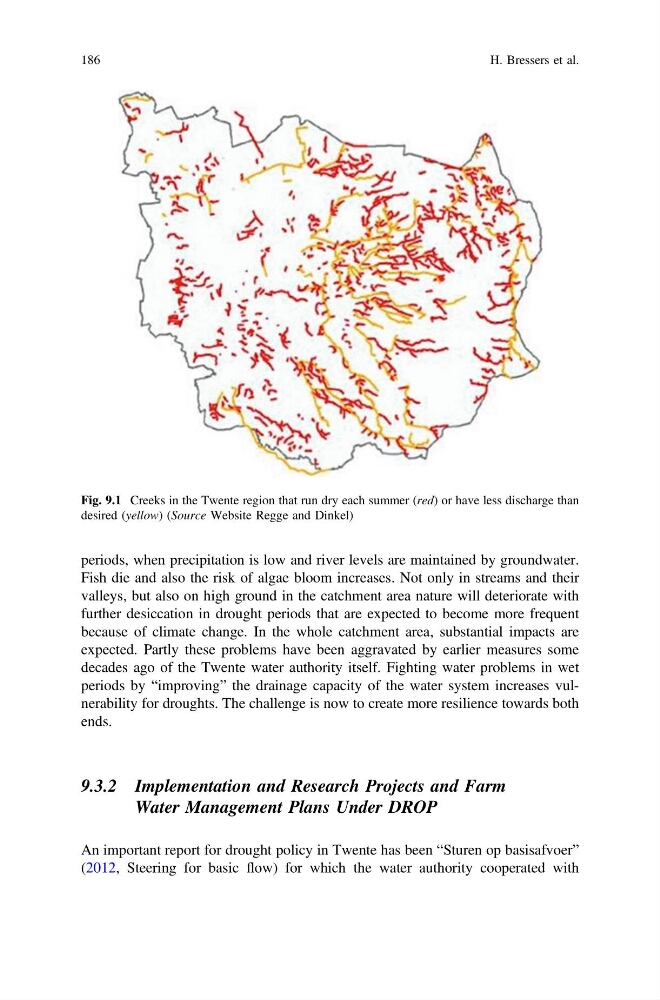
Fig. 9.1 Creeks in the Twente region that run dry each summer (red) or have less discharge than
desired (yellow) (Source Website Regge and Dinkel)
186
H. Bressers et al.
Fish die and also the risk of algae bloom increases. Not only in streams and their
valleys, but also on high ground in the catchment area nature will deteriorate with
further desiccation in drought periods that are expected to become more frequent
because of climate change. In the whole catchment area, substantial impacts are
expected. Partly these problems have been aggravated by earlier measures some
decades ago of the Twente water authority itself. Fighting water problems in wet
periods by “improving” the drainage capacity of the water system increases vulnerability for droughts. The challenge is now to create more resilience towards both
ends.
9.3.2 Implementation and Research Projects and Farm
Water Management Plans Under DROP
An important report for drought policy in Twente has been “Sturen op basisafvoer”
(2012, Steering for basic flow) for which the water authority cooperated with
Fig. 9.1 Creeks in the Twente region that run dry each summer (red) or have less discharge than
desired (yellow) (Source Website Regge and Dinkel)
186
H. Bressers et al.