

administrative entities involved in water management. The CIW also oversees the
functioning of the sub-basin structures, providing support and reviewing possible
contradictions between binding provisions of the management plans at the different
levels.
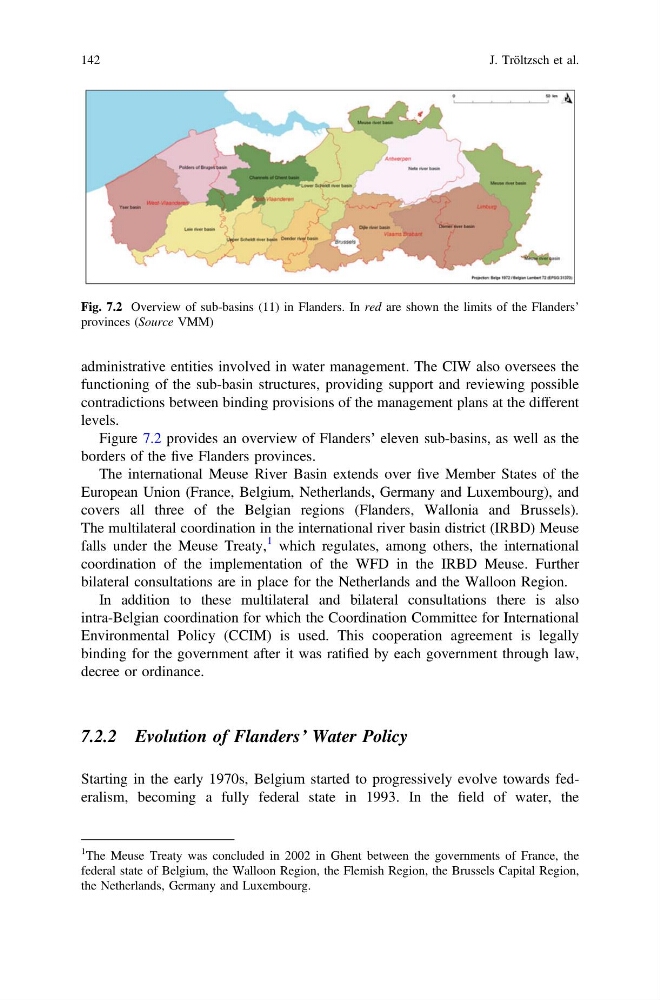
Figure 7.2 provides an overview of Flanders’ eleven sub-basins, as well as the
borders of the five Flanders provinces.
The international Meuse River Basin extends over five Member States of the
European Union (France, Belgium, Netherlands, Germany and Luxembourg), and
covers all three of the Belgian regions (Flanders, Wallonia and Brussels).
The multilateral coordination in the international river basin district (IRBD) Meuse
falls under the Meuse Treaty,
1 which regulates, among others, the international
coordination of the implementation of the WFD in the IRBD Meuse. Further
bilateral consultations are in place for the Netherlands and the Walloon Region.
In addition to these multilateral and bilateral consultations there is also
intra-Belgian coordination for which the Coordination Committee for International
Environmental Policy (CCIM) is used. This cooperation agreement is legally
binding for the government after it was ratified by each government through law,
decree or ordinance.
7.2.2 Evolution of Flanders’ Water Policy
Starting in the early 1970s, Belgium started to progressively evolve towards federalism, becoming a fully federal state in 1993. In the field of water, the
Fig. 7.2 Overview of sub-basins (11) in Flanders. In red are shown the limits of the Flanders’
provinces (Source VMM)
1
The Meuse Treaty was concluded in 2002 in Ghent between the governments of France, the
federal state of Belgium, the Walloon Region, the Flemish Region, the Brussels Capital Region,
the Netherlands, Germany and Luxembourg.
142
J. Tröltzsch et al.
functioning of the sub-basin structures, providing support and reviewing possible
contradictions between binding provisions of the management plans at the different
levels.
Figure 7.2 provides an overview of Flanders’ eleven sub-basins, as well as the
borders of the five Flanders provinces.
The international Meuse River Basin extends over five Member States of the
European Union (France, Belgium, Netherlands, Germany and Luxembourg), and
covers all three of the Belgian regions (Flanders, Wallonia and Brussels).
The multilateral coordination in the international river basin district (IRBD) Meuse
falls under the Meuse Treaty,
1 which regulates, among others, the international
coordination of the implementation of the WFD in the IRBD Meuse. Further
bilateral consultations are in place for the Netherlands and the Walloon Region.
In addition to these multilateral and bilateral consultations there is also
intra-Belgian coordination for which the Coordination Committee for International
Environmental Policy (CCIM) is used. This cooperation agreement is legally
binding for the government after it was ratified by each government through law,
decree or ordinance.
7.2.2 Evolution of Flanders’ Water Policy
Starting in the early 1970s, Belgium started to progressively evolve towards federalism, becoming a fully federal state in 1993. In the field of water, the
Fig. 7.2 Overview of sub-basins (11) in Flanders. In red are shown the limits of the Flanders’
provinces (Source VMM)
1
The Meuse Treaty was concluded in 2002 in Ghent between the governments of France, the
federal state of Belgium, the Walloon Region, the Flemish Region, the Brussels Capital Region,
the Netherlands, Germany and Luxembourg.
142
J. Tröltzsch et al.