

71
Two remarks are worth mentioning here:
1. The economic approach of values of large water infrastructure projects is an
anthropocentric one; benefi ts are derived from people’s preferences (“water as a
means”) . This means that “intrinsic values” of water are not covered. If for example water infrastructure projects are rejected because people think that water has a
value in itself (“water as an end”), this cannot be captured by economic valuation.
Also values that a society as a whole might consider important (i.e. values that go
beyond the aggregation of individuals’ preferences) are not included.
4
2. Nevertheless the economic valuation approach captures a rather broad set of
values. The decisive point here is that all affected humans and all services of
major infrastructure projects are to be included. Thus, ecological services (benefi ts) are integral part of this concept. This allows in particular to conceptually
address ecological trade-offs, which are induced by major water engineering
projects, and the identifi cation of people who are negatively impacted by large
projects through re-settlements or other forms of disadvantages (costs).
4 Sometimes it is diffi cult to distinguish between “self-interested” economic preferences and “common-interested” societal values. The distinction by Vatn ( 2009 ) might be helpful here, who speaks
of “I-preferences” (people value, act, and decide as self-interested entities) and “We-preferences”
(where people value, act, and decide as members of society, setting aside their self-interest and
focusing more on the joint production of common goods).
Total Economic
Value
Use value
Philanthropic value
Option value
Actual value
Direct use
Indirect use
Bequest value
Altruist value
Consumptive
Nonconsumptive
water
regulation,
filtering
amenity,
education
fishery,
aquaculture
potential
future use
natural,
cultural
heritage
others‘
benefit
ecosystem
existence
Non-use value
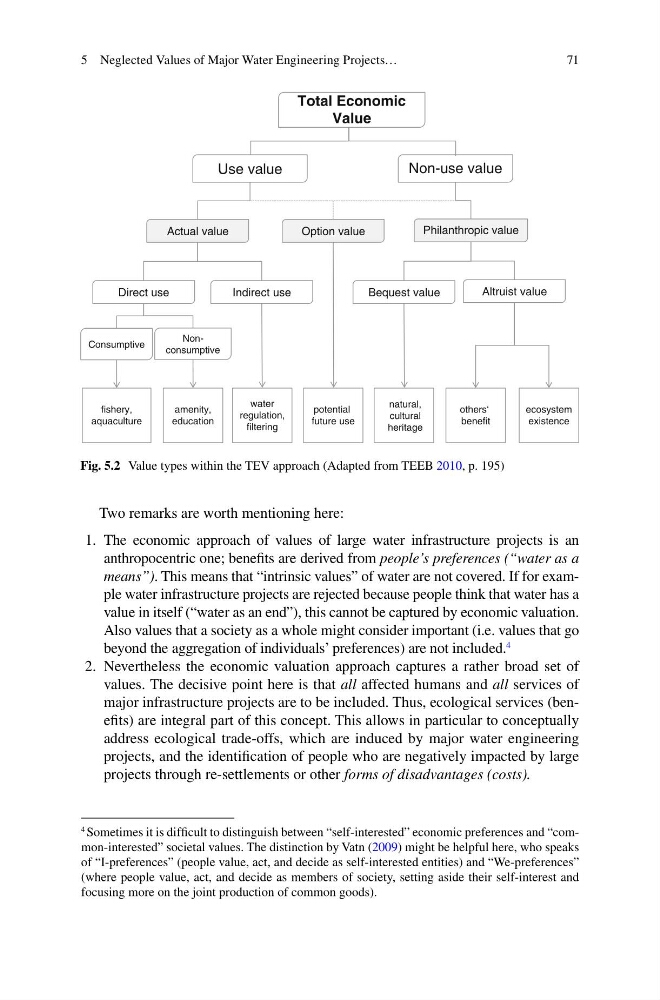
Fig. 5.2 Value types within the TEV approach (Adapted from TEEB 2010 , p. 195)
5 Neglected Values of Major Water Engineering Projects…
Two remarks are worth mentioning here:
1. The economic approach of values of large water infrastructure projects is an
anthropocentric one; benefi ts are derived from people’s preferences (“water as a
means”) . This means that “intrinsic values” of water are not covered. If for example water infrastructure projects are rejected because people think that water has a
value in itself (“water as an end”), this cannot be captured by economic valuation.
Also values that a society as a whole might consider important (i.e. values that go
beyond the aggregation of individuals’ preferences) are not included.
4
2. Nevertheless the economic valuation approach captures a rather broad set of
values. The decisive point here is that all affected humans and all services of
major infrastructure projects are to be included. Thus, ecological services (benefi ts) are integral part of this concept. This allows in particular to conceptually
address ecological trade-offs, which are induced by major water engineering
projects, and the identifi cation of people who are negatively impacted by large
projects through re-settlements or other forms of disadvantages (costs).
4 Sometimes it is diffi cult to distinguish between “self-interested” economic preferences and “common-interested” societal values. The distinction by Vatn ( 2009 ) might be helpful here, who speaks
of “I-preferences” (people value, act, and decide as self-interested entities) and “We-preferences”
(where people value, act, and decide as members of society, setting aside their self-interest and
focusing more on the joint production of common goods).
Total Economic
Value
Use value
Philanthropic value
Option value
Actual value
Direct use
Indirect use
Bequest value
Altruist value
Consumptive
Nonconsumptive
water
regulation,
filtering
amenity,
education
fishery,
aquaculture
potential
future use
natural,
cultural
heritage
others‘
benefit
ecosystem
existence
Non-use value
Fig. 5.2 Value types within the TEV approach (Adapted from TEEB 2010 , p. 195)
5 Neglected Values of Major Water Engineering Projects…