

267
levy level has increased steadily over the previous years, although not necessarily
in accordance with the Israeli multi-annual plan (Kedmi 2005 ). The rates of the levies are determined on the basis of a number of parameters relating to the rate of
water abstraction, the water production source, type and quality of water, hydrological situation, the purpose of the production and the quantity and type of the
water produced (Israel Water Authority).
The levy system is divided into three regions: the country system area (in fact,
those areas connected to the National Water Carrier), areas disconnected from the
country system, and the Lake Tiberias area ( ibid. ).
Currently the levies for agricultural drilling within the country system are set at
50 % of the regular rates. In addition, agriculture is exempted from VAT ( ibid. ).
Here we notice again that the agricultural level is benefi tting from different
(implicit) subsidies.
There is also an ongoing discussion in Israel whether the potassium companies
at the Dead Sea should continue to be exempted from the extraction levy. With
300 × 10
6 m
3 water extraction per year, the companies signifi cantly contribute to the
decline of the Dead Sea (TAHAL and GSI 2011 ). The authors of the Study of
Alternatives (Allan et al. 2014 , p. 74) proposed a levy of USD 0.1/m
3 , under the
condition that the income generated from the planed hydropower production
(exploiting the elevation difference between the Red Sea and the Dead Sea) is
included into the calculations.
But the technical feasibility of hydropower production based on saline water or
brine was never investigated in the World Bank’s study programme and was not part
0
50
100
150
200
250
300
350
400
2007
2008
2009
2010
2011
2012
2013
Percentage [%]
Year
Price Index Input
Agriculture 2007–2013
Agriculture general
Water
Fuel, lubricants, electricity
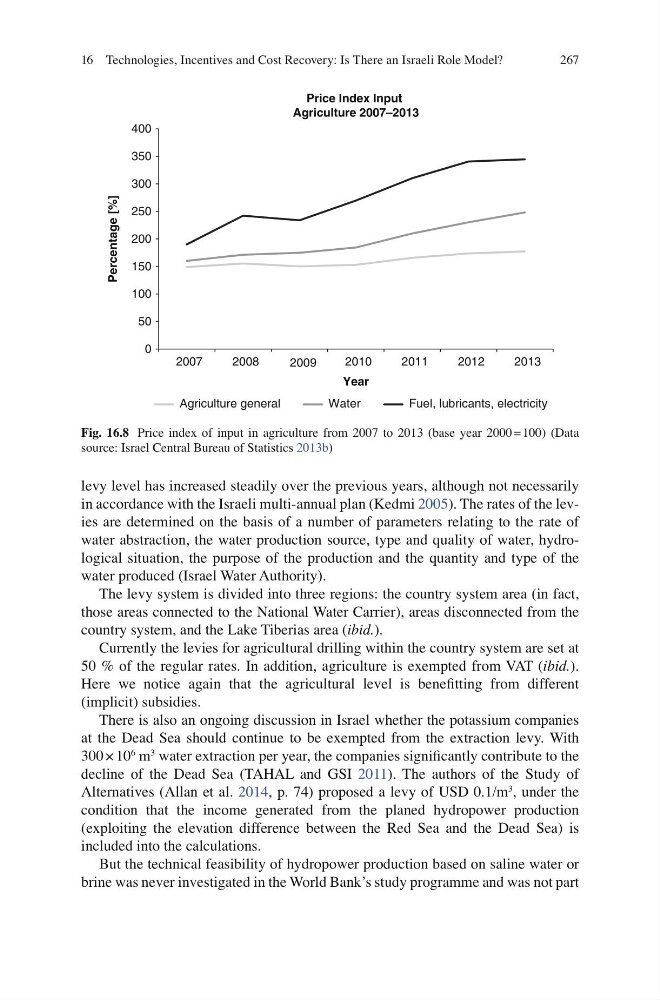
Fig. 16.8 Price index of input in agriculture from 2007 to 2013 (base year 2000 = 100) (Data
source: Israel Central Bureau of Statistics 2013b )
16 Technologies, Incentives and Cost Recovery: Is There an Israeli Role Model?
levy level has increased steadily over the previous years, although not necessarily
in accordance with the Israeli multi-annual plan (Kedmi 2005 ). The rates of the levies are determined on the basis of a number of parameters relating to the rate of
water abstraction, the water production source, type and quality of water, hydrological situation, the purpose of the production and the quantity and type of the
water produced (Israel Water Authority).
The levy system is divided into three regions: the country system area (in fact,
those areas connected to the National Water Carrier), areas disconnected from the
country system, and the Lake Tiberias area ( ibid. ).
Currently the levies for agricultural drilling within the country system are set at
50 % of the regular rates. In addition, agriculture is exempted from VAT ( ibid. ).
Here we notice again that the agricultural level is benefi tting from different
(implicit) subsidies.
There is also an ongoing discussion in Israel whether the potassium companies
at the Dead Sea should continue to be exempted from the extraction levy. With
300 × 10
6 m
3 water extraction per year, the companies signifi cantly contribute to the
decline of the Dead Sea (TAHAL and GSI 2011 ). The authors of the Study of
Alternatives (Allan et al. 2014 , p. 74) proposed a levy of USD 0.1/m
3 , under the
condition that the income generated from the planed hydropower production
(exploiting the elevation difference between the Red Sea and the Dead Sea) is
included into the calculations.
But the technical feasibility of hydropower production based on saline water or
brine was never investigated in the World Bank’s study programme and was not part
0
50
100
150
200
250
300
350
400
2007
2008
2009
2010
2011
2012
2013
Percentage [%]
Year
Price Index Input
Agriculture 2007–2013
Agriculture general
Water
Fuel, lubricants, electricity
Fig. 16.8 Price index of input in agriculture from 2007 to 2013 (base year 2000 = 100) (Data
source: Israel Central Bureau of Statistics 2013b )
16 Technologies, Incentives and Cost Recovery: Is There an Israeli Role Model?