

96
public concern and interest. There are environmental concerns regarding the
likelihood of breakage or leakage of the conveying pipes, and the probable negative
effects this would have on the Arrava groundwater layer. Further ecological threats
could arise from the possible formation of gypsum and an algae blossom in the
Dead Sea.
Shortly after the fi nalisation of the study of alternatives, Jordan, Israel and the
Palestine Territories signed a memorandum of understanding (MoU) concerning a
Red Sea–Dead Sea Conveyance Project as a fi rst stage of a larger project. The MoU
foresees a water swap between Israel and Jordan. In a fi rst stage, a desalination plant
at Aqaba (Jordan) will be built to produce 80 × 10
6 m
3
/year of freshwater, of which
30–50 × 10
6 m
3 /year will be sold to Israel, the remaining being used in Jordan. The
brine is supposed to be pumped to the Dead Sea via a pipeline. Jordan will receive
water from Beit Zera (Lake Tiberias) via the King Abdallah Canal to secure the
water provision of Amman. The Palestine Territories will receive 30 × 10
6 m
3 /year
from the desalination plants on the Israeli Mediterranean coast in return for money
(Markel 2014 ).
Whatever solution will be chosen to overcome the water shortage in the region in
the end, cooperation among the riparian states will be essential. With concern to the
present political situation, the analysis in this volume will be restricted mainly to
Jordan, the Palestine Territories and Israel, even though Syria and Lebanon have a
stake in the region’s water management as well. Bismuth ( 2015 , in this volume,
pp. 189–204) examines the institutional settings, the water management and the specifi c relationships between the main parties. The Red Sea–Dead Sea Conveyance
Project and the planned water swap is studied by Malkawi and Tsur ( 2015 , in this
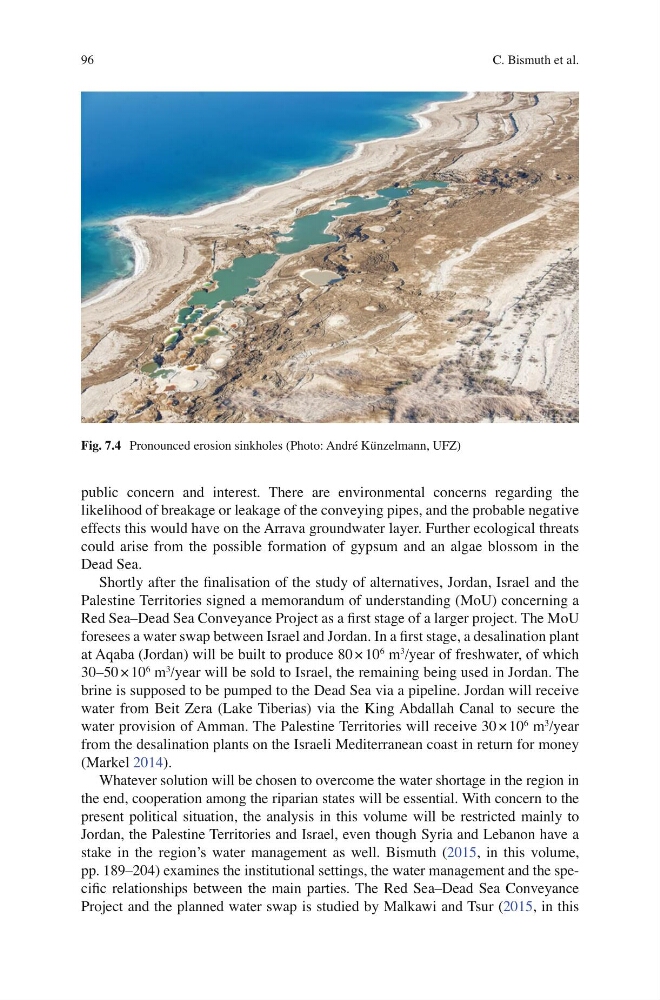
Fig. 7.4 Pronounced erosion sinkholes (Photo: André Künzelmann, UFZ)
C. Bismuth et al.
public concern and interest. There are environmental concerns regarding the
likelihood of breakage or leakage of the conveying pipes, and the probable negative
effects this would have on the Arrava groundwater layer. Further ecological threats
could arise from the possible formation of gypsum and an algae blossom in the
Dead Sea.
Shortly after the fi nalisation of the study of alternatives, Jordan, Israel and the
Palestine Territories signed a memorandum of understanding (MoU) concerning a
Red Sea–Dead Sea Conveyance Project as a fi rst stage of a larger project. The MoU
foresees a water swap between Israel and Jordan. In a fi rst stage, a desalination plant
at Aqaba (Jordan) will be built to produce 80 × 10
6 m
3
/year of freshwater, of which
30–50 × 10
6 m
3 /year will be sold to Israel, the remaining being used in Jordan. The
brine is supposed to be pumped to the Dead Sea via a pipeline. Jordan will receive
water from Beit Zera (Lake Tiberias) via the King Abdallah Canal to secure the
water provision of Amman. The Palestine Territories will receive 30 × 10
6 m
3 /year
from the desalination plants on the Israeli Mediterranean coast in return for money
(Markel 2014 ).
Whatever solution will be chosen to overcome the water shortage in the region in
the end, cooperation among the riparian states will be essential. With concern to the
present political situation, the analysis in this volume will be restricted mainly to
Jordan, the Palestine Territories and Israel, even though Syria and Lebanon have a
stake in the region’s water management as well. Bismuth ( 2015 , in this volume,
pp. 189–204) examines the institutional settings, the water management and the specifi c relationships between the main parties. The Red Sea–Dead Sea Conveyance
Project and the planned water swap is studied by Malkawi and Tsur ( 2015 , in this
Fig. 7.4 Pronounced erosion sinkholes (Photo: André Künzelmann, UFZ)
C. Bismuth et al.