

The experiments to obtain the material irradiation data for the beam window are the
most important mission of TEF-T.
A high-power spallation target, which will be mainly used for material irradiation of candidate materials for a beam window of full-scale ADS, is an essential
issue to realize a TEF-T. To set up the beam parameters, future ADS concepts are
taken into account. In the reference case of the target, proton beam current density
of 20 μA/cm
2 , which equals the maximum beam current density of the JAEAproposed 800 MWth ADS, was assumed.
8.2.2 Outline of TEF-P
Several neutronic experiments for ADS have been performed in both Europe [6, 7]
and Japan. In Japan, subcritical experiments with fast neutron spectrum core were
performed at the Fast Critical Assembly (FCA) in JAEA/Tokai, and subcritical
experiments with thermal subcritical core driven by 100 MeV protons are
performed at Kyoto University Research Reactor Institute. Many experimental
studies also have been performed on the neutronics of the spallation neutron source
with various target materials such as lead, tungsten, mercury, and uranium. These
experiments for spallation targets are also useful to validate the neutronic characteristics of ADS. However, there are no experiments combined with a spallation
source installed inside the subcritical fast-neutron core. The purpose of the TEF-P is
divided roughly into three subjects: (1) reactor physics aspects of the subcritical
core driven by a spallation source, (2) demonstration of the controllability of the
subcritical core including power control by the proton beam power adjustment, and
(3) investigation of the transmutation performance of the subcritical core using a
certain amount of MA and LLFP.
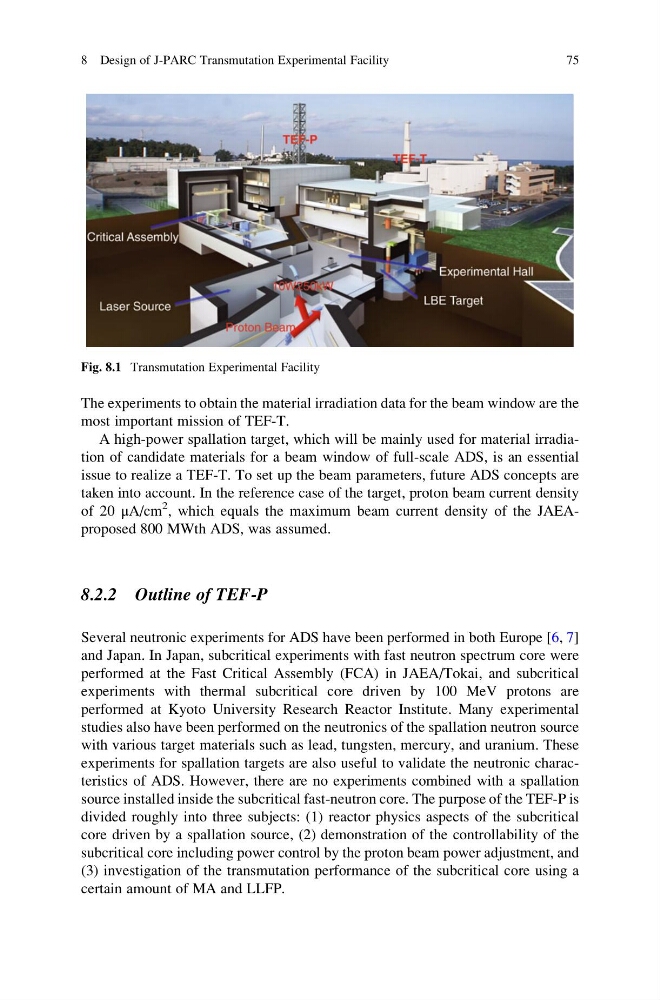
Fig. 8.1 Transmutation Experimental Facility
8 Design of J-PARC Transmutation Experimental Facility
75
most important mission of TEF-T.
A high-power spallation target, which will be mainly used for material irradiation of candidate materials for a beam window of full-scale ADS, is an essential
issue to realize a TEF-T. To set up the beam parameters, future ADS concepts are
taken into account. In the reference case of the target, proton beam current density
of 20 μA/cm
2 , which equals the maximum beam current density of the JAEAproposed 800 MWth ADS, was assumed.
8.2.2 Outline of TEF-P
Several neutronic experiments for ADS have been performed in both Europe [6, 7]
and Japan. In Japan, subcritical experiments with fast neutron spectrum core were
performed at the Fast Critical Assembly (FCA) in JAEA/Tokai, and subcritical
experiments with thermal subcritical core driven by 100 MeV protons are
performed at Kyoto University Research Reactor Institute. Many experimental
studies also have been performed on the neutronics of the spallation neutron source
with various target materials such as lead, tungsten, mercury, and uranium. These
experiments for spallation targets are also useful to validate the neutronic characteristics of ADS. However, there are no experiments combined with a spallation
source installed inside the subcritical fast-neutron core. The purpose of the TEF-P is
divided roughly into three subjects: (1) reactor physics aspects of the subcritical
core driven by a spallation source, (2) demonstration of the controllability of the
subcritical core including power control by the proton beam power adjustment, and
(3) investigation of the transmutation performance of the subcritical core using a
certain amount of MA and LLFP.
Fig. 8.1 Transmutation Experimental Facility
8 Design of J-PARC Transmutation Experimental Facility
75