

CV is filled with water. Then, corrosion of such material by boron must be studied
to prevent recurrence of the water issue.
The dry process without using coolant water will be also a certain criticality
control method (Fig. 21.3). There will be, however, other engineering challenges.
CVs must be sealed to avoid unexpected intrusion of water. It will be necessary as
well to shield radiation and to suppress airborne migration of radioactive materials
without water during fuel debris retrieval work.
21.4.2 Prevention of Criticality by Monitoring
Utilization of borated water may not be feasible if the water issue cannot be
remedied. An alternative may be subcriticality monitoring. It is necessary to detect
the signs of approach to the critical condition across the defense line set in the
subcritical region in Fig. 21.4, and an intervention measure must be deployed
quickly before the critical condition is reached. Detection may be possible by
setting neutron counters near the fuel debris.
There are key natures of the intervention measure to be understood. The injection of neutron poison is the only way, and it will be realistic only if the actual
condition of fuel debris is far from critical condition. It will be, however, difficult to
make the defense line effective if the buffer zone is small. To retain the effect of
intervention even after the event, the neutron poison concentration must be
maintained in the coolant water.
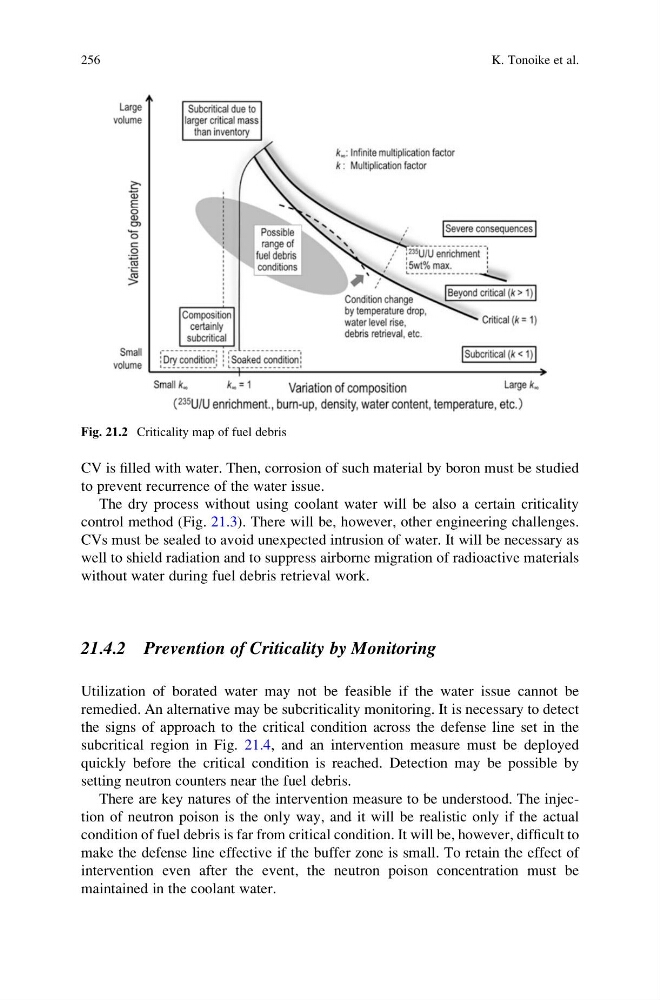
Fig. 21.2 Criticality map of fuel debris
256
K. Tonoike et al.
to prevent recurrence of the water issue.
The dry process without using coolant water will be also a certain criticality
control method (Fig. 21.3). There will be, however, other engineering challenges.
CVs must be sealed to avoid unexpected intrusion of water. It will be necessary as
well to shield radiation and to suppress airborne migration of radioactive materials
without water during fuel debris retrieval work.
21.4.2 Prevention of Criticality by Monitoring
Utilization of borated water may not be feasible if the water issue cannot be
remedied. An alternative may be subcriticality monitoring. It is necessary to detect
the signs of approach to the critical condition across the defense line set in the
subcritical region in Fig. 21.4, and an intervention measure must be deployed
quickly before the critical condition is reached. Detection may be possible by
setting neutron counters near the fuel debris.
There are key natures of the intervention measure to be understood. The injection of neutron poison is the only way, and it will be realistic only if the actual
condition of fuel debris is far from critical condition. It will be, however, difficult to
make the defense line effective if the buffer zone is small. To retain the effect of
intervention even after the event, the neutron poison concentration must be
maintained in the coolant water.
Fig. 21.2 Criticality map of fuel debris
256
K. Tonoike et al.