

16.5 Discussion
One of the problems for hydride used in a fast spectrum core is the thermal spike
wherein a large power peak occurs in the fuel pins near the hydride used zones.
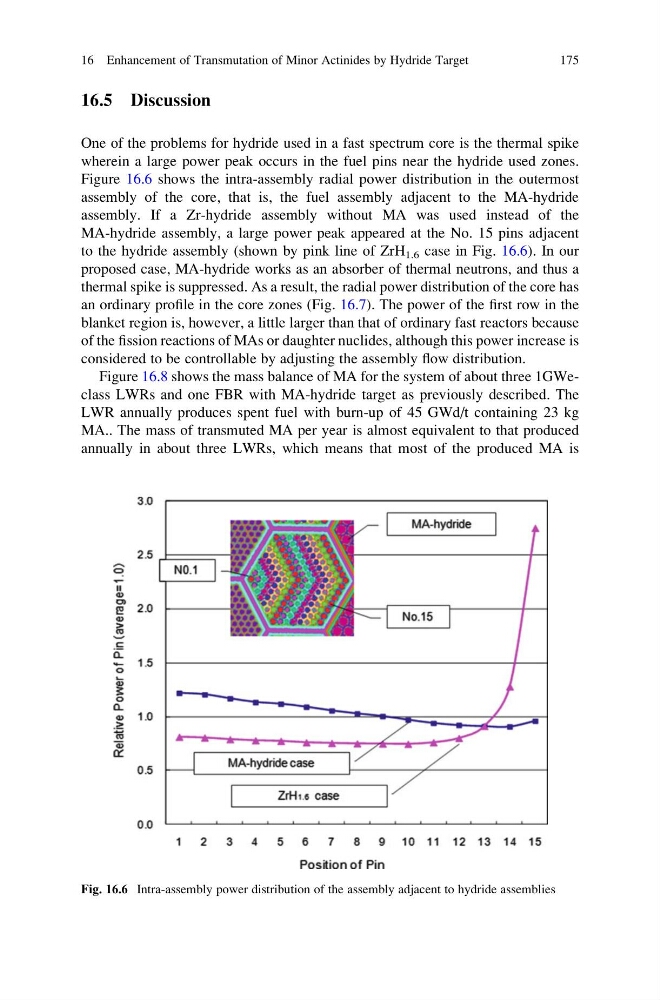
Figure 16.6 shows the intra-assembly radial power distribution in the outermost
assembly of the core, that is, the fuel assembly adjacent to the MA-hydride
assembly. If a Zr-hydride assembly without MA was used instead of the
MA-hydride assembly, a large power peak appeared at the No. 15 pins adjacent
to the hydride assembly (shown by pink line of ZrH 1.6 case in Fig. 16.6). In our
proposed case, MA-hydride works as an absorber of thermal neutrons, and thus a
thermal spike is suppressed. As a result, the radial power distribution of the core has
an ordinary profile in the core zones (Fig. 16.7). The power of the first row in the
blanket region is, however, a little larger than that of ordinary fast reactors because
of the fission reactions of MAs or daughter nuclides, although this power increase is
considered to be controllable by adjusting the assembly flow distribution.
Figure 16.8 shows the mass balance of MA for the system of about three 1GWeclass LWRs and one FBR with MA-hydride target as previously described. The
LWR annually produces spent fuel with burn-up of 45 GWd/t containing 23 kg
MA.. The mass of transmuted MA per year is almost equivalent to that produced
annually in about three LWRs, which means that most of the produced MA is
Fig. 16.6 Intra-assembly power distribution of the assembly adjacent to hydride assemblies
16 Enhancement of Transmutation of Minor Actinides by Hydride Target
175
One of the problems for hydride used in a fast spectrum core is the thermal spike
wherein a large power peak occurs in the fuel pins near the hydride used zones.
Figure 16.6 shows the intra-assembly radial power distribution in the outermost
assembly of the core, that is, the fuel assembly adjacent to the MA-hydride
assembly. If a Zr-hydride assembly without MA was used instead of the
MA-hydride assembly, a large power peak appeared at the No. 15 pins adjacent
to the hydride assembly (shown by pink line of ZrH 1.6 case in Fig. 16.6). In our
proposed case, MA-hydride works as an absorber of thermal neutrons, and thus a
thermal spike is suppressed. As a result, the radial power distribution of the core has
an ordinary profile in the core zones (Fig. 16.7). The power of the first row in the
blanket region is, however, a little larger than that of ordinary fast reactors because
of the fission reactions of MAs or daughter nuclides, although this power increase is
considered to be controllable by adjusting the assembly flow distribution.
Figure 16.8 shows the mass balance of MA for the system of about three 1GWeclass LWRs and one FBR with MA-hydride target as previously described. The
LWR annually produces spent fuel with burn-up of 45 GWd/t containing 23 kg
MA.. The mass of transmuted MA per year is almost equivalent to that produced
annually in about three LWRs, which means that most of the produced MA is
Fig. 16.6 Intra-assembly power distribution of the assembly adjacent to hydride assemblies
16 Enhancement of Transmutation of Minor Actinides by Hydride Target
175