

74
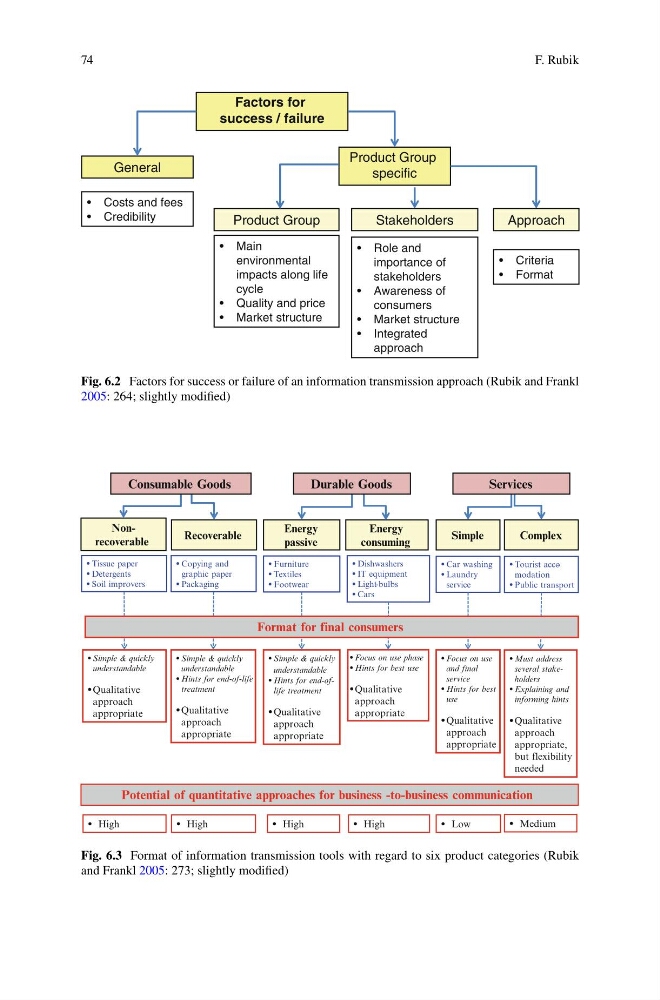
Fig. 6.2 Factors for success or failure of an information transmission approach (Rubik and Frankl
2005 : 264; slightly modifi ed)
Factors for
success / failure
General
Product Group
specific
Product Group
Stakeholders
• Costs and fees
• Credibility
Approach
• Main
environmental
impacts along life
cycle
• Quality and price
• Market structure
• Role and
importance of
stakeholders
• Awareness of
consumers
• Market structure
• Integrated
approach
• Criteria
• Format
Fig. 6.3 Format of information transmission tools with regard to six product categories (Rubik
and Frankl 2005 : 273; slightly modifi ed)
Recoverable
Nonrecoverable
Energy
passive
Energy
consuming
Complex
• Tissue paper
• Detergents
• Soil improvers
Simple
• Copying and
graphic paper
• Packaging
• Furniture
• Textiles
• Footwear
• Dishwashers
• IT equipment
• Light-bulbs
• Cars
• Car washing
• Laundry
service
• Tourist acco -
modation
• Public transport
• Simple & quickly
understandable
• Hints for end-of-life
treatment
• Qualitative
approach
appropriate
• Simple & quickly
understandable
• Qualitative
approach
appropriate
• Focus on use phase
• Hints for best use
• Qualitative
approach
appropriate
• Simple & quickly
understandable
• Hints for end-oflife treatment
• Qualitative
approach
appropriate
• Must address
several stakeholders
• Explaining and
informing hints
• Qualitative
approach
appropriate,
but flexibility
needed
• Focus on use
and final
service
• Hints for best
use
• Qualitative
approach
appropriate
Potential of quantitative approaches for business -to-business communication
• High
• High
• High
• Medium
• High
• Low
Format for final consumers
Consumable Goods
Services
Durable Goods
F. Rubik
Fig. 6.2 Factors for success or failure of an information transmission approach (Rubik and Frankl
2005 : 264; slightly modifi ed)
Factors for
success / failure
General
Product Group
specific
Product Group
Stakeholders
• Costs and fees
• Credibility
Approach
• Main
environmental
impacts along life
cycle
• Quality and price
• Market structure
• Role and
importance of
stakeholders
• Awareness of
consumers
• Market structure
• Integrated
approach
• Criteria
• Format
Fig. 6.3 Format of information transmission tools with regard to six product categories (Rubik
and Frankl 2005 : 273; slightly modifi ed)
Recoverable
Nonrecoverable
Energy
passive
Energy
consuming
Complex
• Tissue paper
• Detergents
• Soil improvers
Simple
• Copying and
graphic paper
• Packaging
• Furniture
• Textiles
• Footwear
• Dishwashers
• IT equipment
• Light-bulbs
• Cars
• Car washing
• Laundry
service
• Tourist acco -
modation
• Public transport
• Simple & quickly
understandable
• Hints for end-of-life
treatment
• Qualitative
approach
appropriate
• Simple & quickly
understandable
• Qualitative
approach
appropriate
• Focus on use phase
• Hints for best use
• Qualitative
approach
appropriate
• Simple & quickly
understandable
• Hints for end-oflife treatment
• Qualitative
approach
appropriate
• Must address
several stakeholders
• Explaining and
informing hints
• Qualitative
approach
appropriate,
but flexibility
needed
• Focus on use
and final
service
• Hints for best
use
• Qualitative
approach
appropriate
Potential of quantitative approaches for business -to-business communication
• High
• High
• High
• Medium
• High
• Low
Format for final consumers
Consumable Goods
Services
Durable Goods
F. Rubik