

40
In whatsoever ambition level is set in the sustainability policy, it should provide
a clearly defi ned and well-grounded strategies and objectives that can ensure environmental, social and economic improvements in all relevant stages of a product
profi le. The product profi le should include impact assessment throughout the product’s life cycle, from cradle to grave, taking into account interests from different
stakeholders. The product profi le should also answer questions such as: Where is
the position of the organization compared to its important competitors? Whether the
organization has relevant supply chain information on input parts and raw materials? Whether the product provides the demanded environmental quality and social
concerns by the consumers and other interested parties? Whether the organization
has the necessary resources to achieve its goals?
When the policy has been set, the next steps are to organize the effort and set up
specifi c targets.
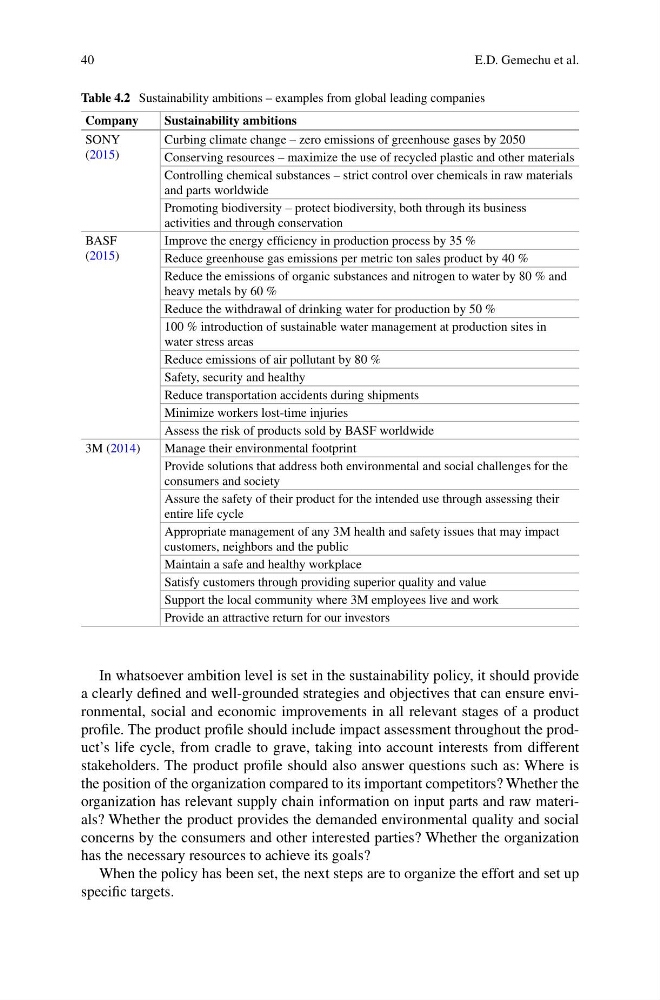
Table 4.2 Sustainability ambitions – examples from global leading companies
Company
Sustainability ambitions
SONY
( 2015 )
Curbing climate change – zero emissions of greenhouse gases by 2050
Conserving resources – maximize the use of recycled plastic and other materials
Controlling chemical substances – strict control over chemicals in raw materials
and parts worldwide
Promoting biodiversity – protect biodiversity, both through its business
activities and through conservation
BASF
( 2015 )
Improve the energy effi ciency in production process by 35 %
Reduce greenhouse gas emissions per metric ton sales product by 40 %
Reduce the emissions of organic substances and nitrogen to water by 80 % and
heavy metals by 60 %
Reduce the withdrawal of drinking water for production by 50 %
100 % introduction of sustainable water management at production sites in
water stress areas
Reduce emissions of air pollutant by 80 %
Safety, security and healthy
Reduce transportation accidents during shipments
Minimize workers lost-time injuries
Assess the risk of products sold by BASF worldwide
3M ( 2014 )
Manage their environmental footprint
Provide solutions that address both environmental and social challenges for the
consumers and society
Assure the safety of their product for the intended use through assessing their
entire life cycle
Appropriate management of any 3M health and safety issues that may impact
customers, neighbors and the public
Maintain a safe and healthy workplace
Satisfy customers through providing superior quality and value
Support the local community where 3M employees live and work
Provide an attractive return for our investors
E.D. Gemechu et al.
In whatsoever ambition level is set in the sustainability policy, it should provide
a clearly defi ned and well-grounded strategies and objectives that can ensure environmental, social and economic improvements in all relevant stages of a product
profi le. The product profi le should include impact assessment throughout the product’s life cycle, from cradle to grave, taking into account interests from different
stakeholders. The product profi le should also answer questions such as: Where is
the position of the organization compared to its important competitors? Whether the
organization has relevant supply chain information on input parts and raw materials? Whether the product provides the demanded environmental quality and social
concerns by the consumers and other interested parties? Whether the organization
has the necessary resources to achieve its goals?
When the policy has been set, the next steps are to organize the effort and set up
specifi c targets.
Table 4.2 Sustainability ambitions – examples from global leading companies
Company
Sustainability ambitions
SONY
( 2015 )
Curbing climate change – zero emissions of greenhouse gases by 2050
Conserving resources – maximize the use of recycled plastic and other materials
Controlling chemical substances – strict control over chemicals in raw materials
and parts worldwide
Promoting biodiversity – protect biodiversity, both through its business
activities and through conservation
BASF
( 2015 )
Improve the energy effi ciency in production process by 35 %
Reduce greenhouse gas emissions per metric ton sales product by 40 %
Reduce the emissions of organic substances and nitrogen to water by 80 % and
heavy metals by 60 %
Reduce the withdrawal of drinking water for production by 50 %
100 % introduction of sustainable water management at production sites in
water stress areas
Reduce emissions of air pollutant by 80 %
Safety, security and healthy
Reduce transportation accidents during shipments
Minimize workers lost-time injuries
Assess the risk of products sold by BASF worldwide
3M ( 2014 )
Manage their environmental footprint
Provide solutions that address both environmental and social challenges for the
consumers and society
Assure the safety of their product for the intended use through assessing their
entire life cycle
Appropriate management of any 3M health and safety issues that may impact
customers, neighbors and the public
Maintain a safe and healthy workplace
Satisfy customers through providing superior quality and value
Support the local community where 3M employees live and work
Provide an attractive return for our investors
E.D. Gemechu et al.