

324
3.1 Lightweight Design
Lightweight design is one relevant measure for lowering the car’s fuel consumption
and driving emissions, as the car’s mass has the biggest single influence on the running resistances. However, from an environmental life cycle perspective, it is crucial
to choose the “right” lightweight concepts and materials in order to avoid the shift
of environmental burdens (Warsen and Krinke 2012).
From the environmental point of view, a ground-breaking success factor for
lightweight design depends on the realization of secondary weight effects. Reversing
the spiral of increasing weight can and should lead to an adaption of powertrain
size. For example, the reduction of 100 kg in a car powered by a turbocharged petrol
engine results in a reduction of tailpipe-emissions by 3.6 g CO 2 /km, which is equivalent to a fuel reduction value (FRV) of 0.15 l/100 km. With an adapted powertrain
(adapted engine displacement and gear ratio), the improvement more than doubles
to 8.2 g CO 2 /km (Rohde-Brandenburger 2014). At this point it is important to bear
in mind that the choice of a powertrain is made on a vehicle perspective and depends
on the available powertrain portfolio (Krinke et al. 2010, p. 38).
3.2 Example: Hot Stamped Steel
Usually the most common way to assess the environmental impact of lightweight
design is the comparison of two materials in the context of a real application. On the
one hand the specific constraints and assumptions are set, but on the other hand the
assessment is not valid outside these constraints and assumptions.
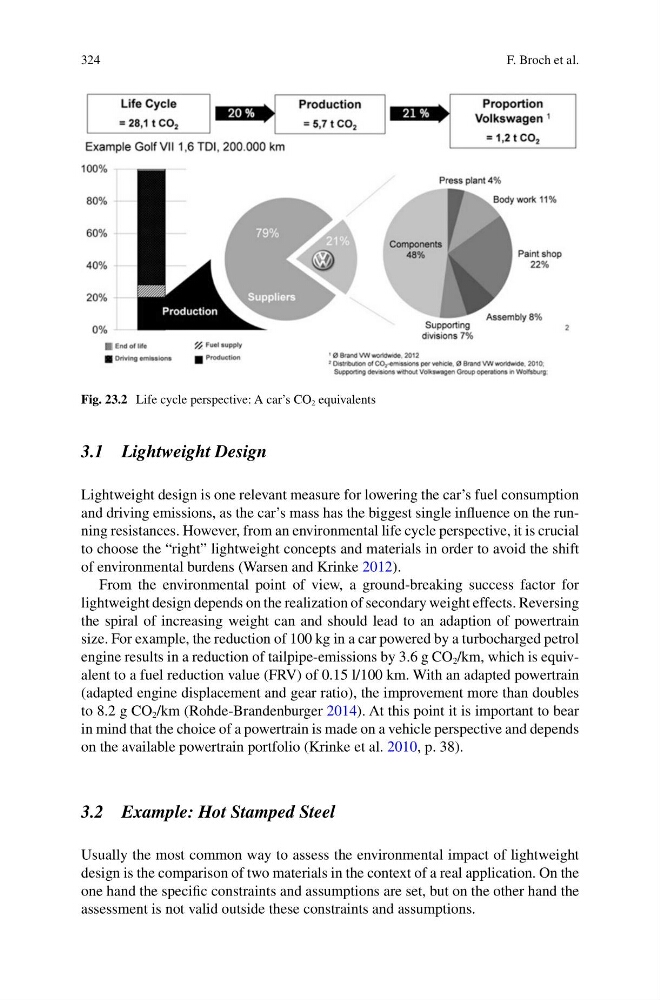
Fig. 23.2 Life cycle perspective: A car’s CO 2 equivalents
F. Broch et al.
3.1 Lightweight Design
Lightweight design is one relevant measure for lowering the car’s fuel consumption
and driving emissions, as the car’s mass has the biggest single influence on the running resistances. However, from an environmental life cycle perspective, it is crucial
to choose the “right” lightweight concepts and materials in order to avoid the shift
of environmental burdens (Warsen and Krinke 2012).
From the environmental point of view, a ground-breaking success factor for
lightweight design depends on the realization of secondary weight effects. Reversing
the spiral of increasing weight can and should lead to an adaption of powertrain
size. For example, the reduction of 100 kg in a car powered by a turbocharged petrol
engine results in a reduction of tailpipe-emissions by 3.6 g CO 2 /km, which is equivalent to a fuel reduction value (FRV) of 0.15 l/100 km. With an adapted powertrain
(adapted engine displacement and gear ratio), the improvement more than doubles
to 8.2 g CO 2 /km (Rohde-Brandenburger 2014). At this point it is important to bear
in mind that the choice of a powertrain is made on a vehicle perspective and depends
on the available powertrain portfolio (Krinke et al. 2010, p. 38).
3.2 Example: Hot Stamped Steel
Usually the most common way to assess the environmental impact of lightweight
design is the comparison of two materials in the context of a real application. On the
one hand the specific constraints and assumptions are set, but on the other hand the
assessment is not valid outside these constraints and assumptions.
Fig. 23.2 Life cycle perspective: A car’s CO 2 equivalents
F. Broch et al.