

288
4 Making It Happen
For all of the reasons outlined above, it is of utmost importance for the life cycle
community to become a stakeholder of its own, in order to be seen and have a global
voice that is heard. This will only happen, if the community starts to structure itself
in the form of a new organization. This organization should provide the actions in
the following sections.
4.1 Space to Coordinate Efforts Around the World
Currently a number of small circles and a few international organizations exist in
the life cycle space. A life cycle community organization would thus need to build
close relationships with each of these existing organizations to become a central
information and network hub that connects these circles and organizations again
and facilitates coordination.
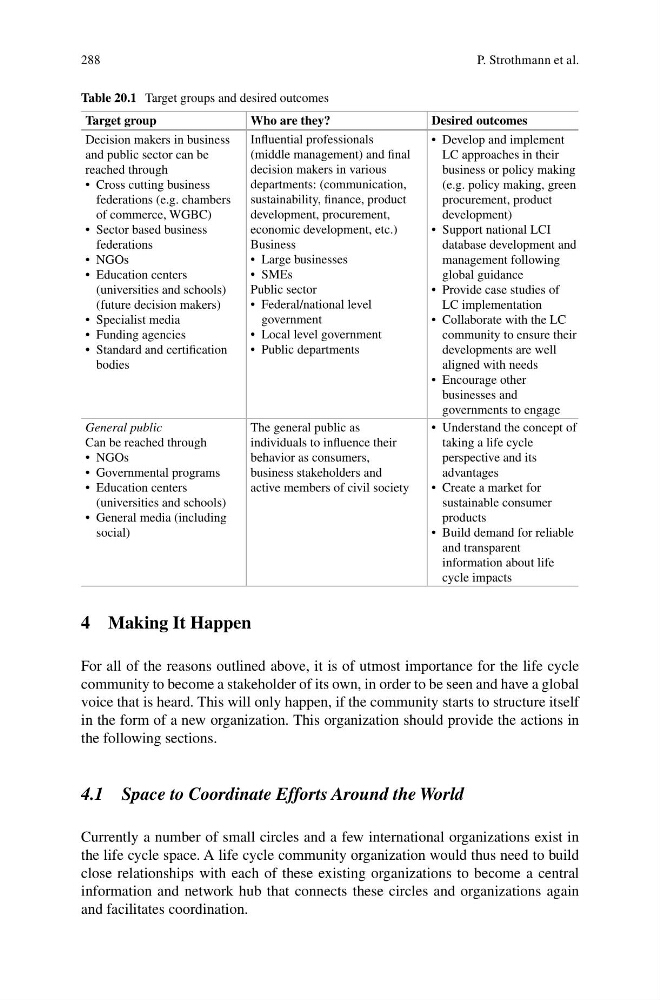
Table 20.1 Target groups and desired outcomes
Target group
Who are they?
Desired outcomes
Decision makers in business
and public sector can be
reached through
• Cross cutting business
federations (e.g. chambers
of commerce, WGBC)
• Sector based business
federations
• NGOs
• Education centers
(universities and schools)
(future decision makers)
• Specialist media
• Funding agencies
• Standard and certifi cation
bodies
Infl uential professionals
(middle management) and fi nal
decision makers in various
departments: (communication,
sustainability, fi nance, product
development, procurement,
economic development, etc.)
Business
• Large businesses
• SMEs
Public sector
• Federal/national level
government
• Local level government
• Public departments
• Develop and implement
LC approaches in their
business or policy making
(e.g. policy making, green
procurement, product
development)
• Support national LCI
database development and
management following
global guidance
• Provide case studies of
LC implementation
• Collaborate with the LC
community to ensure their
developments are well
aligned with needs
• Encourage other
businesses and
governments to engage
General public
Can be reached through
• NGOs
• Governmental programs
• Education centers
(universities and schools)
• General media (including
social)
The general public as
individuals to infl uence their
behavior as consumers,
business stakeholders and
active members of civil society
• Understand the concept of
taking a life cycle
perspective and its
advantages
• Create a market for
sustainable consumer
products
• Build demand for reliable
and transparent
information about life
cycle impacts
P. Strothmann et al.
4 Making It Happen
For all of the reasons outlined above, it is of utmost importance for the life cycle
community to become a stakeholder of its own, in order to be seen and have a global
voice that is heard. This will only happen, if the community starts to structure itself
in the form of a new organization. This organization should provide the actions in
the following sections.
4.1 Space to Coordinate Efforts Around the World
Currently a number of small circles and a few international organizations exist in
the life cycle space. A life cycle community organization would thus need to build
close relationships with each of these existing organizations to become a central
information and network hub that connects these circles and organizations again
and facilitates coordination.
Table 20.1 Target groups and desired outcomes
Target group
Who are they?
Desired outcomes
Decision makers in business
and public sector can be
reached through
• Cross cutting business
federations (e.g. chambers
of commerce, WGBC)
• Sector based business
federations
• NGOs
• Education centers
(universities and schools)
(future decision makers)
• Specialist media
• Funding agencies
• Standard and certifi cation
bodies
Infl uential professionals
(middle management) and fi nal
decision makers in various
departments: (communication,
sustainability, fi nance, product
development, procurement,
economic development, etc.)
Business
• Large businesses
• SMEs
Public sector
• Federal/national level
government
• Local level government
• Public departments
• Develop and implement
LC approaches in their
business or policy making
(e.g. policy making, green
procurement, product
development)
• Support national LCI
database development and
management following
global guidance
• Provide case studies of
LC implementation
• Collaborate with the LC
community to ensure their
developments are well
aligned with needs
• Encourage other
businesses and
governments to engage
General public
Can be reached through
• NGOs
• Governmental programs
• Education centers
(universities and schools)
• General media (including
social)
The general public as
individuals to infl uence their
behavior as consumers,
business stakeholders and
active members of civil society
• Understand the concept of
taking a life cycle
perspective and its
advantages
• Create a market for
sustainable consumer
products
• Build demand for reliable
and transparent
information about life
cycle impacts
P. Strothmann et al.