

9
The defi nitions of LCM are thus wide and its concept needs further development,
to which this book aims to contribute with theoretical and practical contributions, in
particular from industries and businesses. New aspects include, for instance, activities on mainstreaming and capacity building as well as the use of LCM in the
context of emerging economies, SMEs and regional development. The focus on
the earlier defi nitions of LCM was mainly linked to the management view of only the
environmental aspect of a product or a company – environmental LCM (Fava 1997 ;
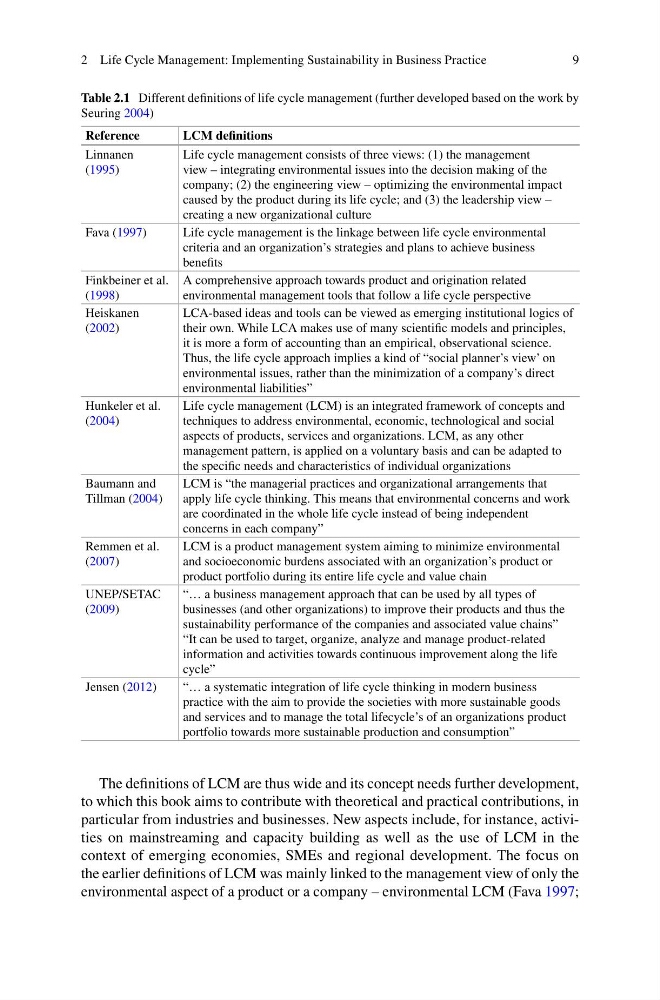
Table 2.1 Different defi nitions of life cycle management (further developed based on the work by
Seuring 2004 )
Reference
LCM defi nitions
Linnanen
( 1995 )
Life cycle management consists of three views: (1) the management
view – integrating environmental issues into the decision making of the
company; (2) the engineering view – optimizing the environmental impact
caused by the product during its life cycle; and (3) the leadership view –
creating a new organizational culture
Fava ( 1997 )
Life cycle management is the linkage between life cycle environmental
criteria and an organization’s strategies and plans to achieve business
benefi ts
Finkbeiner et al.
( 1998 )
A comprehensive approach towards product and origination related
environmental management tools that follow a life cycle perspective
Heiskanen
( 2002 )
LCA-based ideas and tools can be viewed as emerging institutional logics of
their own. While LCA makes use of many scientifi c models and principles,
it is more a form of accounting than an empirical, observational science.
Thus, the life cycle approach implies a kind of “social planner’s view’ on
environmental issues, rather than the minimization of a company’s direct
environmental liabilities”
Hunkeler et al.
( 2004 )
Life cycle management (LCM) is an integrated framework of concepts and
techniques to address environmental, economic, technological and social
aspects of products, services and organizations. LCM, as any other
management pattern, is applied on a voluntary basis and can be adapted to
the specifi c needs and characteristics of individual organizations
Baumann and
Tillman ( 2004 )
LCM is “the managerial practices and organizational arrangements that
apply life cycle thinking. This means that environmental concerns and work
are coordinated in the whole life cycle instead of being independent
concerns in each company”
Remmen et al.
( 2007 )
LCM is a product management system aiming to minimize environmental
and socioeconomic burdens associated with an organization’s product or
product portfolio during its entire life cycle and value chain
UNEP/SETAC
( 2009 )
“… a business management approach that can be used by all types of
businesses (and other organizations) to improve their products and thus the
sustainability performance of the companies and associated value chains”
“It can be used to target, organize, analyze and manage product-related
information and activities towards continuous improvement along the life
cycle”
Jensen ( 2012 )
“… a systematic integration of life cycle thinking in modern business
practice with the aim to provide the societies with more sustainable goods
and services and to manage the total lifecycle’s of an organizations product
portfolio towards more sustainable production and consumption”
2 Life Cycle Management: Implementing Sustainability in Business Practice
The defi nitions of LCM are thus wide and its concept needs further development,
to which this book aims to contribute with theoretical and practical contributions, in
particular from industries and businesses. New aspects include, for instance, activities on mainstreaming and capacity building as well as the use of LCM in the
context of emerging economies, SMEs and regional development. The focus on
the earlier defi nitions of LCM was mainly linked to the management view of only the
environmental aspect of a product or a company – environmental LCM (Fava 1997 ;
Table 2.1 Different defi nitions of life cycle management (further developed based on the work by
Seuring 2004 )
Reference
LCM defi nitions
Linnanen
( 1995 )
Life cycle management consists of three views: (1) the management
view – integrating environmental issues into the decision making of the
company; (2) the engineering view – optimizing the environmental impact
caused by the product during its life cycle; and (3) the leadership view –
creating a new organizational culture
Fava ( 1997 )
Life cycle management is the linkage between life cycle environmental
criteria and an organization’s strategies and plans to achieve business
benefi ts
Finkbeiner et al.
( 1998 )
A comprehensive approach towards product and origination related
environmental management tools that follow a life cycle perspective
Heiskanen
( 2002 )
LCA-based ideas and tools can be viewed as emerging institutional logics of
their own. While LCA makes use of many scientifi c models and principles,
it is more a form of accounting than an empirical, observational science.
Thus, the life cycle approach implies a kind of “social planner’s view’ on
environmental issues, rather than the minimization of a company’s direct
environmental liabilities”
Hunkeler et al.
( 2004 )
Life cycle management (LCM) is an integrated framework of concepts and
techniques to address environmental, economic, technological and social
aspects of products, services and organizations. LCM, as any other
management pattern, is applied on a voluntary basis and can be adapted to
the specifi c needs and characteristics of individual organizations
Baumann and
Tillman ( 2004 )
LCM is “the managerial practices and organizational arrangements that
apply life cycle thinking. This means that environmental concerns and work
are coordinated in the whole life cycle instead of being independent
concerns in each company”
Remmen et al.
( 2007 )
LCM is a product management system aiming to minimize environmental
and socioeconomic burdens associated with an organization’s product or
product portfolio during its entire life cycle and value chain
UNEP/SETAC
( 2009 )
“… a business management approach that can be used by all types of
businesses (and other organizations) to improve their products and thus the
sustainability performance of the companies and associated value chains”
“It can be used to target, organize, analyze and manage product-related
information and activities towards continuous improvement along the life
cycle”
Jensen ( 2012 )
“… a systematic integration of life cycle thinking in modern business
practice with the aim to provide the societies with more sustainable goods
and services and to manage the total lifecycle’s of an organizations product
portfolio towards more sustainable production and consumption”
2 Life Cycle Management: Implementing Sustainability in Business Practice