

208
Life cycle in their conception, they are usually presented in materials fl ow rather
than management terms and have their main impact on LCM objectives rather than
on the management processes used. Conversely, the various programs on human
rights and social conditions are not especially focused on a value chain approach but
their objectives can still be taken into account in LCM applications. Finally, it is
useful to try to link the downstream dimension of LCM with various ‘consumption
side’ programs in the UN system, with green purchasing initiatives, PSS ideas and
EPR for producers and retailers. Many of the solutions they propose can be more
easily operationalized through LCM than on a stand-alone basis.
The extension of LCM into the downstream consumption area presents particular
challenges, however this is precisely where much of the impact, and hence the real
need, often lies. For many appliances and for buildings, for example, over 80 % of
energy use, and much materials consumption occurs during use. In the food cycle,
end-point cooking is the most energy-demanding step. We already saw above the
attempts by the detergent industry to address this point. Overall, LCM’s reach so far
into the downstream parts of the value chain can best be described as timid. Effective
management action will no doubt need new partnerships with public policy institutions, governments and consumer organizations, but it cannot deny that this is an
important area to address.
On the manufacturing side the concepts of cleaner production, eco-effi ciency,
green productivity and ‘pollution prevention pays’ have been adopted in many
places, often incorporating recommendations for management that can be
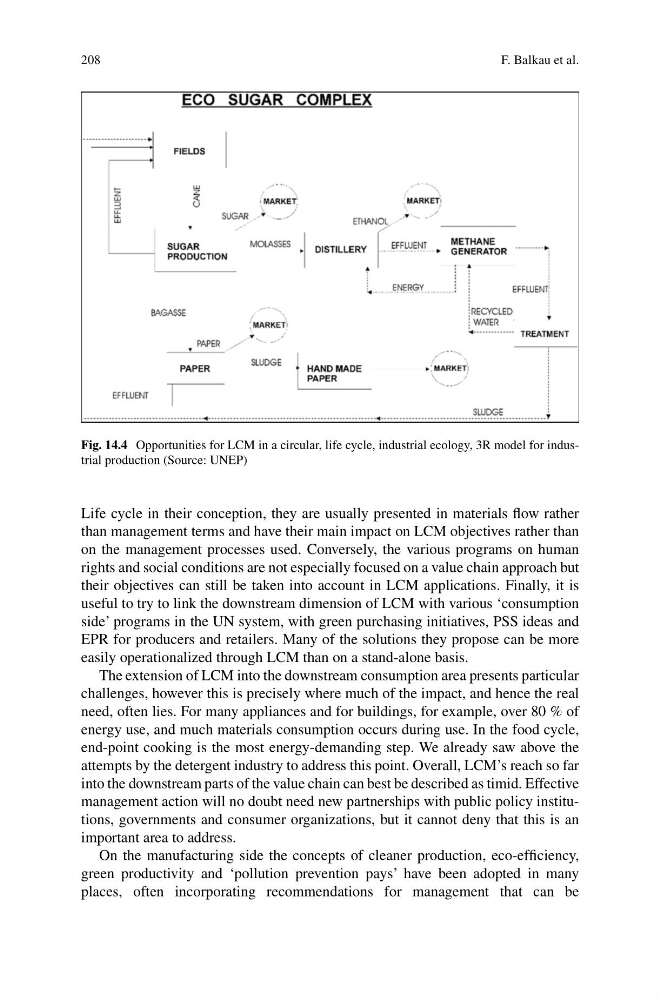
Fig. 14.4 Opportunities for LCM in a circular, life cycle, industrial ecology, 3R model for industrial production (Source: UNEP)
F. Balkau et al.
Life cycle in their conception, they are usually presented in materials fl ow rather
than management terms and have their main impact on LCM objectives rather than
on the management processes used. Conversely, the various programs on human
rights and social conditions are not especially focused on a value chain approach but
their objectives can still be taken into account in LCM applications. Finally, it is
useful to try to link the downstream dimension of LCM with various ‘consumption
side’ programs in the UN system, with green purchasing initiatives, PSS ideas and
EPR for producers and retailers. Many of the solutions they propose can be more
easily operationalized through LCM than on a stand-alone basis.
The extension of LCM into the downstream consumption area presents particular
challenges, however this is precisely where much of the impact, and hence the real
need, often lies. For many appliances and for buildings, for example, over 80 % of
energy use, and much materials consumption occurs during use. In the food cycle,
end-point cooking is the most energy-demanding step. We already saw above the
attempts by the detergent industry to address this point. Overall, LCM’s reach so far
into the downstream parts of the value chain can best be described as timid. Effective
management action will no doubt need new partnerships with public policy institutions, governments and consumer organizations, but it cannot deny that this is an
important area to address.
On the manufacturing side the concepts of cleaner production, eco-effi ciency,
green productivity and ‘pollution prevention pays’ have been adopted in many
places, often incorporating recommendations for management that can be
Fig. 14.4 Opportunities for LCM in a circular, life cycle, industrial ecology, 3R model for industrial production (Source: UNEP)
F. Balkau et al.