

155
3.1 Scale of Application
Hotspots analysis methodologies are fl exible and can be adapted based on the scope
and scale of application required by those commissioning or undertaking studies. In
general hotspots analysis can be applied at:
National and city : Countries and cities use hotspots analysis to help government
policy-makers to focus on voluntary agreements or action plans with industry,
citizens and communities in areas where sustainability hotspots have been
identifi ed. Examples include: the Water Footprint Network’s analysis of water
scarcity hotspots in major river catchments, World Resources Institute’s work to
quantify cities carbon emissions, etc.
Sector/industry and product category/product : Businesses use hotspots analysis to
identify improvement opportunities and action plans, particularly in areas such
as future resource availability and management, global supply chain risks and
volatility, waste prevention and management, etc. Examples of sector initiatives
based on hotspots analysis include: the UK grocery retailer – Tesco, tackling
the food losses and food waste associated with the international sourcing of
its products and their use by consumers; and The Sustainability Consortium
building consensus around the key sustainability hotspots to be addressed in
consumer goods value chains.
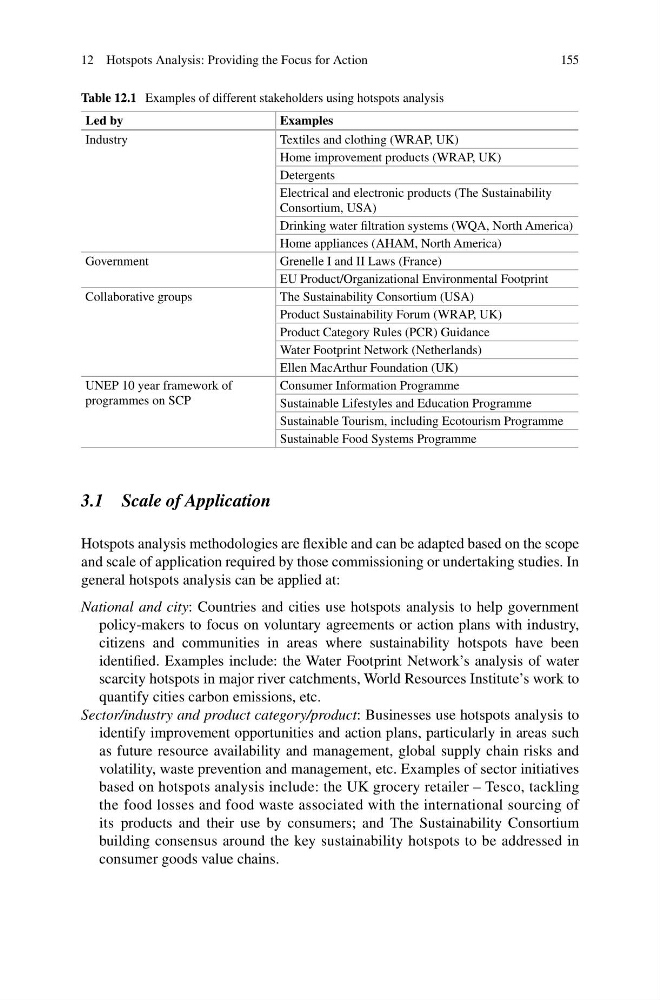
Table 12.1 Examples of different stakeholders using hotspots analysis
Led by
Examples
Industry
Textiles and clothing (WRAP, UK)
Home improvement products (WRAP, UK)
Detergents
Electrical and electronic products (The Sustainability
Consortium, USA)
Drinking water fi ltration systems (WQA, North America)
Home appliances (AHAM, North America)
Government
Grenelle I and II Laws (France)
EU Product/Organizational Environmental Footprint
Collaborative groups
The Sustainability Consortium (USA)
Product Sustainability Forum (WRAP, UK)
Product Category Rules (PCR) Guidance
Water Footprint Network (Netherlands)
Ellen MacArthur Foundation (UK)
UNEP 10 year framework of
programmes on SCP
Consumer Information Programme
Sustainable Lifestyles and Education Programme
Sustainable Tourism, including Ecotourism Programme
Sustainable Food Systems Programme
12 Hotspots Analysis: Providing the Focus for Action
3.1 Scale of Application
Hotspots analysis methodologies are fl exible and can be adapted based on the scope
and scale of application required by those commissioning or undertaking studies. In
general hotspots analysis can be applied at:
National and city : Countries and cities use hotspots analysis to help government
policy-makers to focus on voluntary agreements or action plans with industry,
citizens and communities in areas where sustainability hotspots have been
identifi ed. Examples include: the Water Footprint Network’s analysis of water
scarcity hotspots in major river catchments, World Resources Institute’s work to
quantify cities carbon emissions, etc.
Sector/industry and product category/product : Businesses use hotspots analysis to
identify improvement opportunities and action plans, particularly in areas such
as future resource availability and management, global supply chain risks and
volatility, waste prevention and management, etc. Examples of sector initiatives
based on hotspots analysis include: the UK grocery retailer – Tesco, tackling
the food losses and food waste associated with the international sourcing of
its products and their use by consumers; and The Sustainability Consortium
building consensus around the key sustainability hotspots to be addressed in
consumer goods value chains.
Table 12.1 Examples of different stakeholders using hotspots analysis
Led by
Examples
Industry
Textiles and clothing (WRAP, UK)
Home improvement products (WRAP, UK)
Detergents
Electrical and electronic products (The Sustainability
Consortium, USA)
Drinking water fi ltration systems (WQA, North America)
Home appliances (AHAM, North America)
Government
Grenelle I and II Laws (France)
EU Product/Organizational Environmental Footprint
Collaborative groups
The Sustainability Consortium (USA)
Product Sustainability Forum (WRAP, UK)
Product Category Rules (PCR) Guidance
Water Footprint Network (Netherlands)
Ellen MacArthur Foundation (UK)
UNEP 10 year framework of
programmes on SCP
Consumer Information Programme
Sustainable Lifestyles and Education Programme
Sustainable Tourism, including Ecotourism Programme
Sustainable Food Systems Programme
12 Hotspots Analysis: Providing the Focus for Action