

141
Business
Development
LCA of
Vitamin C
Innovation
External context
1.Growing population
2.Malnutrition
3.Care for healthy diets
4.Food safety
Business context (includes
stakeholder expectations)
1.Competition with Chinese
producers
2.Increasing energy prices
Marketing
and sales
Mergers and
acquisitions
1. Forward integrate into premixes
1. Acquire premix business
2. Acquire Chinese producer
a. Customers (brands/retailers): Brand their products using DSM trademarks
b. Consumers: Feel confident about food safety
c: Food fortification stakeholders: Want to see social and environmental effects quantified
For DSM:
- Reduce cost
- Reduce environmental footprint
- Improve customer loyalty (be a
preferred supplier)
For Customers (brands/retailers):
- Feel confident about reliable
Source
- Enhanced brand image without
reputational risks
For Food fortification programs
- Contribute to health of people
threatened by malnutrition
Context and Drivers
Business
functions
Business decisions based on
understanding the life cycle
Sustainable value creation
opportunities
Stakeholders’ responses
1. Switch to fermentative KGA process
2. Develop fully fermentative route
1. Include sustainability and LCA in
branding and value propositions
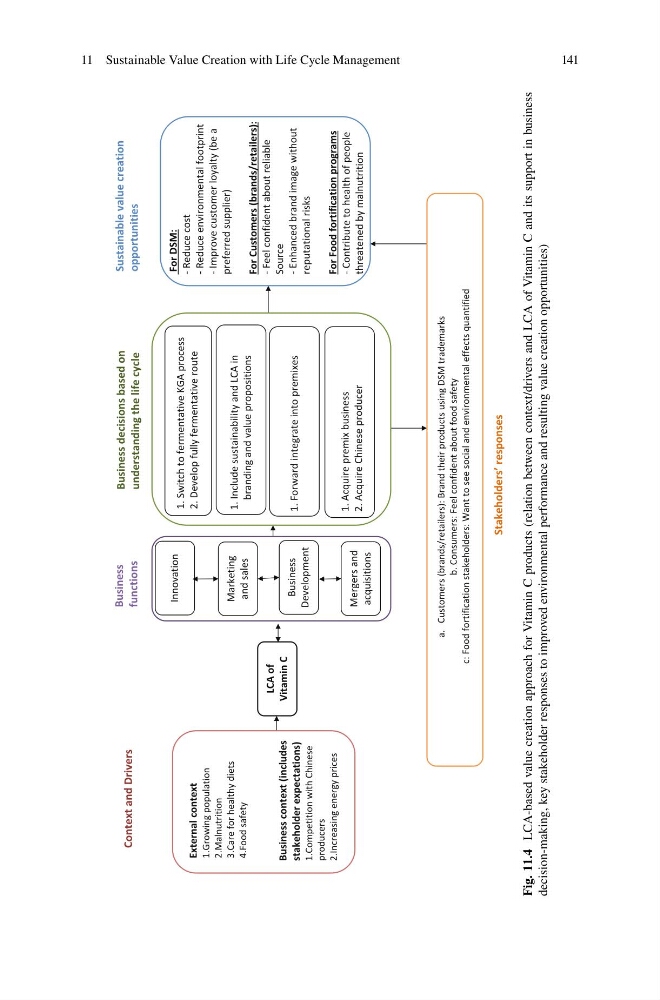
Fig. 11.4
LCA-based value creation approach for Vitamin C products (relation between context/drivers and LCA of Vitamin C and its support in business
decision-making, key stakeholder responses to improved environmental performance and resulting value creation opportunities)
11 Sustainable Value Creation with Life Cycle Management
Business
Development
LCA of
Vitamin C
Innovation
External context
1.Growing population
2.Malnutrition
3.Care for healthy diets
4.Food safety
Business context (includes
stakeholder expectations)
1.Competition with Chinese
producers
2.Increasing energy prices
Marketing
and sales
Mergers and
acquisitions
1. Forward integrate into premixes
1. Acquire premix business
2. Acquire Chinese producer
a. Customers (brands/retailers): Brand their products using DSM trademarks
b. Consumers: Feel confident about food safety
c: Food fortification stakeholders: Want to see social and environmental effects quantified
For DSM:
- Reduce cost
- Reduce environmental footprint
- Improve customer loyalty (be a
preferred supplier)
For Customers (brands/retailers):
- Feel confident about reliable
Source
- Enhanced brand image without
reputational risks
For Food fortification programs
- Contribute to health of people
threatened by malnutrition
Context and Drivers
Business
functions
Business decisions based on
understanding the life cycle
Sustainable value creation
opportunities
Stakeholders’ responses
1. Switch to fermentative KGA process
2. Develop fully fermentative route
1. Include sustainability and LCA in
branding and value propositions
Fig. 11.4
LCA-based value creation approach for Vitamin C products (relation between context/drivers and LCA of Vitamin C and its support in business
decision-making, key stakeholder responses to improved environmental performance and resulting value creation opportunities)
11 Sustainable Value Creation with Life Cycle Management