

pennsylvanica, Xanthium spp., Eclipta prostrata, Lindernia dubia, and Dysphania
ambrosioides (Anastasiu et al. 2007). However, most of the alien species within
DDBR are present in ruderal vegetal communities strongly influenced by anthropogenic activities, while fewer of them are found in natural and semi-natural
communities (Anastasiu 2011) (see Table 18.2).
Figure 18.1 presents a map with the spreading potential of invasive species. The
dark red colour (e.g. 5) shows the core areas, where species are considered to have a
high rate of spreading. In order to enhance the vulnerability of DDBR strictly
protected areas are presented as well.
18.4 Discussion
18.4.1 Climate Change-Related Features of Invasive Species
Dragota ˘ et al. (2011) explain that DDBR’s climatic frame originates from the
interaction between the main positive weather parameters and extremes. The
most climatic extremes from Romania are: the uppermost air temperature values;
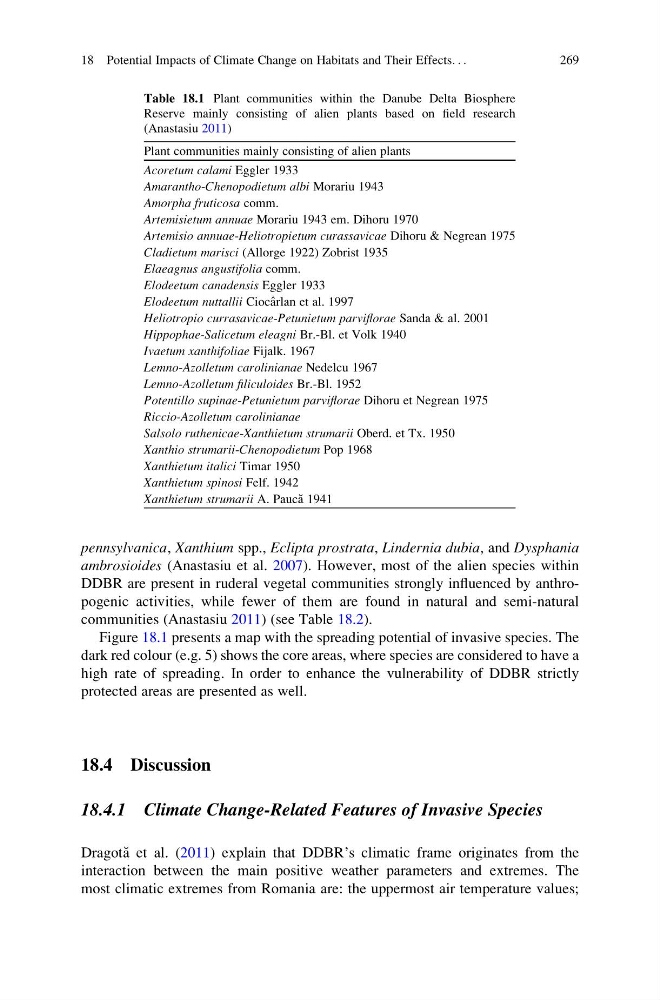
Table 18.1 Plant communities within the Danube Delta Biosphere
Reserve mainly consisting of alien plants based on field research
(Anastasiu 2011)
Plant communities mainly consisting of alien plants
Acoretum calami Eggler 1933
Amarantho-Chenopodietum albi Morariu 1943
Amorpha fruticosa comm.
Artemisietum annuae Morariu 1943 em. Dihoru 1970
Artemisio annuae-Heliotropietum curassavicae Dihoru & Negrean 1975
Cladietum marisci (Allorge 1922) Zobrist 1935
Elaeagnus angustifolia comm.
Elodeetum canadensis Eggler 1933
Elodeetum nuttallii Cioca ˆrlan et al. 1997
Heliotropio currasavicae-Petunietum parviflorae Sanda & al. 2001
Hippophae-Salicetum eleagni Br.-Bl. et Volk 1940
Ivaetum xanthifoliae Fijalk. 1967
Lemno-Azolletum carolinianae Nedelcu 1967
Lemno-Azolletum filiculoides Br.-Bl. 1952
Potentillo supinae-Petunietum parviflorae Dihoru et Negrean 1975
Riccio-Azolletum carolinianae
Salsolo ruthenicae-Xanthietum strumarii Oberd. et Tx. 1950
Xanthio strumarii-Chenopodietum Pop 1968
Xanthietum italici Timar 1950
Xanthietum spinosi Felf. 1942
Xanthietum strumarii A. Pauca ˘ 1941
18 Potential Impacts of Climate Change on Habitats and Their Effects. . .
269
ambrosioides (Anastasiu et al. 2007). However, most of the alien species within
DDBR are present in ruderal vegetal communities strongly influenced by anthropogenic activities, while fewer of them are found in natural and semi-natural
communities (Anastasiu 2011) (see Table 18.2).
Figure 18.1 presents a map with the spreading potential of invasive species. The
dark red colour (e.g. 5) shows the core areas, where species are considered to have a
high rate of spreading. In order to enhance the vulnerability of DDBR strictly
protected areas are presented as well.
18.4 Discussion
18.4.1 Climate Change-Related Features of Invasive Species
Dragota ˘ et al. (2011) explain that DDBR’s climatic frame originates from the
interaction between the main positive weather parameters and extremes. The
most climatic extremes from Romania are: the uppermost air temperature values;
Table 18.1 Plant communities within the Danube Delta Biosphere
Reserve mainly consisting of alien plants based on field research
(Anastasiu 2011)
Plant communities mainly consisting of alien plants
Acoretum calami Eggler 1933
Amarantho-Chenopodietum albi Morariu 1943
Amorpha fruticosa comm.
Artemisietum annuae Morariu 1943 em. Dihoru 1970
Artemisio annuae-Heliotropietum curassavicae Dihoru & Negrean 1975
Cladietum marisci (Allorge 1922) Zobrist 1935
Elaeagnus angustifolia comm.
Elodeetum canadensis Eggler 1933
Elodeetum nuttallii Cioca ˆrlan et al. 1997
Heliotropio currasavicae-Petunietum parviflorae Sanda & al. 2001
Hippophae-Salicetum eleagni Br.-Bl. et Volk 1940
Ivaetum xanthifoliae Fijalk. 1967
Lemno-Azolletum carolinianae Nedelcu 1967
Lemno-Azolletum filiculoides Br.-Bl. 1952
Potentillo supinae-Petunietum parviflorae Dihoru et Negrean 1975
Riccio-Azolletum carolinianae
Salsolo ruthenicae-Xanthietum strumarii Oberd. et Tx. 1950
Xanthio strumarii-Chenopodietum Pop 1968
Xanthietum italici Timar 1950
Xanthietum spinosi Felf. 1942
Xanthietum strumarii A. Pauca ˘ 1941
18 Potential Impacts of Climate Change on Habitats and Their Effects. . .
269