

temperatures (hekistothermophytes and psychrothermophytes). They are oligotrophic plants. The accompanying species are 89 % hemicryptophyte and chamaephyte. Seventy percentage of the identified species are dependent either on
humidity (mesophytes and mesohydrophyte) or on low temperatures (hekistothermophytes, psychrothermophytes and microthermophytes), and 40 % are oligotrophic. About 52 % of the plant species of Festuca supina grasslands, include the
dominant species, twelve rare plants and three endemics Achillea oxyloba subsp.
schurii (Sch.Bip.) Heimerl, Androsace villosa var. arachnoidea (Schott, Nyman &
Kotschy) R. Knuth, Dianthus glacialis subsp. gelidus (Schott, Nyman & Kotschy)
Tutin, require both low temperatures and moisture for an adequate growth.
The analysis of the species identified in habitat type 6150 revealed the presence
of some eurithermophyte and mesothermophyte, and some eutrophic species, which
are not normally found in this type of habitat (Donit ¸a ˘ et al. 2005; Gafta and
Mountford 2008). Some of these might have migrated from neighbouring habitats,
at a lower altitude. We mention here Deschampsia caespitosa (L.) P. Beauv.,
Gnaphalium sylvaticum L., Cardamine pratensis L., as well as Nardus stricta L.,
which is a dominant and characteristic species for the habitat 6230* (Species – rich
Nardus grasslands). This habitat develops at lower altitudes (800–2,070 m) and in
climate conditions characterised by average annual temperatures of between 1.5
and 6.0
C (Mountford et al. 2008).
The existence of some eutrophic and mesothrophic species (Biscutella laevigata
L., Alyssum repens Baumg., Ranunculus repens L. s.o.) can be explained by the
tendency towards eutrophication of these grasslands, which is in general, a process
associated with grazing activities (Donit ¸a ˘ et al. 2005).
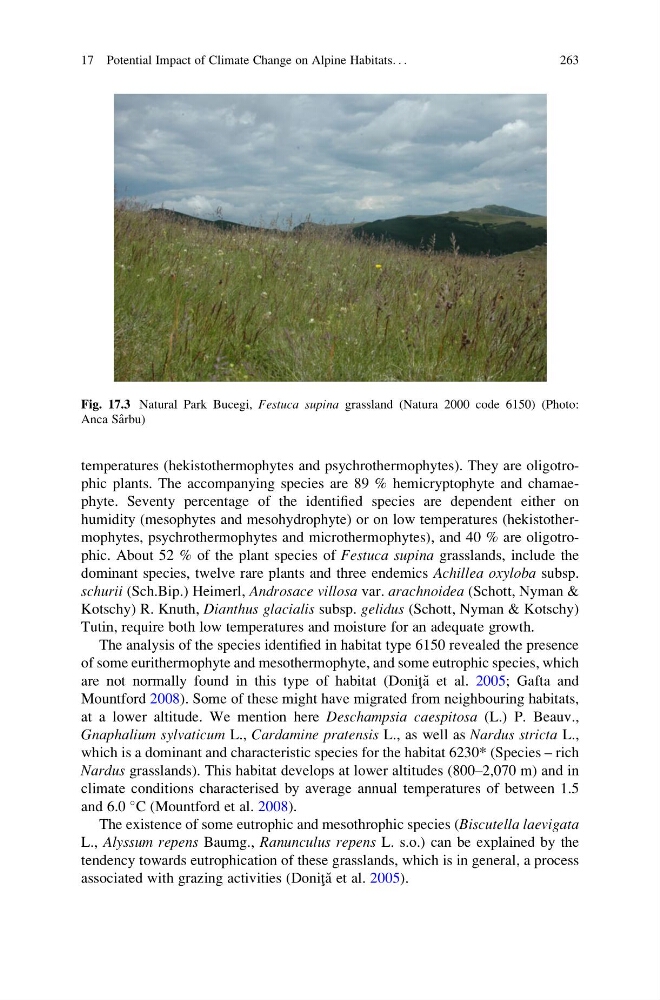
Fig. 17.3 Natural Park Bucegi, Festuca supina grassland (Natura 2000 code 6150) (Photo:
Anca Sa ˆrbu)
17 Potential Impact of Climate Change on Alpine Habitats. . .
263
humidity (mesophytes and mesohydrophyte) or on low temperatures (hekistothermophytes, psychrothermophytes and microthermophytes), and 40 % are oligotrophic. About 52 % of the plant species of Festuca supina grasslands, include the
dominant species, twelve rare plants and three endemics Achillea oxyloba subsp.
schurii (Sch.Bip.) Heimerl, Androsace villosa var. arachnoidea (Schott, Nyman &
Kotschy) R. Knuth, Dianthus glacialis subsp. gelidus (Schott, Nyman & Kotschy)
Tutin, require both low temperatures and moisture for an adequate growth.
The analysis of the species identified in habitat type 6150 revealed the presence
of some eurithermophyte and mesothermophyte, and some eutrophic species, which
are not normally found in this type of habitat (Donit ¸a ˘ et al. 2005; Gafta and
Mountford 2008). Some of these might have migrated from neighbouring habitats,
at a lower altitude. We mention here Deschampsia caespitosa (L.) P. Beauv.,
Gnaphalium sylvaticum L., Cardamine pratensis L., as well as Nardus stricta L.,
which is a dominant and characteristic species for the habitat 6230* (Species – rich
Nardus grasslands). This habitat develops at lower altitudes (800–2,070 m) and in
climate conditions characterised by average annual temperatures of between 1.5
and 6.0
C (Mountford et al. 2008).
The existence of some eutrophic and mesothrophic species (Biscutella laevigata
L., Alyssum repens Baumg., Ranunculus repens L. s.o.) can be explained by the
tendency towards eutrophication of these grasslands, which is in general, a process
associated with grazing activities (Donit ¸a ˘ et al. 2005).
Fig. 17.3 Natural Park Bucegi, Festuca supina grassland (Natura 2000 code 6150) (Photo:
Anca Sa ˆrbu)
17 Potential Impact of Climate Change on Alpine Habitats. . .
263