

16.4.2 Habitat Shifts Due to Gradual Climatic Changes
Gradual climatic changes may require the reassessment of any given forest habitat
type regarding its characteristic site suitability. This applies particularly to bog
woodlands (91D0), which are by definition associated with wet organic sites, deep
peat layers and high ground-water levels, as well as to alluvial softwood forests
(91E0) that lost their functional connection to a flowing water body and are no
longer regularly flooded. In both cases, small-scale loss or drift of the respective
habitat types is theoretically possible. However, serious changes of the water
regime are currently not expected for montane zones characterised by windward
weather situations with high amounts of precipitation.
The climate-based evaluation of gradual zonal habitat drifts within the BR relies
on the assumption that the current classification is ecologically plausible and
correct. However, the first reporting and surveying of the forest habitat types was
relatively coarse. For example, Luzulo-Fagetum habitat types are reported for
spring-influenced or alluvial azonal stand patches, where habitat types 91E0 and
9180 (Stellario-Alnetum, Carici remotae-Fraxinetum and Ulmo glabrae-Aceretum
pseudoplatani) ought to be present.
Highly likely changes of the species composition typical for correctly classified
habitat types were evaluated regarding the potential occurrence of plant associations (realised niche) and typical species (fundamental niche) of the respective
habitat types (see Fig. 16.6). Depending on the habitat type, ‘optimal’ and ‘good’
ratings for species composition are lost if the share of typical species falls below
90 % and 60 %, respectively. This is expected for 6 ha of Vaccinio-Piceetea
habitats (9410) on wet or moderately moist mesotrophic, slightly to highly skeletal
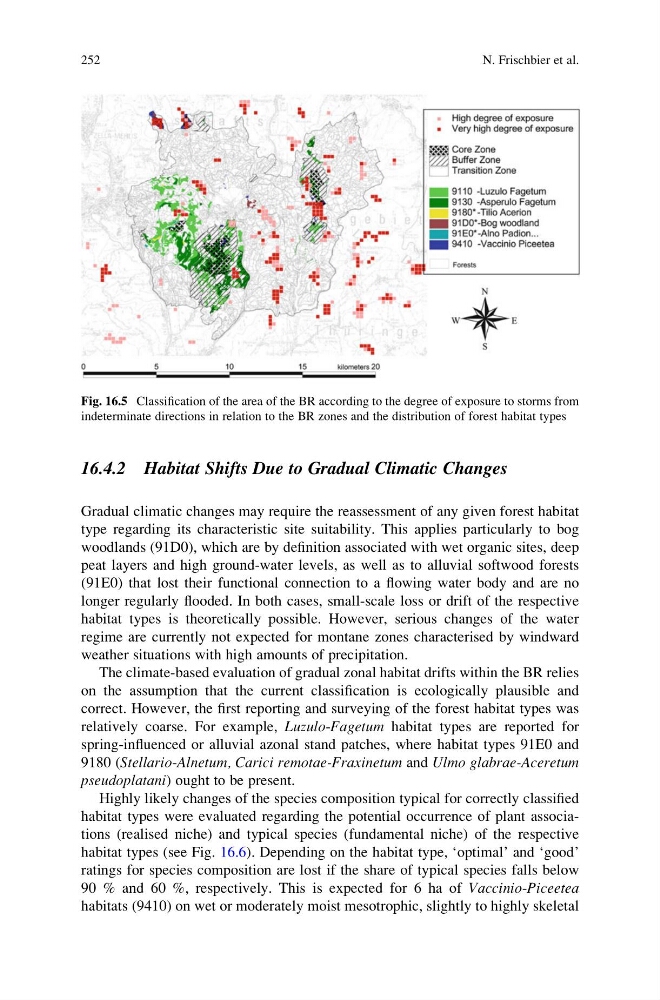
Fig. 16.5 Classification of the area of the BR according to the degree of exposure to storms from
indeterminate directions in relation to the BR zones and the distribution of forest habitat types
252
N. Frischbier et al.
Gradual climatic changes may require the reassessment of any given forest habitat
type regarding its characteristic site suitability. This applies particularly to bog
woodlands (91D0), which are by definition associated with wet organic sites, deep
peat layers and high ground-water levels, as well as to alluvial softwood forests
(91E0) that lost their functional connection to a flowing water body and are no
longer regularly flooded. In both cases, small-scale loss or drift of the respective
habitat types is theoretically possible. However, serious changes of the water
regime are currently not expected for montane zones characterised by windward
weather situations with high amounts of precipitation.
The climate-based evaluation of gradual zonal habitat drifts within the BR relies
on the assumption that the current classification is ecologically plausible and
correct. However, the first reporting and surveying of the forest habitat types was
relatively coarse. For example, Luzulo-Fagetum habitat types are reported for
spring-influenced or alluvial azonal stand patches, where habitat types 91E0 and
9180 (Stellario-Alnetum, Carici remotae-Fraxinetum and Ulmo glabrae-Aceretum
pseudoplatani) ought to be present.
Highly likely changes of the species composition typical for correctly classified
habitat types were evaluated regarding the potential occurrence of plant associations (realised niche) and typical species (fundamental niche) of the respective
habitat types (see Fig. 16.6). Depending on the habitat type, ‘optimal’ and ‘good’
ratings for species composition are lost if the share of typical species falls below
90 % and 60 %, respectively. This is expected for 6 ha of Vaccinio-Piceetea
habitats (9410) on wet or moderately moist mesotrophic, slightly to highly skeletal
Fig. 16.5 Classification of the area of the BR according to the degree of exposure to storms from
indeterminate directions in relation to the BR zones and the distribution of forest habitat types
252
N. Frischbier et al.