

both long- and short-term climatic fluctuations, of which the most important is the
temporal distribution of precipitation responsible for runoff dynamics and air
temperature variability, which determines snow accumulation, snowmelt and
evapotranspiration.
The complexity of hydrological processes and their spatial relations within the
Biebrza Valley induced the development of various types of wetland: minerotrophic
calcareous fens, regularly flooded riparian marshes and ombrotrophic bogs (Okruszko
1991; Os ´wit 1991; Wassen et al. 2006). In many parts of the analysed area the status of
wetlands can be considered as near-natural, because they evolve within the feedback
of natural, physical and ecological processes, not being directly influenced by any type
of water management nor agricultural pressures (Grygoruk et al. 2011a; Wassen
et al. 1990). Therefore, one of the most important, trans-national, European value of
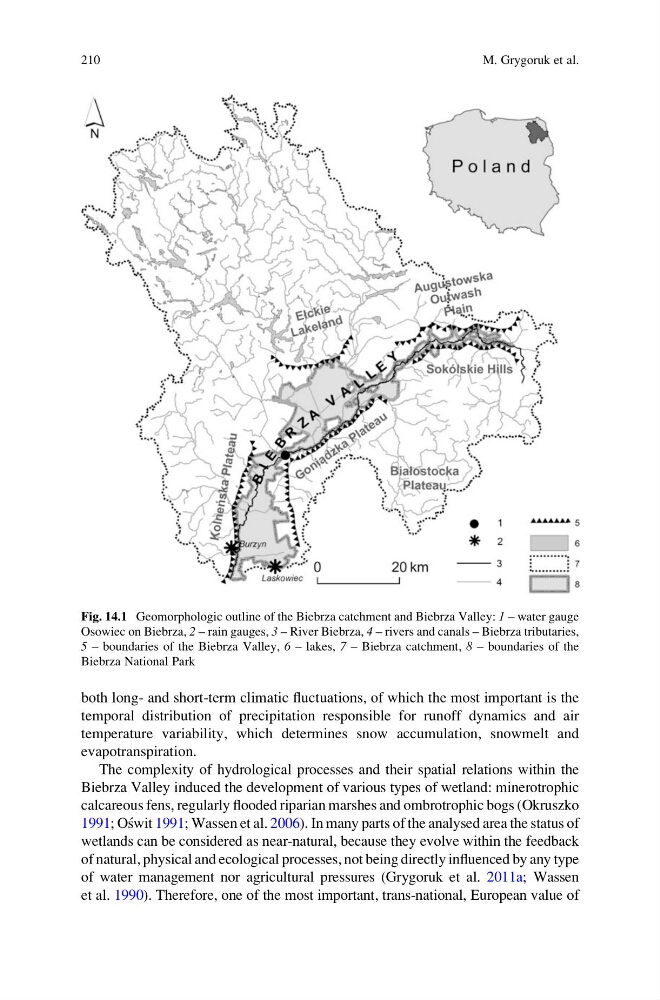
Fig. 14.1 Geomorphologic outline of the Biebrza catchment and Biebrza Valley: 1 – water gauge
Osowiec on Biebrza, 2 – rain gauges, 3 – River Biebrza, 4 – rivers and canals – Biebrza tributaries,
5 – boundaries of the Biebrza Valley, 6 – lakes, 7 – Biebrza catchment, 8 – boundaries of the
Biebrza National Park
210
M. Grygoruk et al.
temporal distribution of precipitation responsible for runoff dynamics and air
temperature variability, which determines snow accumulation, snowmelt and
evapotranspiration.
The complexity of hydrological processes and their spatial relations within the
Biebrza Valley induced the development of various types of wetland: minerotrophic
calcareous fens, regularly flooded riparian marshes and ombrotrophic bogs (Okruszko
1991; Os ´wit 1991; Wassen et al. 2006). In many parts of the analysed area the status of
wetlands can be considered as near-natural, because they evolve within the feedback
of natural, physical and ecological processes, not being directly influenced by any type
of water management nor agricultural pressures (Grygoruk et al. 2011a; Wassen
et al. 1990). Therefore, one of the most important, trans-national, European value of
Fig. 14.1 Geomorphologic outline of the Biebrza catchment and Biebrza Valley: 1 – water gauge
Osowiec on Biebrza, 2 – rain gauges, 3 – River Biebrza, 4 – rivers and canals – Biebrza tributaries,
5 – boundaries of the Biebrza Valley, 6 – lakes, 7 – Biebrza catchment, 8 – boundaries of the
Biebrza National Park
210
M. Grygoruk et al.