

The sample areas host five types of habitats that are under protection within
the Natura 2000 programme of the European Union: Pannonic salt steppes
and salt marshes (Habitat Directive code 1530), Natural eutrophic lakes with
Magnopotamion or Hydrocharition-type vegetation (3150), Pannonic loess steppic
grasslands (6250), Alluvial meadows of river valleys of the Cnidion dubii (6440)
and Alluvial forests with Alnus glutinosa and Fraxinus excelsior (91E0). This is
why, on top of being a national park area, those habitats have been also designated
as Natura 2000 sites (both Special Protection Areas (SPA) and Special Areas of
Conservation (SAC)). They are especially important as preservers of salt steppes
and salt marshes. Due to the high ecological values, these habitats are in focus of
adaptive management planning.
Arable lands cover a larger portion of the Kis-Sa ´rre ´t SAC and SPA areas. However,
the national park’s directorate supports their conversion of grasslands. The rate of
inhabitants living in the investigation area and working in agriculture is higher than the
national average. However, most of them own less than 5 ha. Some former agricultural
cooperatives have been converted to economic enterprises. The national park’s
directorate primarily uses those areas which benefit from habitat reconstruction or
restoration. Other state-owned protected areas are worked by farmers, with certain
restrictions from to the national park’s directorate. The main crops grown in these
areas are autumn wheat, autumn barley, oat, corn, sunflower, alfalfa. Alternative crops
are oil pumpkin, oil rape, and oil radish. Rice had been produced between the 1930s
and 1960s around Mezo ˝gya ´n, Geszt and Biharugra villages, resulting in artificially
created wet areas that were later inhabited by native species.
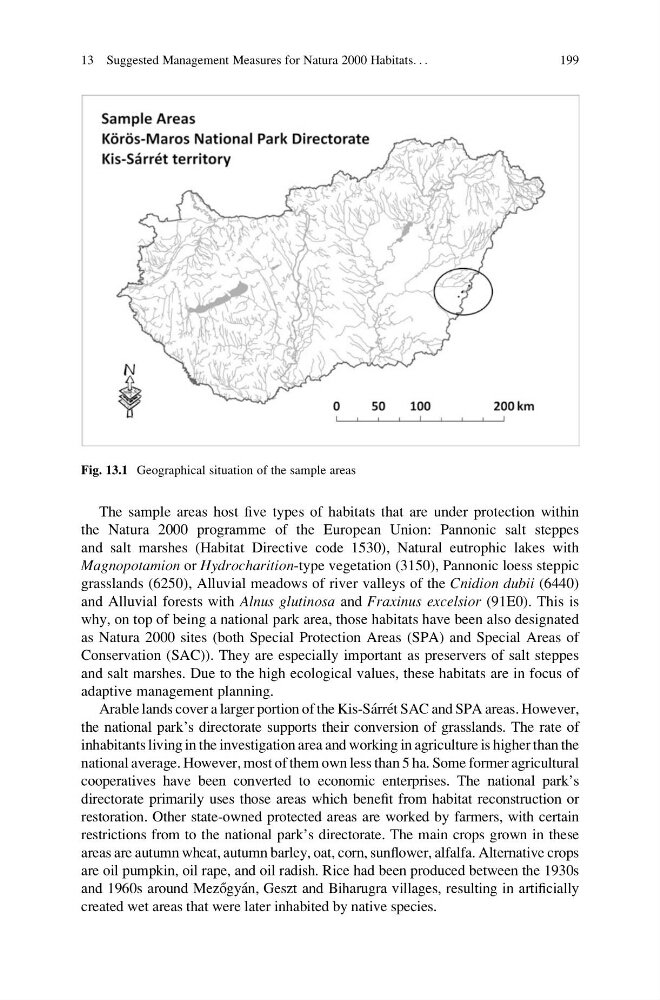
Fig. 13.1 Geographical situation of the sample areas
13 Suggested Management Measures for Natura 2000 Habitats. . .
199
the Natura 2000 programme of the European Union: Pannonic salt steppes
and salt marshes (Habitat Directive code 1530), Natural eutrophic lakes with
Magnopotamion or Hydrocharition-type vegetation (3150), Pannonic loess steppic
grasslands (6250), Alluvial meadows of river valleys of the Cnidion dubii (6440)
and Alluvial forests with Alnus glutinosa and Fraxinus excelsior (91E0). This is
why, on top of being a national park area, those habitats have been also designated
as Natura 2000 sites (both Special Protection Areas (SPA) and Special Areas of
Conservation (SAC)). They are especially important as preservers of salt steppes
and salt marshes. Due to the high ecological values, these habitats are in focus of
adaptive management planning.
Arable lands cover a larger portion of the Kis-Sa ´rre ´t SAC and SPA areas. However,
the national park’s directorate supports their conversion of grasslands. The rate of
inhabitants living in the investigation area and working in agriculture is higher than the
national average. However, most of them own less than 5 ha. Some former agricultural
cooperatives have been converted to economic enterprises. The national park’s
directorate primarily uses those areas which benefit from habitat reconstruction or
restoration. Other state-owned protected areas are worked by farmers, with certain
restrictions from to the national park’s directorate. The main crops grown in these
areas are autumn wheat, autumn barley, oat, corn, sunflower, alfalfa. Alternative crops
are oil pumpkin, oil rape, and oil radish. Rice had been produced between the 1930s
and 1960s around Mezo ˝gya ´n, Geszt and Biharugra villages, resulting in artificially
created wet areas that were later inhabited by native species.
Fig. 13.1 Geographical situation of the sample areas
13 Suggested Management Measures for Natura 2000 Habitats. . .
199