

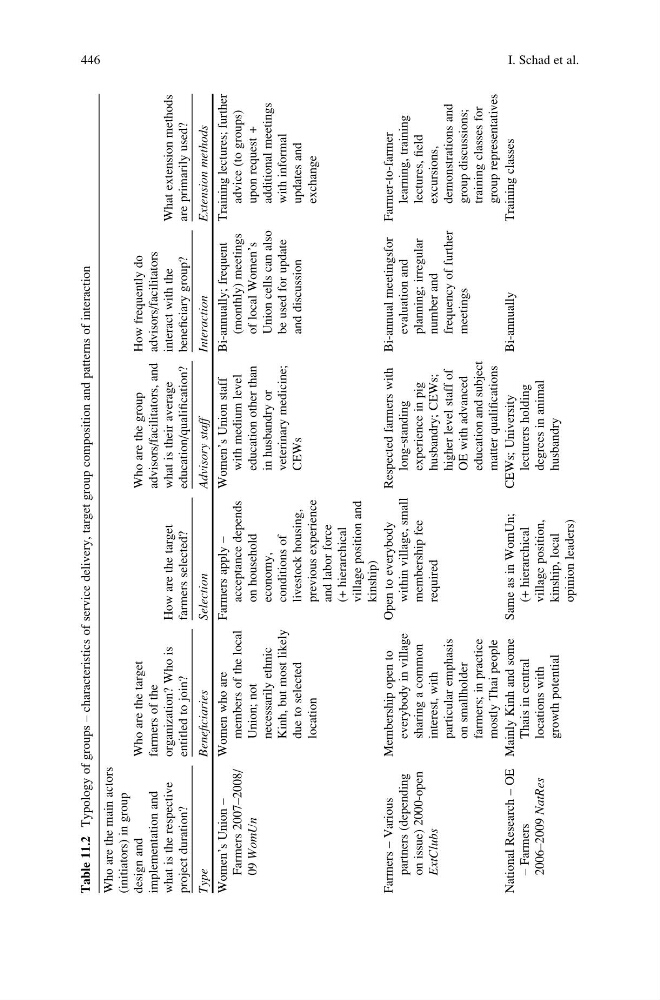
Table 11.2 Typology of groups – characteristics of service delivery, target group composition and patterns of interaction
Who are the main actors
(initiators) in group
design and
implementation and
what is the respective
project duration?
Who are the target
farmers of the
organization? Who is
entitled to join?
How are the target
farmers selected?
Who are the group
advisors/facilitators, and
what is their average
education/qualification?
How frequently do
advisors/facilitators
interact with the
beneficiary group?
What extension methods
are primarily used?
Type
Beneficiaries
Selection
Advisory staff
Interaction
Extension methods
Women’s Union –
Farmers 2007–2008/
09
WomUn
Women who are
members of the local
Union; not
necessarily ethnic
Kinh, but most likely
due to selected
location
Farmers apply –
acceptance depends
on household
economy,
conditions of
livestock housing,
previous experience
and labor force
(+ hierarchical
village position and
kinship)
Women’s Union staff
with medium level
education other than
in husbandry or
veterinary medicine;
CEWs
Bi-annually; frequent
(monthly) meetings
of local Women’s
Union cells can also
be used for update
and discussion
Training lectures; further
advice (to groups)
upon request +
additional meetings
with informal
updates and
exchange
Farmers – Various
partners (depending
on issue) 2000-open
ExtClubs
Membership open to
everybody in village
sharing a common
interest, with
particular emphasis
on smallholder
farmers; in practice
mostly Thai people
Open to everybody
within village, small
membership fee
required
Respected farmers with
long-standing
experience in pig
husbandry; CEWs;
higher level staff of
OE with advanced
education and subject
matter qualifications
Bi-annual meetingsfor
evaluation and
planning; irregular
number and
frequency of further
meetings
Farmer-to-farmer
learning, training
lectures, field
excursions,
demonstrations and
group discussions;
training classes for
group representatives
National Research – OE
– Farmers
2006–2009
NatRes
Mainly Kinh and some
Thais in central
locations with
growth potential
Same as in WomUn;
(+ hierarchical
village position,
kinship, local
opinion leaders)
CEWs; University
lecturers holding
degrees in animal
husbandry
Bi-annually
Training classes
446
I. Schad et al.
Who are the main actors
(initiators) in group
design and
implementation and
what is the respective
project duration?
Who are the target
farmers of the
organization? Who is
entitled to join?
How are the target
farmers selected?
Who are the group
advisors/facilitators, and
what is their average
education/qualification?
How frequently do
advisors/facilitators
interact with the
beneficiary group?
What extension methods
are primarily used?
Type
Beneficiaries
Selection
Advisory staff
Interaction
Extension methods
Women’s Union –
Farmers 2007–2008/
09
WomUn
Women who are
members of the local
Union; not
necessarily ethnic
Kinh, but most likely
due to selected
location
Farmers apply –
acceptance depends
on household
economy,
conditions of
livestock housing,
previous experience
and labor force
(+ hierarchical
village position and
kinship)
Women’s Union staff
with medium level
education other than
in husbandry or
veterinary medicine;
CEWs
Bi-annually; frequent
(monthly) meetings
of local Women’s
Union cells can also
be used for update
and discussion
Training lectures; further
advice (to groups)
upon request +
additional meetings
with informal
updates and
exchange
Farmers – Various
partners (depending
on issue) 2000-open
ExtClubs
Membership open to
everybody in village
sharing a common
interest, with
particular emphasis
on smallholder
farmers; in practice
mostly Thai people
Open to everybody
within village, small
membership fee
required
Respected farmers with
long-standing
experience in pig
husbandry; CEWs;
higher level staff of
OE with advanced
education and subject
matter qualifications
Bi-annual meetingsfor
evaluation and
planning; irregular
number and
frequency of further
meetings
Farmer-to-farmer
learning, training
lectures, field
excursions,
demonstrations and
group discussions;
training classes for
group representatives
National Research – OE
– Farmers
2006–2009
NatRes
Mainly Kinh and some
Thais in central
locations with
growth potential
Same as in WomUn;
(+ hierarchical
village position,
kinship, local
opinion leaders)
CEWs; University
lecturers holding
degrees in animal
husbandry
Bi-annually
Training classes
446
I. Schad et al.