

models locally or separately on remote computers. Figure 10.22 depicts the
principles of data exchange used in the coupled model.
Data exchange takes place once a year. LUCIA receives a land use map at the
beginning of each year and then runs for 365 days, returning a yield map to MPMAS, which serves as a basis for agents’ decision-making.
This soft coupling approach allows cooperation between teams of different
disciplines without major adaptations to the individual models. Model interaction
is limited to a well-defined set of data pertaining to few parameters. As a consequence, the codes for both models can be maintained and developed independently.
10.8.2.2 Case Study
As for the LUCIA standalone study (Sect. 10.2), we aimed to compare the impacts
of several soil conservation measures on erosion and yields in Chieng Khoi
commune, north-west Vietnam – but this time incorporating dynamic decisionmaking and household incomes. The four scenarios built were the same as
described in the LUCIA standalone study. In addition, labor inputs were accounted
for as shown in Table 10.10. Because we tested low cost soil conservation methods,
we assumed no additional cash costs for Scenarios B to D, as compared to
Scenario A. While soil conservation options were not introduced in Scenario A,
conventional practices were available to farmers under B to D. Likewise, zero
tillage without a cover crop could be selected by agents under C and D.
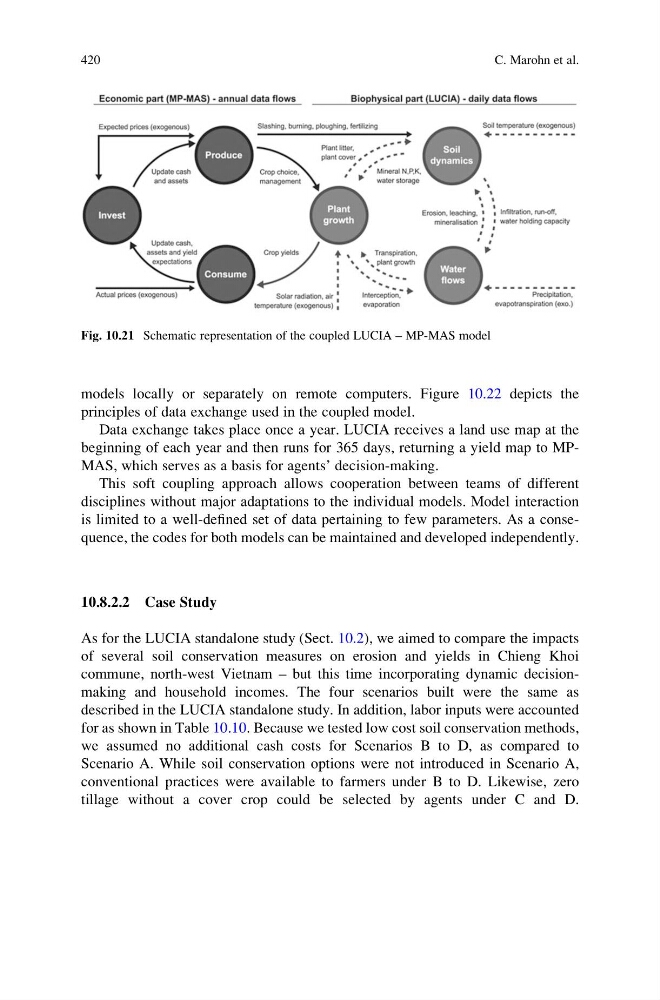
Fig. 10.21 Schematic representation of the coupled LUCIA – MP-MAS model
420
C. Marohn et al.
principles of data exchange used in the coupled model.
Data exchange takes place once a year. LUCIA receives a land use map at the
beginning of each year and then runs for 365 days, returning a yield map to MPMAS, which serves as a basis for agents’ decision-making.
This soft coupling approach allows cooperation between teams of different
disciplines without major adaptations to the individual models. Model interaction
is limited to a well-defined set of data pertaining to few parameters. As a consequence, the codes for both models can be maintained and developed independently.
10.8.2.2 Case Study
As for the LUCIA standalone study (Sect. 10.2), we aimed to compare the impacts
of several soil conservation measures on erosion and yields in Chieng Khoi
commune, north-west Vietnam – but this time incorporating dynamic decisionmaking and household incomes. The four scenarios built were the same as
described in the LUCIA standalone study. In addition, labor inputs were accounted
for as shown in Table 10.10. Because we tested low cost soil conservation methods,
we assumed no additional cash costs for Scenarios B to D, as compared to
Scenario A. While soil conservation options were not introduced in Scenario A,
conventional practices were available to farmers under B to D. Likewise, zero
tillage without a cover crop could be selected by agents under C and D.
Fig. 10.21 Schematic representation of the coupled LUCIA – MP-MAS model
420
C. Marohn et al.