

requested an official letter from the National Park authorities certifying that they
have the right to permanently settle in the present location, but to no avail.
Surprisingly, the litchi processing cooperative appeared to face fewer constraints
when exporting the dried litchis to European markets. Neither the French natural
food retailer that ordered two shipments of dried organic litchi from the cooperative
in 2009, nor the fair trade organization in Germany that expressed its interest in
importing dried litchi starting from the 2012 season, insisted on having the drying
process certified under the Thai GMP scheme, that is, as long as the dried litchi
were produced under hygienic conditions and contained no agrochemical residues.
This is in sharp contrast with the marketing of fresh litchi; for example, farmers
involved in a marketing network with a British-based hypermarket chain via a Thai
cooperative learned quickly that the quality standards for their litchi were not as
strictly applied as initially claimed by their new business partners. Whereas in the
first round of negotiations, GAP certification was mentioned as an absolute prerequisite for supplying fresh litchi to the hypermarket chain, it turned out that non-GAP
certified farmers could also sell their litchi through this new marketing channel,
particularly if the Thai cooperative could not fulfill the daily quota of litchis from its
GAP-certified orchards.
Yet the exporters of fresh litchi in general face much stricter regulations than
those governing local value chains. In the 2010 season, a Thai export company
worked with a group of farmers in one of the Hmong villages towards obtaining the
Global GAP certification needed to enable exports to overseas markets. This first
attempt failed when one of the farmers failed to comply with the strict rules on
pesticide application, with chemical residues then detected in one shipment at the
country of destination. As a consequence, the shipment was rejected by the
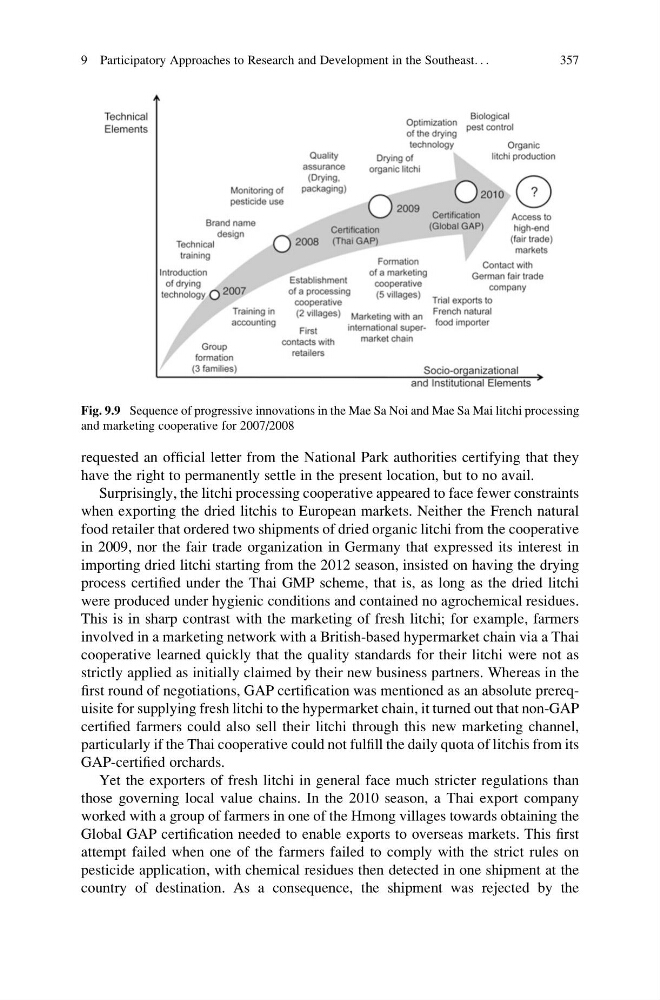
Fig. 9.9 Sequence of progressive innovations in the Mae Sa Noi and Mae Sa Mai litchi processing
and marketing cooperative for 2007/2008
9 Participatory Approaches to Research and Development in the Southeast. . .
357
have the right to permanently settle in the present location, but to no avail.
Surprisingly, the litchi processing cooperative appeared to face fewer constraints
when exporting the dried litchis to European markets. Neither the French natural
food retailer that ordered two shipments of dried organic litchi from the cooperative
in 2009, nor the fair trade organization in Germany that expressed its interest in
importing dried litchi starting from the 2012 season, insisted on having the drying
process certified under the Thai GMP scheme, that is, as long as the dried litchi
were produced under hygienic conditions and contained no agrochemical residues.
This is in sharp contrast with the marketing of fresh litchi; for example, farmers
involved in a marketing network with a British-based hypermarket chain via a Thai
cooperative learned quickly that the quality standards for their litchi were not as
strictly applied as initially claimed by their new business partners. Whereas in the
first round of negotiations, GAP certification was mentioned as an absolute prerequisite for supplying fresh litchi to the hypermarket chain, it turned out that non-GAP
certified farmers could also sell their litchi through this new marketing channel,
particularly if the Thai cooperative could not fulfill the daily quota of litchis from its
GAP-certified orchards.
Yet the exporters of fresh litchi in general face much stricter regulations than
those governing local value chains. In the 2010 season, a Thai export company
worked with a group of farmers in one of the Hmong villages towards obtaining the
Global GAP certification needed to enable exports to overseas markets. This first
attempt failed when one of the farmers failed to comply with the strict rules on
pesticide application, with chemical residues then detected in one shipment at the
country of destination. As a consequence, the shipment was rejected by the
Fig. 9.9 Sequence of progressive innovations in the Mae Sa Noi and Mae Sa Mai litchi processing
and marketing cooperative for 2007/2008
9 Participatory Approaches to Research and Development in the Southeast. . .
357