

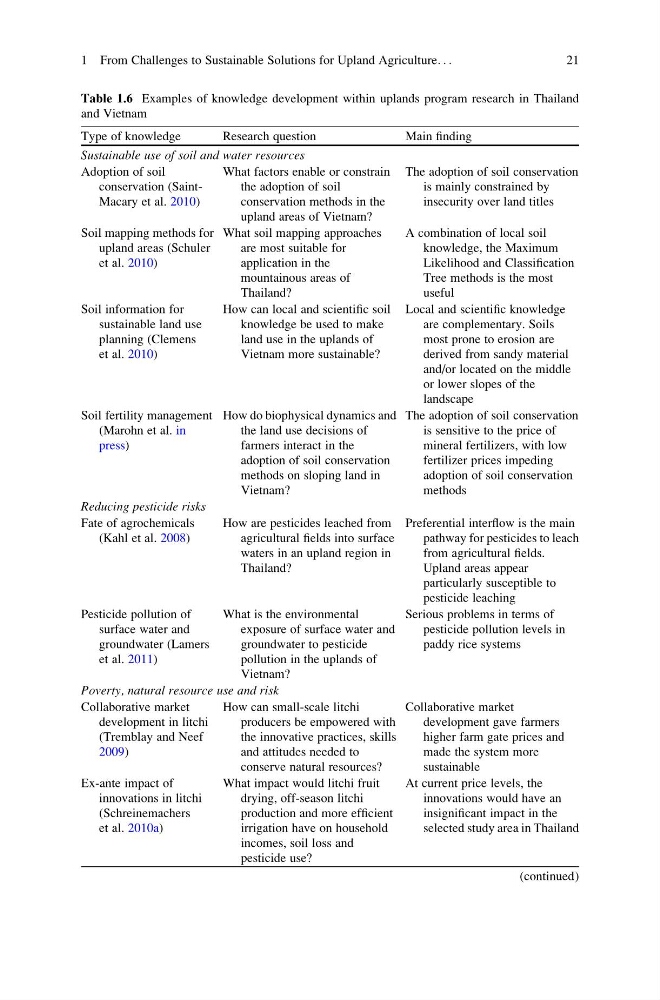
Table 1.6 Examples of knowledge development within uplands program research in Thailand
and Vietnam
Type of knowledge
Research question
Main finding
Sustainable use of soil and water resources
Adoption of soil
conservation (SaintMacary et al. 2010)
What factors enable or constrain
the adoption of soil
conservation methods in the
upland areas of Vietnam?
The adoption of soil conservation
is mainly constrained by
insecurity over land titles
Soil mapping methods for
upland areas (Schuler
et al. 2010)
What soil mapping approaches
are most suitable for
application in the
mountainous areas of
Thailand?
A combination of local soil
knowledge, the Maximum
Likelihood and Classification
Tree methods is the most
useful
Soil information for
sustainable land use
planning (Clemens
et al. 2010)
How can local and scientific soil
knowledge be used to make
land use in the uplands of
Vietnam more sustainable?
Local and scientific knowledge
are complementary. Soils
most prone to erosion are
derived from sandy material
and/or located on the middle
or lower slopes of the
landscape
Soil fertility management
(Marohn et al. in
press)
How do biophysical dynamics and
the land use decisions of
farmers interact in the
adoption of soil conservation
methods on sloping land in
Vietnam?
The adoption of soil conservation
is sensitive to the price of
mineral fertilizers, with low
fertilizer prices impeding
adoption of soil conservation
methods
Reducing pesticide risks
Fate of agrochemicals
(Kahl et al. 2008)
How are pesticides leached from
agricultural fields into surface
waters in an upland region in
Thailand?
Preferential interflow is the main
pathway for pesticides to leach
from agricultural fields.
Upland areas appear
particularly susceptible to
pesticide leaching
Pesticide pollution of
surface water and
groundwater (Lamers
et al. 2011)
What is the environmental
exposure of surface water and
groundwater to pesticide
pollution in the uplands of
Vietnam?
Serious problems in terms of
pesticide pollution levels in
paddy rice systems
Poverty, natural resource use and risk
Collaborative market
development in litchi
(Tremblay and Neef
2009)
How can small-scale litchi
producers be empowered with
the innovative practices, skills
and attitudes needed to
conserve natural resources?
Collaborative market
development gave farmers
higher farm gate prices and
made the system more
sustainable
Ex-ante impact of
innovations in litchi
(Schreinemachers
et al. 2010a)
What impact would litchi fruit
drying, off-season litchi
production and more efficient
irrigation have on household
incomes, soil loss and
pesticide use?
At current price levels, the
innovations would have an
insignificant impact in the
selected study area in Thailand
(continued)
1 From Challenges to Sustainable Solutions for Upland Agriculture. . .
21
and Vietnam
Type of knowledge
Research question
Main finding
Sustainable use of soil and water resources
Adoption of soil
conservation (SaintMacary et al. 2010)
What factors enable or constrain
the adoption of soil
conservation methods in the
upland areas of Vietnam?
The adoption of soil conservation
is mainly constrained by
insecurity over land titles
Soil mapping methods for
upland areas (Schuler
et al. 2010)
What soil mapping approaches
are most suitable for
application in the
mountainous areas of
Thailand?
A combination of local soil
knowledge, the Maximum
Likelihood and Classification
Tree methods is the most
useful
Soil information for
sustainable land use
planning (Clemens
et al. 2010)
How can local and scientific soil
knowledge be used to make
land use in the uplands of
Vietnam more sustainable?
Local and scientific knowledge
are complementary. Soils
most prone to erosion are
derived from sandy material
and/or located on the middle
or lower slopes of the
landscape
Soil fertility management
(Marohn et al. in
press)
How do biophysical dynamics and
the land use decisions of
farmers interact in the
adoption of soil conservation
methods on sloping land in
Vietnam?
The adoption of soil conservation
is sensitive to the price of
mineral fertilizers, with low
fertilizer prices impeding
adoption of soil conservation
methods
Reducing pesticide risks
Fate of agrochemicals
(Kahl et al. 2008)
How are pesticides leached from
agricultural fields into surface
waters in an upland region in
Thailand?
Preferential interflow is the main
pathway for pesticides to leach
from agricultural fields.
Upland areas appear
particularly susceptible to
pesticide leaching
Pesticide pollution of
surface water and
groundwater (Lamers
et al. 2011)
What is the environmental
exposure of surface water and
groundwater to pesticide
pollution in the uplands of
Vietnam?
Serious problems in terms of
pesticide pollution levels in
paddy rice systems
Poverty, natural resource use and risk
Collaborative market
development in litchi
(Tremblay and Neef
2009)
How can small-scale litchi
producers be empowered with
the innovative practices, skills
and attitudes needed to
conserve natural resources?
Collaborative market
development gave farmers
higher farm gate prices and
made the system more
sustainable
Ex-ante impact of
innovations in litchi
(Schreinemachers
et al. 2010a)
What impact would litchi fruit
drying, off-season litchi
production and more efficient
irrigation have on household
incomes, soil loss and
pesticide use?
At current price levels, the
innovations would have an
insignificant impact in the
selected study area in Thailand
(continued)
1 From Challenges to Sustainable Solutions for Upland Agriculture. . .
21