

occurring in the spring time when there was very little soil cover and heavy rains
occurred. For rice paddies in the research area, Schmitter et al. (2010, 2011)
reported changes in soil fertility related to the distance of the water inflow in
relation to paddy rice cascades, and explained these differences in soil fertility
and corresponding grain yields as being due to sedimentation of the eroded particles
from the uplands. While eroded particles have a yield increasing effect in rice
paddies, Steinbronn (2009) reported that these particles also inhibit primary production in ponds by impairing the penetration of sunlight, even though in her study
both the particles and the water that carried them brought in nutrients and organic
matter. Lamers et al. (2011) reported that in their study both ground and surface
water contained several pesticides that had been applied in the rice paddies and that,
under existing practices in the research region, reached levels that posed serious
environmental problems. As farmers tend to apply pesticides mostly in their rice
paddies, negative impacts on fish, zooplankton, phytoplankton and zoobenthos tend
to be most pronounced in water flowing from these areas, and can thus make fish
consumption risky for human health.
In order to avoid the negative effects of eroded particles coming from
surrounding upland fields and pesticides from neighboring paddy fields, our study
ponds, using the modified management system, were isolated from external water
flows. The dikes used needed to be strengthened against flooding caused by heavy
rains (Schad et al. 2012), and cracks and macro pores in the dikes had to be sealed.
Ponds were equipped with proper pipes for controlling inflows and outflows, with
the outlet pipe situated at the deepest point in the pond so that the water could be
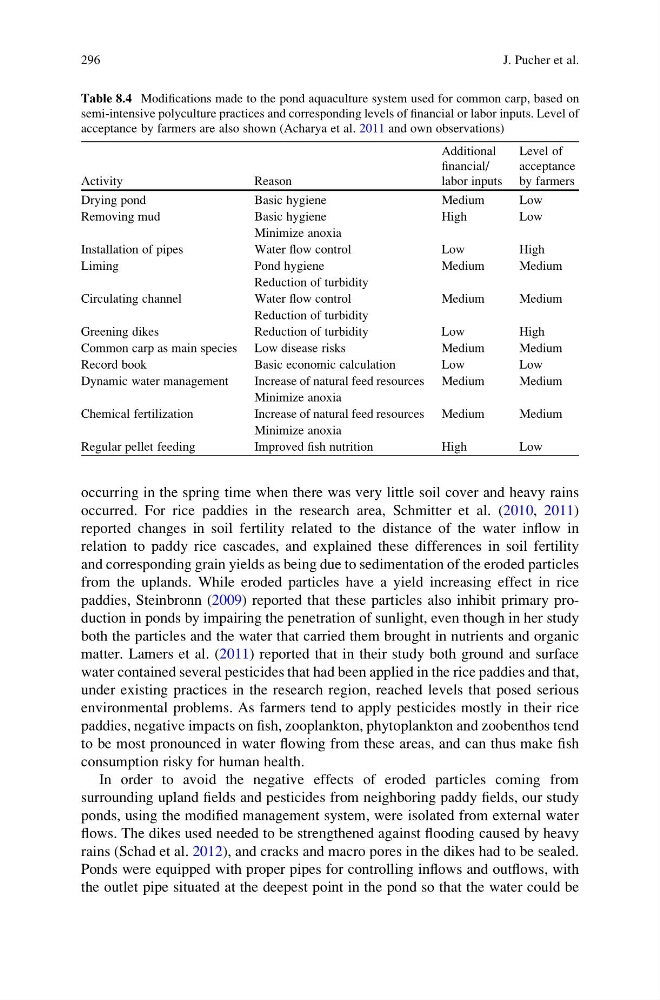
Table 8.4 Modifications made to the pond aquaculture system used for common carp, based on
semi-intensive polyculture practices and corresponding levels of financial or labor inputs. Level of
acceptance by farmers are also shown (Acharya et al. 2011 and own observations)
Activity
Reason
Additional
financial/
labor inputs
Level of
acceptance
by farmers
Drying pond
Basic hygiene
Medium
Low
Removing mud
Basic hygiene
High
Low
Minimize anoxia
Installation of pipes
Water flow control
Low
High
Liming
Pond hygiene
Medium
Medium
Reduction of turbidity
Circulating channel
Water flow control
Medium
Medium
Reduction of turbidity
Greening dikes
Reduction of turbidity
Low
High
Common carp as main species Low disease risks
Medium
Medium
Record book
Basic economic calculation
Low
Low
Dynamic water management
Increase of natural feed resources Medium
Medium
Minimize anoxia
Chemical fertilization
Increase of natural feed resources Medium
Medium
Minimize anoxia
Regular pellet feeding
Improved fish nutrition
High
Low
296
J. Pucher et al.
occurred. For rice paddies in the research area, Schmitter et al. (2010, 2011)
reported changes in soil fertility related to the distance of the water inflow in
relation to paddy rice cascades, and explained these differences in soil fertility
and corresponding grain yields as being due to sedimentation of the eroded particles
from the uplands. While eroded particles have a yield increasing effect in rice
paddies, Steinbronn (2009) reported that these particles also inhibit primary production in ponds by impairing the penetration of sunlight, even though in her study
both the particles and the water that carried them brought in nutrients and organic
matter. Lamers et al. (2011) reported that in their study both ground and surface
water contained several pesticides that had been applied in the rice paddies and that,
under existing practices in the research region, reached levels that posed serious
environmental problems. As farmers tend to apply pesticides mostly in their rice
paddies, negative impacts on fish, zooplankton, phytoplankton and zoobenthos tend
to be most pronounced in water flowing from these areas, and can thus make fish
consumption risky for human health.
In order to avoid the negative effects of eroded particles coming from
surrounding upland fields and pesticides from neighboring paddy fields, our study
ponds, using the modified management system, were isolated from external water
flows. The dikes used needed to be strengthened against flooding caused by heavy
rains (Schad et al. 2012), and cracks and macro pores in the dikes had to be sealed.
Ponds were equipped with proper pipes for controlling inflows and outflows, with
the outlet pipe situated at the deepest point in the pond so that the water could be
Table 8.4 Modifications made to the pond aquaculture system used for common carp, based on
semi-intensive polyculture practices and corresponding levels of financial or labor inputs. Level of
acceptance by farmers are also shown (Acharya et al. 2011 and own observations)
Activity
Reason
Additional
financial/
labor inputs
Level of
acceptance
by farmers
Drying pond
Basic hygiene
Medium
Low
Removing mud
Basic hygiene
High
Low
Minimize anoxia
Installation of pipes
Water flow control
Low
High
Liming
Pond hygiene
Medium
Medium
Reduction of turbidity
Circulating channel
Water flow control
Medium
Medium
Reduction of turbidity
Greening dikes
Reduction of turbidity
Low
High
Common carp as main species Low disease risks
Medium
Medium
Record book
Basic economic calculation
Low
Low
Dynamic water management
Increase of natural feed resources Medium
Medium
Minimize anoxia
Chemical fertilization
Increase of natural feed resources Medium
Medium
Minimize anoxia
Regular pellet feeding
Improved fish nutrition
High
Low
296
J. Pucher et al.