

from rice to intensive horticulture in particular, little knowledge or experience has
accumulated on how to effectively manage pests and synthetic pesticides – which
have proved to be an easy solution for farmers. However, making the system more
sustainable would require long-term investments in integrated pest management for
such areas. Increasing demand for safe and high quality food among urban consumers
could provide a useful incentive for farmers to make greater efforts to minimize
pesticide use. Although pesticide taxes might only have a minimal effect, as most
studies agree that the demand for pesticides is inelastic (Falconer and Hodge 2000;
Pina and Forcada 2004), an investment of such tax revenues into IPM might make a
much greater contribution to reducing pesticide use.
4.6 Conclusion
The rapid adoption of pesticides in mountainous areas raises concerns about the
sustainability of land use intensification in these areas. The intensive use of
pesticides is especially problematic in mountainous areas, for two reasons. First,
pesticide use creates a relatively high level of exposure because of the hydrological
connection of mountainous to downstream areas. Second, pesticides tend to be both
misused and overused. Misuse stems from the fact that pesticides have only
recently been introduced, so farmers largely lack awareness about the risks
involved in their use, plus knowledge about how to use them correctly. Overuse
stems from the problem that farmers incorrectly assess the benefits of pesticide use
as compared to their costs, as well due to the fact that the purchasing price for
pesticides does not reflect the true costs to consumers, farmers and the environment.
In addition, pesticide use levels are high because of a lack of investment in
integrated methods of pest management, which gives farmers few alternatives
when wishing to manage pests.
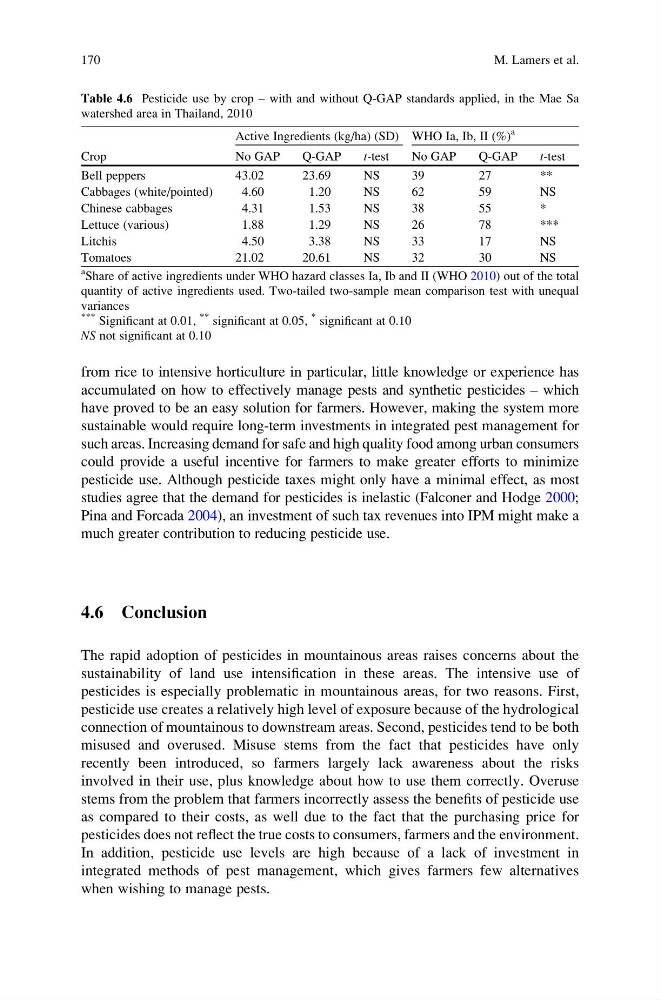
Table 4.6 Pesticide use by crop – with and without Q-GAP standards applied, in the Mae Sa
watershed area in Thailand, 2010
Crop
Active Ingredients (kg/ha) (SD) WHO Ia, Ib, II (%)
a
No GAP
Q-GAP
t-test
No GAP
Q-GAP
t-test
Bell peppers
43.02
23.69
NS
39
27
**
Cabbages (white/pointed)
4.60
1.20
NS
62
59
NS
Chinese cabbages
4.31
1.53
NS
38
55
*
Lettuce (various)
1.88
1.29
NS
26
78
***
Litchis
4.50
3.38
NS
33
17
NS
Tomatoes
21.02
20.61
NS
32
30
NS
a
Share of active ingredients under WHO hazard classes Ia, Ib and II (WHO 2010) out of the total
quantity of active ingredients used. Two-tailed two-sample mean comparison test with unequal
variances
*** Significant at 0.01,
** significant at 0.05,
* significant at 0.10
NS not significant at 0.10
170
M. Lamers et al.
accumulated on how to effectively manage pests and synthetic pesticides – which
have proved to be an easy solution for farmers. However, making the system more
sustainable would require long-term investments in integrated pest management for
such areas. Increasing demand for safe and high quality food among urban consumers
could provide a useful incentive for farmers to make greater efforts to minimize
pesticide use. Although pesticide taxes might only have a minimal effect, as most
studies agree that the demand for pesticides is inelastic (Falconer and Hodge 2000;
Pina and Forcada 2004), an investment of such tax revenues into IPM might make a
much greater contribution to reducing pesticide use.
4.6 Conclusion
The rapid adoption of pesticides in mountainous areas raises concerns about the
sustainability of land use intensification in these areas. The intensive use of
pesticides is especially problematic in mountainous areas, for two reasons. First,
pesticide use creates a relatively high level of exposure because of the hydrological
connection of mountainous to downstream areas. Second, pesticides tend to be both
misused and overused. Misuse stems from the fact that pesticides have only
recently been introduced, so farmers largely lack awareness about the risks
involved in their use, plus knowledge about how to use them correctly. Overuse
stems from the problem that farmers incorrectly assess the benefits of pesticide use
as compared to their costs, as well due to the fact that the purchasing price for
pesticides does not reflect the true costs to consumers, farmers and the environment.
In addition, pesticide use levels are high because of a lack of investment in
integrated methods of pest management, which gives farmers few alternatives
when wishing to manage pests.
Table 4.6 Pesticide use by crop – with and without Q-GAP standards applied, in the Mae Sa
watershed area in Thailand, 2010
Crop
Active Ingredients (kg/ha) (SD) WHO Ia, Ib, II (%)
a
No GAP
Q-GAP
t-test
No GAP
Q-GAP
t-test
Bell peppers
43.02
23.69
NS
39
27
**
Cabbages (white/pointed)
4.60
1.20
NS
62
59
NS
Chinese cabbages
4.31
1.53
NS
38
55
*
Lettuce (various)
1.88
1.29
NS
26
78
***
Litchis
4.50
3.38
NS
33
17
NS
Tomatoes
21.02
20.61
NS
32
30
NS
a
Share of active ingredients under WHO hazard classes Ia, Ib and II (WHO 2010) out of the total
quantity of active ingredients used. Two-tailed two-sample mean comparison test with unequal
variances
*** Significant at 0.01,
** significant at 0.05,
* significant at 0.10
NS not significant at 0.10
170
M. Lamers et al.