

320
5 Numerical Models for Pebble-Bed Heat Transfer
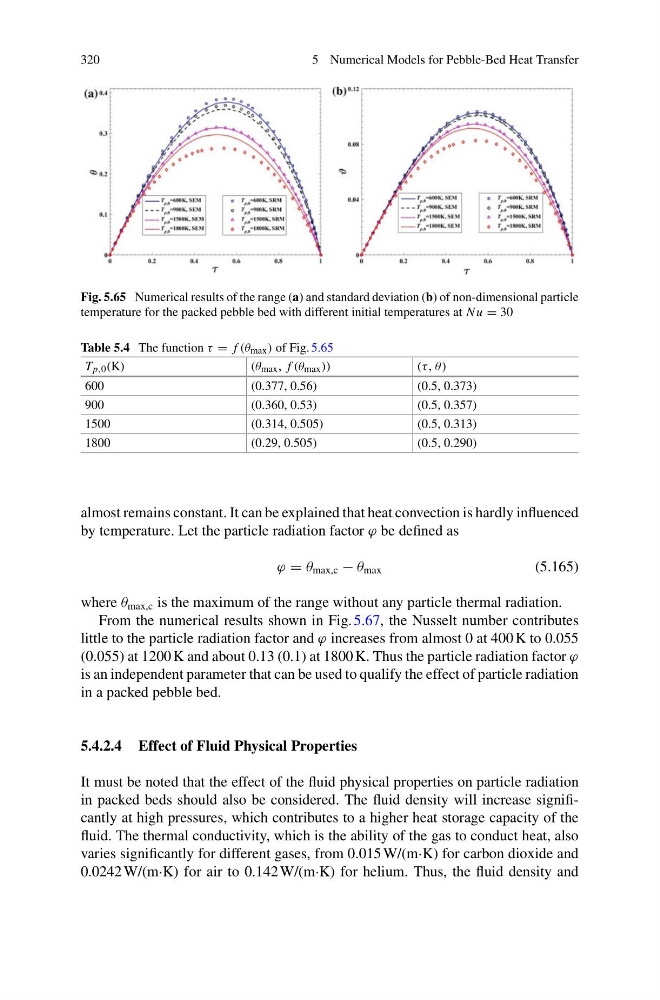
Fig. 5.65 Numerical results of the range (a) and standard deviation (b) of non-dimensional particle
temperature for the packed pebble bed with different initial temperatures at N u = 30
Table 5.4 The function τ = f (θ max ) of Fig. 5.65
T p,0 (K)
(θ max , f (θ max ))
(τ , θ)
600
(0.377, 0.56)
(0.5, 0.373)
900
(0.360, 0.53)
(0.5, 0.357)
1500
(0.314, 0.505)
(0.5, 0.313)
1800
(0.29, 0.505)
(0.5, 0.290)
almost remains constant. It can be explained that heat convection is hardly influenced
by temperature. Let the particle radiation factor ϕ be defined as
ϕ = θ max,c − θ max
(5.165)
where θ max,c is the maximum of the range without any particle thermal radiation.
From the numerical results shown in Fig. 5.67, the Nusselt number contributes
little to the particle radiation factor and ϕ increases from almost 0 at 400 K to 0.055
(0.055) at 1200 K and about 0.13 (0.1) at 1800 K. Thus the particle radiation factor ϕ
is an independent parameter that can be used to qualify the effect of particle radiation
in a packed pebble bed.
5.4.2.4 Effect of Fluid Physical Properties
It must be noted that the effect of the fluid physical properties on particle radiation
in packed beds should also be considered. The fluid density will increase significantly at high pressures, which contributes to a higher heat storage capacity of the
fluid. The thermal conductivity, which is the ability of the gas to conduct heat, also
varies significantly for different gases, from 0.015 W/(m·K) for carbon dioxide and
0.0242 W/(m·K) for air to 0.142 W/(m·K) for helium. Thus, the fluid density and
5 Numerical Models for Pebble-Bed Heat Transfer
Fig. 5.65 Numerical results of the range (a) and standard deviation (b) of non-dimensional particle
temperature for the packed pebble bed with different initial temperatures at N u = 30
Table 5.4 The function τ = f (θ max ) of Fig. 5.65
T p,0 (K)
(θ max , f (θ max ))
(τ , θ)
600
(0.377, 0.56)
(0.5, 0.373)
900
(0.360, 0.53)
(0.5, 0.357)
1500
(0.314, 0.505)
(0.5, 0.313)
1800
(0.29, 0.505)
(0.5, 0.290)
almost remains constant. It can be explained that heat convection is hardly influenced
by temperature. Let the particle radiation factor ϕ be defined as
ϕ = θ max,c − θ max
(5.165)
where θ max,c is the maximum of the range without any particle thermal radiation.
From the numerical results shown in Fig. 5.67, the Nusselt number contributes
little to the particle radiation factor and ϕ increases from almost 0 at 400 K to 0.055
(0.055) at 1200 K and about 0.13 (0.1) at 1800 K. Thus the particle radiation factor ϕ
is an independent parameter that can be used to qualify the effect of particle radiation
in a packed pebble bed.
5.4.2.4 Effect of Fluid Physical Properties
It must be noted that the effect of the fluid physical properties on particle radiation
in packed beds should also be considered. The fluid density will increase significantly at high pressures, which contributes to a higher heat storage capacity of the
fluid. The thermal conductivity, which is the ability of the gas to conduct heat, also
varies significantly for different gases, from 0.015 W/(m·K) for carbon dioxide and
0.0242 W/(m·K) for air to 0.142 W/(m·K) for helium. Thus, the fluid density and