

258
5 Numerical Models for Pebble-Bed Heat Transfer
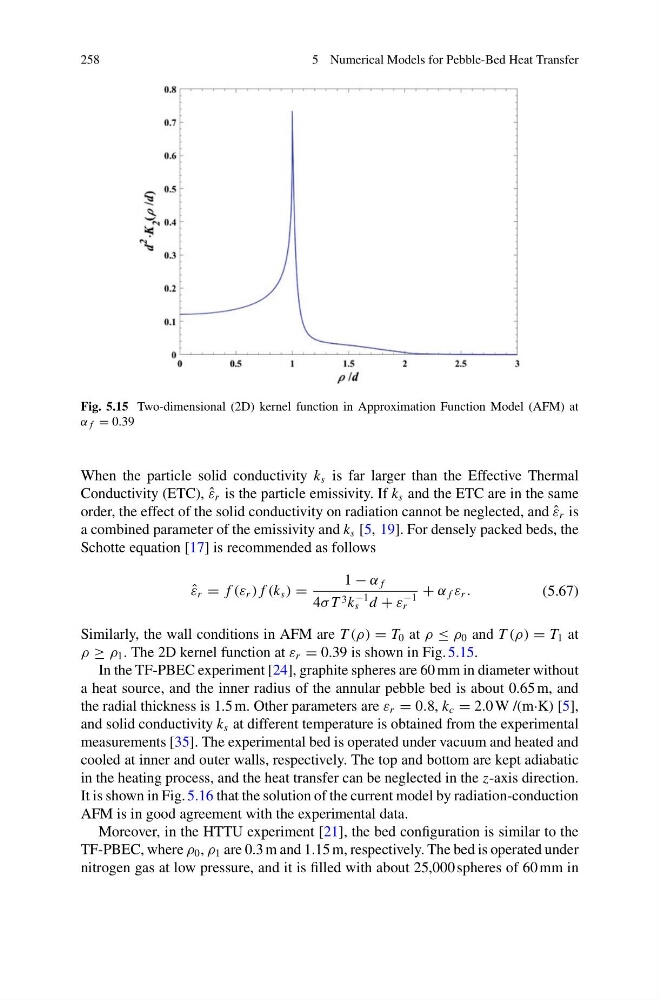
Fig. 5.15 Two-dimensional (2D) kernel function in Approximation Function Model (AFM) at
α f = 0.39
When the particle solid conductivity k s is far larger than the Effective Thermal
Conductivity (ETC), ˆ
ε r is the particle emissivity. If k s and the ETC are in the same
order, the effect of the solid conductivity on radiation cannot be neglected, and ˆ
ε r is
a combined parameter of the emissivity and k s [5, 19]. For densely packed beds, the
Schotte equation [17] is recommended as follows
ˆ
ε r = f (ε r ) f (k s ) =
1 − α f
4σ T 3 k
−1
s d + ε
−1
r
+ α f ε r .
(5.67)
Similarly, the wall conditions in AFM are T (ρ) = T 0 at ρ ≤ ρ 0 and T (ρ) = T 1 at
ρ ≥ ρ 1 . The 2D kernel function at ε r = 0.39 is shown in Fig. 5.15.
In the TF-PBEC experiment [24], graphite spheres are 60 mm in diameter without
a heat source, and the inner radius of the annular pebble bed is about 0.65 m, and
the radial thickness is 1.5 m. Other parameters are ε r = 0.8, k c = 2.0 W /(m·K) [5],
and solid conductivity k s at different temperature is obtained from the experimental
measurements [35]. The experimental bed is operated under vacuum and heated and
cooled at inner and outer walls, respectively. The top and bottom are kept adiabatic
in the heating process, and the heat transfer can be neglected in the z-axis direction.
It is shown in Fig. 5.16 that the solution of the current model by radiation-conduction
AFM is in good agreement with the experimental data.
Moreover, in the HTTU experiment [21], the bed configuration is similar to the
TF-PBEC, where ρ 0 , ρ 1 are 0.3 m and 1.15 m, respectively. The bed is operated under
nitrogen gas at low pressure, and it is filled with about 25,000 spheres of 60 mm in
5 Numerical Models for Pebble-Bed Heat Transfer
Fig. 5.15 Two-dimensional (2D) kernel function in Approximation Function Model (AFM) at
α f = 0.39
When the particle solid conductivity k s is far larger than the Effective Thermal
Conductivity (ETC), ˆ
ε r is the particle emissivity. If k s and the ETC are in the same
order, the effect of the solid conductivity on radiation cannot be neglected, and ˆ
ε r is
a combined parameter of the emissivity and k s [5, 19]. For densely packed beds, the
Schotte equation [17] is recommended as follows
ˆ
ε r = f (ε r ) f (k s ) =
1 − α f
4σ T 3 k
−1
s d + ε
−1
r
+ α f ε r .
(5.67)
Similarly, the wall conditions in AFM are T (ρ) = T 0 at ρ ≤ ρ 0 and T (ρ) = T 1 at
ρ ≥ ρ 1 . The 2D kernel function at ε r = 0.39 is shown in Fig. 5.15.
In the TF-PBEC experiment [24], graphite spheres are 60 mm in diameter without
a heat source, and the inner radius of the annular pebble bed is about 0.65 m, and
the radial thickness is 1.5 m. Other parameters are ε r = 0.8, k c = 2.0 W /(m·K) [5],
and solid conductivity k s at different temperature is obtained from the experimental
measurements [35]. The experimental bed is operated under vacuum and heated and
cooled at inner and outer walls, respectively. The top and bottom are kept adiabatic
in the heating process, and the heat transfer can be neglected in the z-axis direction.
It is shown in Fig. 5.16 that the solution of the current model by radiation-conduction
AFM is in good agreement with the experimental data.
Moreover, in the HTTU experiment [21], the bed configuration is similar to the
TF-PBEC, where ρ 0 , ρ 1 are 0.3 m and 1.15 m, respectively. The bed is operated under
nitrogen gas at low pressure, and it is filled with about 25,000 spheres of 60 mm in