

154
3 Experiments in Pebble Bed Heat Transfer
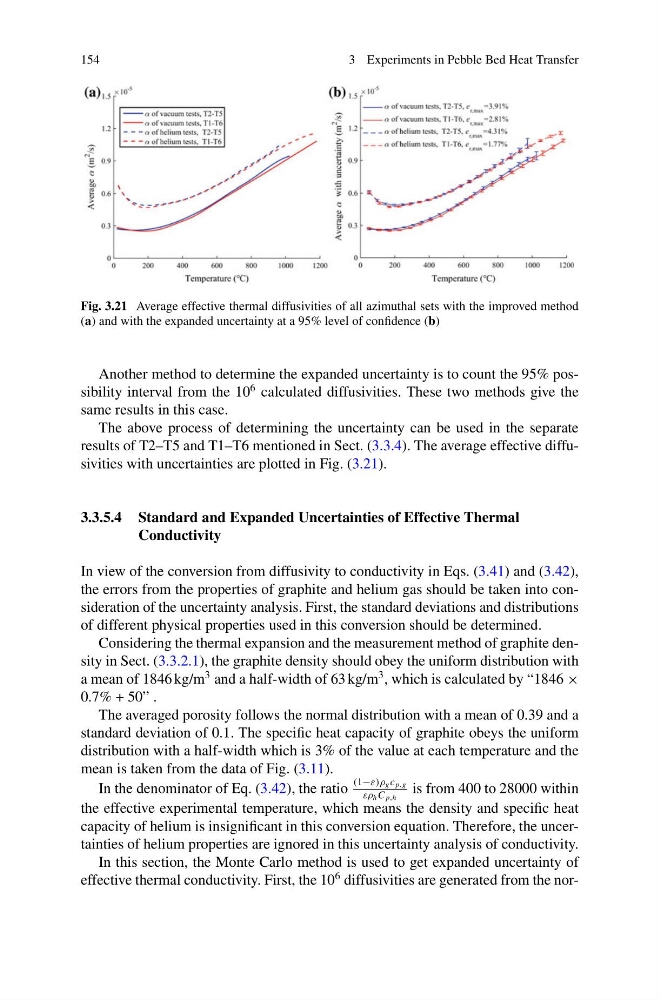
Fig. 3.21 Average effective thermal diffusivities of all azimuthal sets with the improved method
(a) and with the expanded uncertainty at a 95% level of confidence (b)
Another method to determine the expanded uncertainty is to count the 95% possibility interval from the 10
6 calculated diffusivities. These two methods give the
same results in this case.
The above process of determining the uncertainty can be used in the separate
results of T2–T5 and T1–T6 mentioned in Sect. (3.3.4). The average effective diffusivities with uncertainties are plotted in Fig. (3.21).
3.3.5.4 Standard and Expanded Uncertainties of Effective Thermal
Conductivity
In view of the conversion from diffusivity to conductivity in Eqs. (3.41) and (3.42),
the errors from the properties of graphite and helium gas should be taken into consideration of the uncertainty analysis. First, the standard deviations and distributions
of different physical properties used in this conversion should be determined.
Considering the thermal expansion and the measurement method of graphite density in Sect. (3.3.2.1), the graphite density should obey the uniform distribution with
a mean of 1846 kg/m
3 and a half-width of 63 kg/m
3 , which is calculated by “1846 ×
0.7% + 50” .
The averaged porosity follows the normal distribution with a mean of 0.39 and a
standard deviation of 0.1. The specific heat capacity of graphite obeys the uniform
distribution with a half-width which is 3% of the value at each temperature and the
mean is taken from the data of Fig. (3.11).
In the denominator of Eq. (3.42), the ratio
(1−ε)ρ g c p,g
ερ h C p,h
is from 400 to 28000 within
the effective experimental temperature, which means the density and specific heat
capacity of helium is insignificant in this conversion equation. Therefore, the uncertainties of helium properties are ignored in this uncertainty analysis of conductivity.
In this section, the Monte Carlo method is used to get expanded uncertainty of
effective thermal conductivity. First, the 10
6 diffusivities are generated from the nor-
3 Experiments in Pebble Bed Heat Transfer
Fig. 3.21 Average effective thermal diffusivities of all azimuthal sets with the improved method
(a) and with the expanded uncertainty at a 95% level of confidence (b)
Another method to determine the expanded uncertainty is to count the 95% possibility interval from the 10
6 calculated diffusivities. These two methods give the
same results in this case.
The above process of determining the uncertainty can be used in the separate
results of T2–T5 and T1–T6 mentioned in Sect. (3.3.4). The average effective diffusivities with uncertainties are plotted in Fig. (3.21).
3.3.5.4 Standard and Expanded Uncertainties of Effective Thermal
Conductivity
In view of the conversion from diffusivity to conductivity in Eqs. (3.41) and (3.42),
the errors from the properties of graphite and helium gas should be taken into consideration of the uncertainty analysis. First, the standard deviations and distributions
of different physical properties used in this conversion should be determined.
Considering the thermal expansion and the measurement method of graphite density in Sect. (3.3.2.1), the graphite density should obey the uniform distribution with
a mean of 1846 kg/m
3 and a half-width of 63 kg/m
3 , which is calculated by “1846 ×
0.7% + 50” .
The averaged porosity follows the normal distribution with a mean of 0.39 and a
standard deviation of 0.1. The specific heat capacity of graphite obeys the uniform
distribution with a half-width which is 3% of the value at each temperature and the
mean is taken from the data of Fig. (3.11).
In the denominator of Eq. (3.42), the ratio
(1−ε)ρ g c p,g
ερ h C p,h
is from 400 to 28000 within
the effective experimental temperature, which means the density and specific heat
capacity of helium is insignificant in this conversion equation. Therefore, the uncertainties of helium properties are ignored in this uncertainty analysis of conductivity.
In this section, the Monte Carlo method is used to get expanded uncertainty of
effective thermal conductivity. First, the 10
6 diffusivities are generated from the nor-