

491
16 Fourier Transform Infrared (Ft-Ir) Spectroscopic Imaging …
and/or structural composition of the samples as well as relationship to physiologic
or disease processes. Classification techniques can be broadly divided into two
types, namely, supervised and unsupervised methods.
Supervised Methods In the use of supervised methods, the final categorization
of data is known a priori and accurately marked representative samples from these
known classes are available. It is critically important that the size and characteristics
of the representative samples should be such that they represent the entire population well. these representative samples constitutes the training data set. A similarly
representative data set is separately selected and employed to validate the results
obtained from the methods. Appropriately, this data set is termed the validation set.
the development of an analysis protocol using supervised classification can be
divided into three parts: first, the training data set is acquired and subjected to a
series of pre-processing steps to enhance data quality. Second, the class labels applied to training data are used to identify potentially significant and differentiating
features within the spectrum. For example, in imaging human tissues, it is common to differentiate histological classes such as ‘epithelium’, ‘stroma’ and ‘blood’,
among others. Spectra from different classes show differences in absorption spectra because of the differences in their chemical compositions. hence, spectra from
each class are analyzed carefully to deduce characteristic differences – spatial,
spectral, or both – that highlight differences between specific cell types. there are
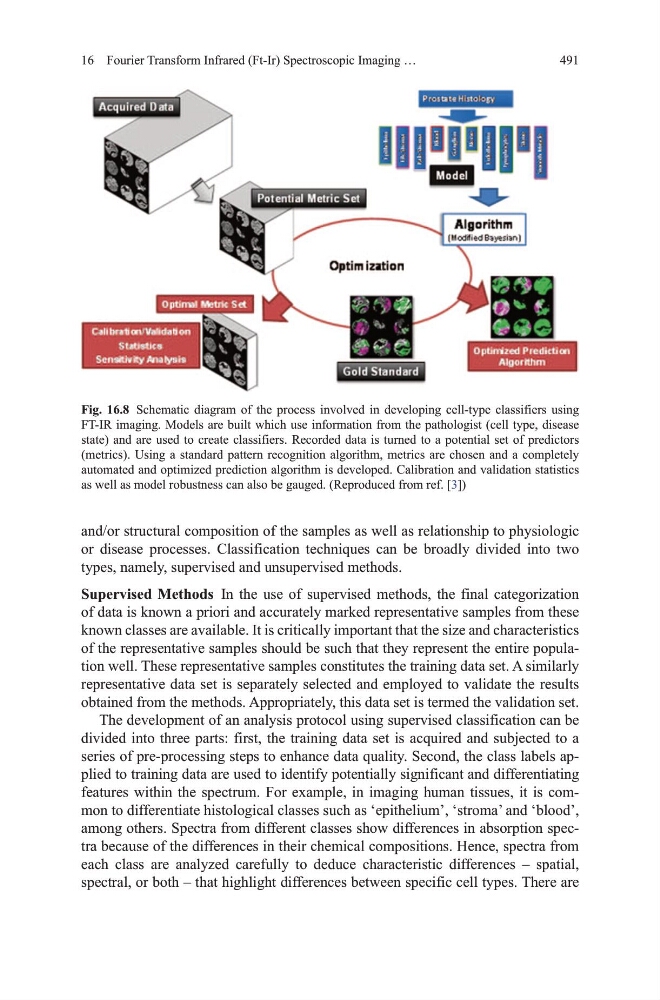
Fig. 16.8 Schematic diagram of the process involved in developing cell-type classifiers using
Ft-IR imaging. models are built which use information from the pathologist (cell type, disease
state) and are used to create classifiers. Recorded data is turned to a potential set of predictors
(metrics). using a standard pattern recognition algorithm, metrics are chosen and a completely
automated and optimized prediction algorithm is developed. Calibration and validation statistics
as well as model robustness can also be gauged. (Reproduced from ref. [3])
16 Fourier Transform Infrared (Ft-Ir) Spectroscopic Imaging …
and/or structural composition of the samples as well as relationship to physiologic
or disease processes. Classification techniques can be broadly divided into two
types, namely, supervised and unsupervised methods.
Supervised Methods In the use of supervised methods, the final categorization
of data is known a priori and accurately marked representative samples from these
known classes are available. It is critically important that the size and characteristics
of the representative samples should be such that they represent the entire population well. these representative samples constitutes the training data set. A similarly
representative data set is separately selected and employed to validate the results
obtained from the methods. Appropriately, this data set is termed the validation set.
the development of an analysis protocol using supervised classification can be
divided into three parts: first, the training data set is acquired and subjected to a
series of pre-processing steps to enhance data quality. Second, the class labels applied to training data are used to identify potentially significant and differentiating
features within the spectrum. For example, in imaging human tissues, it is common to differentiate histological classes such as ‘epithelium’, ‘stroma’ and ‘blood’,
among others. Spectra from different classes show differences in absorption spectra because of the differences in their chemical compositions. hence, spectra from
each class are analyzed carefully to deduce characteristic differences – spatial,
spectral, or both – that highlight differences between specific cell types. there are
Fig. 16.8 Schematic diagram of the process involved in developing cell-type classifiers using
Ft-IR imaging. models are built which use information from the pathologist (cell type, disease
state) and are used to create classifiers. Recorded data is turned to a potential set of predictors
(metrics). using a standard pattern recognition algorithm, metrics are chosen and a completely
automated and optimized prediction algorithm is developed. Calibration and validation statistics
as well as model robustness can also be gauged. (Reproduced from ref. [3])